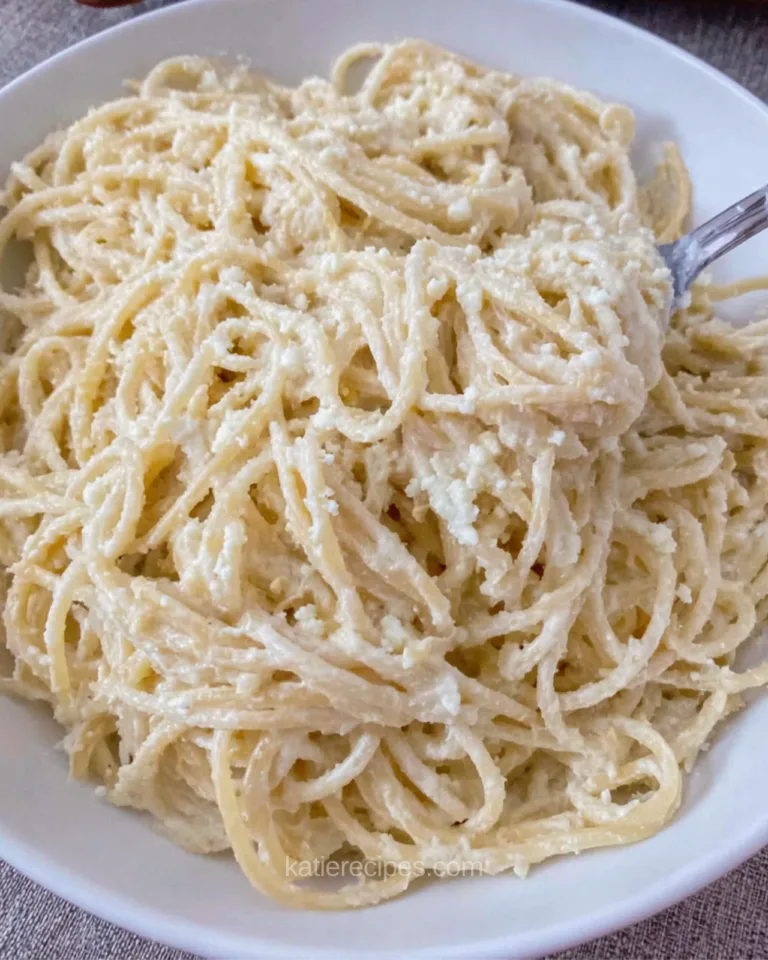
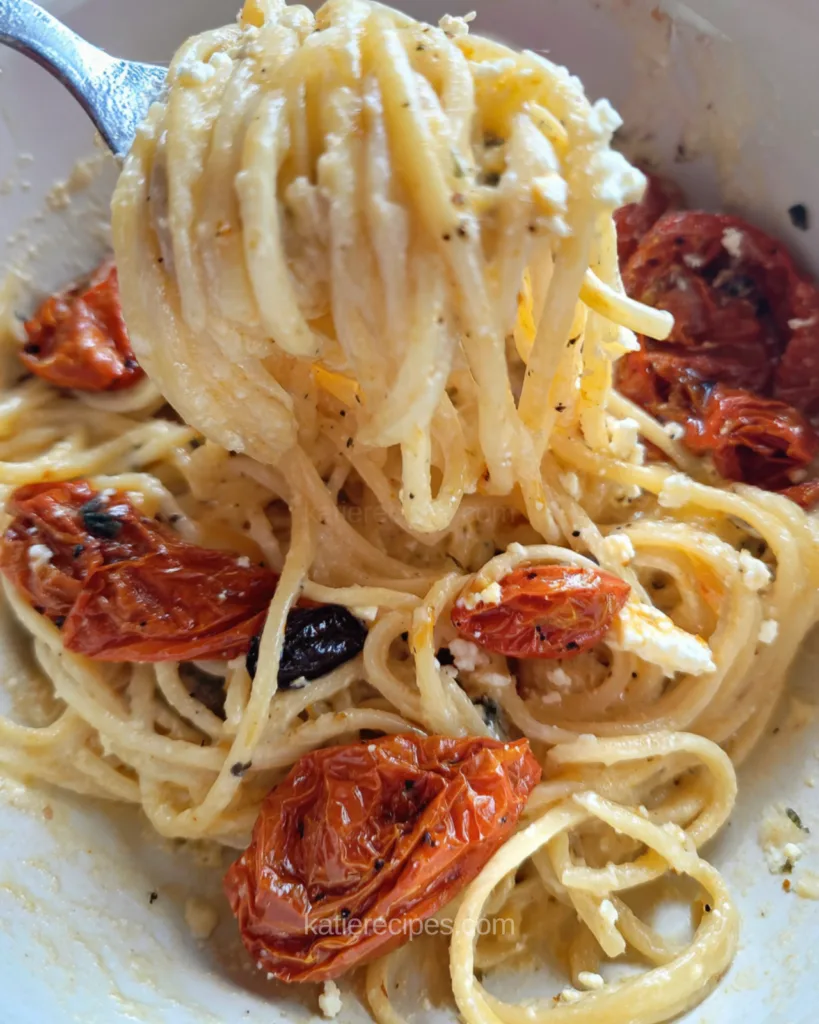
The first few times I made this, I got clumpy pasta with bits of cold cheese in it.
Not a sauce. Just spaghetti, some tomatoes, and crumbles of feta that stayed stubbornly separate from everything else. I kept adding more olive oil trying to bring it together, which only made it greasy.
The problem was that I’d drained the pasta down the sink. All of it.
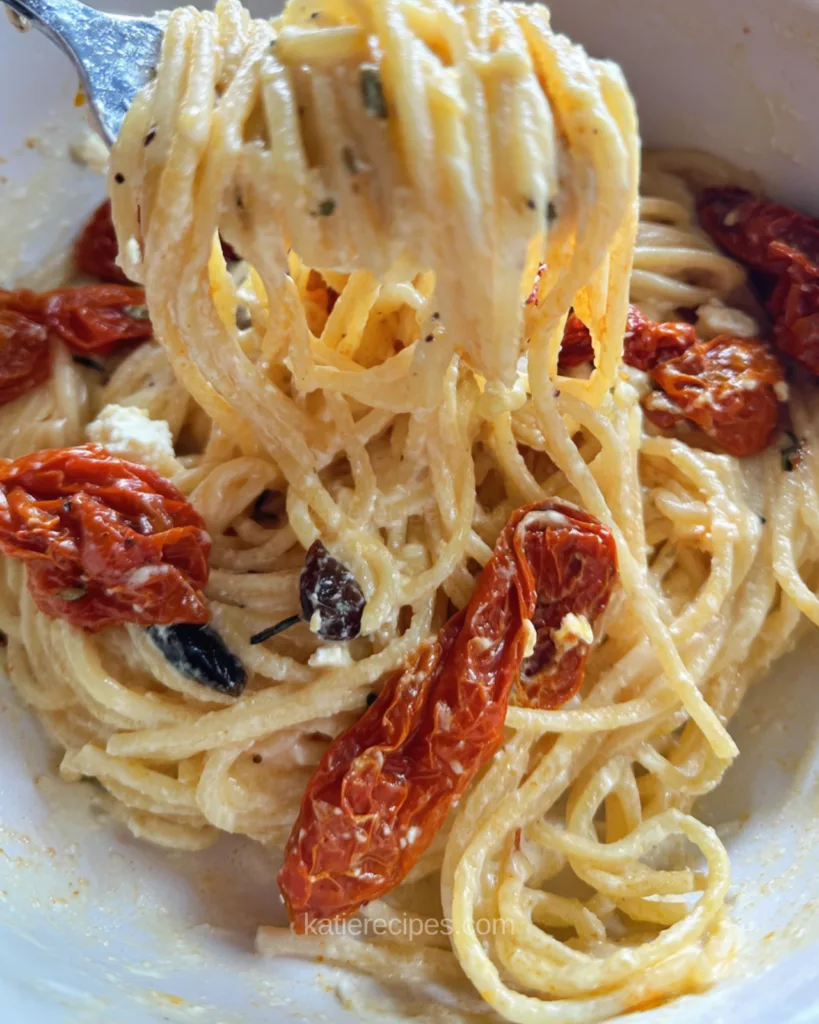
Feta won’t turn into a sauce on its own — it’s a brined cheese and it doesn’t melt the way mozzarella does. What it needs is hot, starchy pasta water, mashed into it until the two become one creamy thing. Two minutes with a fork and it goes from crumbles to something that coats every strand.
This spaghetti with feta is that version. It’s the stovetop answer to baked feta pasta — same salty, tangy, tomato-and-cheese flavors, but no oven and about twenty-five minutes start to finish.
Table of Contents
Why You’ll Love This Recipe
- No oven, which makes it a summer dinner rather than a project
- Twenty-five minutes, most of it waiting for water to boil
- Six real ingredients and a handful of parsley
- Creamy without a drop of cream
- Good hot, and honestly quite good at room temperature the next day
It’s also cheap. A block of feta, a punnet of tomatoes, and a box of spaghetti feeds four.
Ingredients You’ll Need
12 oz spaghetti – Regular spaghetti is right here. Bucatini works too if you want something with more chew. Cook it a minute shy of the package time, since it finishes in the sauce.
1½ cups (about 8 oz) block feta, crumbled – Block, not pre-crumbled, and this genuinely matters. Pre-crumbled feta is coated in anti-caking agents to stop it clumping in the tub, and that coating stops it becoming creamy when you need it to. Crumble it yourself.
2 cups cherry or grape tomatoes, halved – They collapse in a couple of minutes and release their juice into the oil. Ripe ones are worth seeking out; pale winter tomatoes give you very little.
½ cup Kalamata olives, pitted and sliced – The briny hit that makes this taste Greek rather than just Italian. Green olives work but they’re milder.
3 cloves garlic, minced – One minute in the oil, no more. Burnt garlic is bitter and there’s nowhere for it to hide in a dish this simple.
¼ cup extra virgin olive oil – This is a dish where you’ll taste the oil, so use one you like.
1 cup reserved pasta water – Not optional, and it’s the thing the old version of this recipe got wrong. Scoop it out before you drain.
¼ cup fresh parsley, chopped, and 1 tsp lemon zest – Both go in at the end. The zest is a small addition that cuts through the salt and the fat without adding acid.
Black pepper, and salt only if you need it – You probably won’t. More on that below.
How to Make This Recipe
Bring a large pot of water to a boil and salt it lightly — about half what you’d normally use. Feta is stored in brine and carries a lot of salt with it, so the usual “salt it like the sea” advice will wreck this dish.
Cook the spaghetti to al dente. Before you drain it, scoop out 1 cup of the pasta water. Set it somewhere you won’t forget it.
While the pasta cooks, make the sauce base. Put 1 cup of the crumbled feta in a large bowl, pour in about ½ cup of the hot pasta water, and mash it with a fork. It’ll look wrong at first — lumpy and separated — then after thirty seconds or so it turns into a thick, smooth paste. That’s the whole trick.
Heat the olive oil in a large skillet over medium. Add the garlic and cook about a minute, just until fragrant. Add the tomatoes and cook 2 to 3 minutes, until they start to collapse and release their juice. Stir in the olives, give it another minute, then take it off the heat.
Add the drained hot spaghetti straight into the bowl with the feta paste and toss hard, adding pasta water a splash at a time. It’ll go from looking dry and patchy to glossy and creamy within about thirty seconds of vigorous tossing.
Tip in the tomatoes and olives with all their oil, then the parsley and lemon zest. Toss again.
Taste it before you reach for the salt. Scatter the remaining feta over the top, grind over some black pepper, and serve straight away.
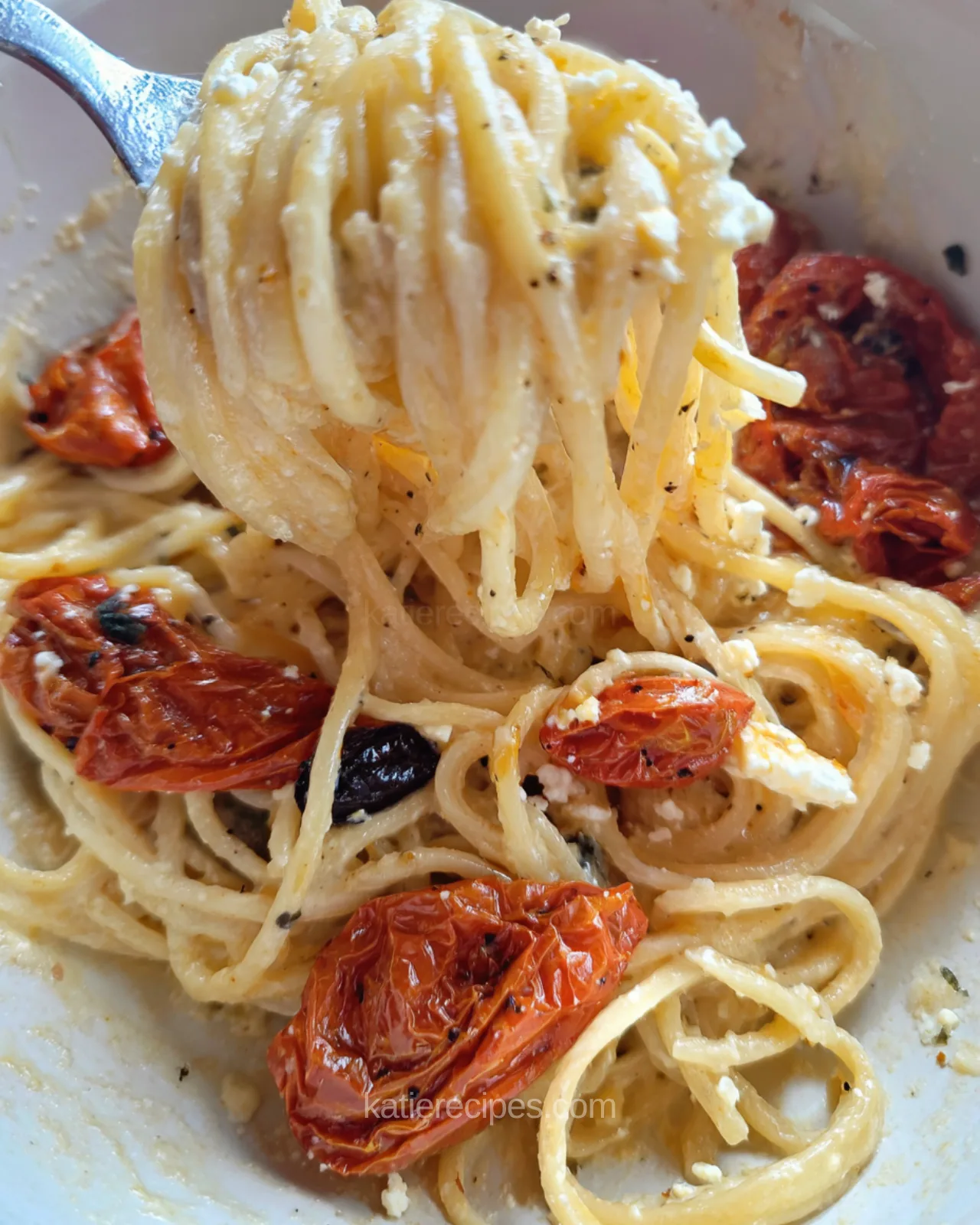
Spaghetti with Feta
Ingredients
Method
- Bring a large pot of water to a boil and salt it lightly, about half what you would normally use. Feta and olives are both cured and bring plenty of salt to the dish. Cook the spaghetti to al dente.
- Before draining, scoop out 1 cup of the pasta water and set it aside. This is what turns the feta into a sauce, so don’t skip it.
- While the pasta cooks, put 1 cup of the crumbled feta in a large bowl. Add about 1/2 cup of the hot pasta water and mash with a fork until it becomes a thick, smooth paste. It will look lumpy at first, then come together.
- Heat the olive oil in a large skillet over medium. Add the garlic and cook about 1 minute, just until fragrant. Don’t let it brown.
- Add the tomatoes and cook 2-3 minutes, until they begin to collapse. Stir in the olives, cook 1 minute more, then remove from the heat.
- Add the drained hot spaghetti to the bowl with the feta paste and toss hard, adding pasta water a splash at a time, until it turns glossy and creamy and coats every strand.
- Tip in the tomatoes and olives with their oil, then the parsley and lemon zest. Toss again. Taste before adding any salt. Top with the remaining feta and black pepper, and serve immediately.
Notes
My “Feta Doesn’t Melt” Mini Guide
Feta behaves differently from every other cheese you’d put on pasta, and understanding why fixes most of what goes wrong.
Why it stays in clumps
Mozzarella and cheddar are rennet-set cheeses. Their proteins are loosely linked, so heat melts them into a flowing mass. Feta is acid-set and then stored in brine, which locks its proteins into a tight, crumbly structure. Heat softens it, but it will never flow.
So if you just stir crumbled feta into hot pasta, you get exactly what you put in: warm crumbles of cheese. No sauce.
What actually makes it creamy
Two things working together. The starch in pasta water acts as an emulsifier, holding fat and water in suspension instead of letting them separate. And mechanical force — mashing with a fork, then tossing hard — physically breaks the feta down into small enough particles to stay suspended.
You’re not melting the cheese. You’re building an emulsion around it. That’s why the fork matters as much as the heat.
The salt problem nobody mentions
Every pasta recipe tells you to salt the water heavily. Almost every feta pasta recipe repeats it without thinking.
But feta sits in brine. A cup and a half of it brings a lot of salt into the dish, and you’re also adding olives, which are cured. Salt the water as usual and you’ll end up with something genuinely too salty to enjoy.
Half the usual amount is about right. Then taste at the very end and adjust, which most of the time means not adjusting at all.
Block feta, always
Pre-crumbled feta is dusted with cellulose or potato starch to keep the pieces separate in the tub. That coating is doing the exact opposite of what you want here — it resists the water and stops the cheese breaking down into a sauce. You’ll get a grainier result no matter how hard you mash.
Buy the block, ideally the kind packed in brine rather than vacuum-sealed dry. Crumbling it takes about a minute.
If it still isn’t creamy
Add more pasta water and keep tossing. People consistently give up too early — the transformation happens suddenly, not gradually, and usually about ten seconds after you’ve decided it isn’t working.
Helpful Tips
Save more pasta water than you think you need. It’s free and there’s nothing worse than realising you’re short after the pasta’s drained.
If it tightens up while you’re plating, a splash more hot water and a quick toss brings it right back.
Add grilled chicken, shrimp, or a tin of chickpeas to make it a fuller meal. Stir them in at the end so they just warm through.
Spinach wilts into it beautifully. Add a couple of big handfuls with the hot pasta and it’ll collapse in the residual heat.
For leftovers, reheat gently in a skillet with a splash of water rather than the microwave, which turns the feta rubbery.
Frequently Asked Questions
Why won’t my feta melt?
Because it can’t. Feta is acid-set and brine-cured, which gives it a tight protein structure that softens but never flows the way mozzarella does. The way to get a creamy result is to mash it with hot starchy pasta water into an emulsion rather than waiting for it to melt.
Can I use pre-crumbled feta?
You can, but it won’t be as creamy. Pre-crumbled feta is coated with anti-caking agents that resist water and keep the cheese grainy. A block costs about the same and crumbles in a minute.
How is this different from baked feta pasta?
Baked feta pasta roasts a whole block with tomatoes in the oven for around half an hour, which softens the cheese into a sauce. This does the same job on the stovetop in about twenty-five minutes using pasta water instead of an oven. Same flavors, no preheating.
Do I need to salt the pasta water?
Lightly — roughly half what you’d normally use. Feta and olives are both cured and bring plenty of salt with them. Taste at the end before adding any more.
Can I make it ahead?
It’s best fresh, since the sauce tightens as it cools. Leftovers keep three days in the fridge and reheat well in a skillet with a splash of water.
Final Thoughts
For a long time I thought this dish was just a bit disappointing — that feta pasta was fine but never quite the creamy thing it looked like in photos.
It wasn’t the recipe. It was the cup of pasta water I kept pouring down the sink.
Save it, mash it into the cheese, and toss harder than feels necessary. That’s the entire difference.