I ruined a batch of these once by being too thorough.
I’d read somewhere that longer marinating meant more flavor, so I put the tenders in lemon, oil, and oregano in the morning and left them until dinner. Eight hours, give or take. I thought I was doing the responsible thing.
What came off the grill was chalky. Not dry exactly — the texture had gone soft and slightly grainy, and the lemon had turned harsh instead of bright. The chicken had been sitting in acid all day, and acid doesn’t stop working just because you’ve stopped paying attention.
So the version below has yogurt in the marinade, which is how Greek cooks have been doing it for a very long time and which I should have started with. It buffers the lemon, tenderizes gently, and clings to the meat in a way that oil and juice never quite manage. It also makes the whole thing far more forgiving if dinner runs late.
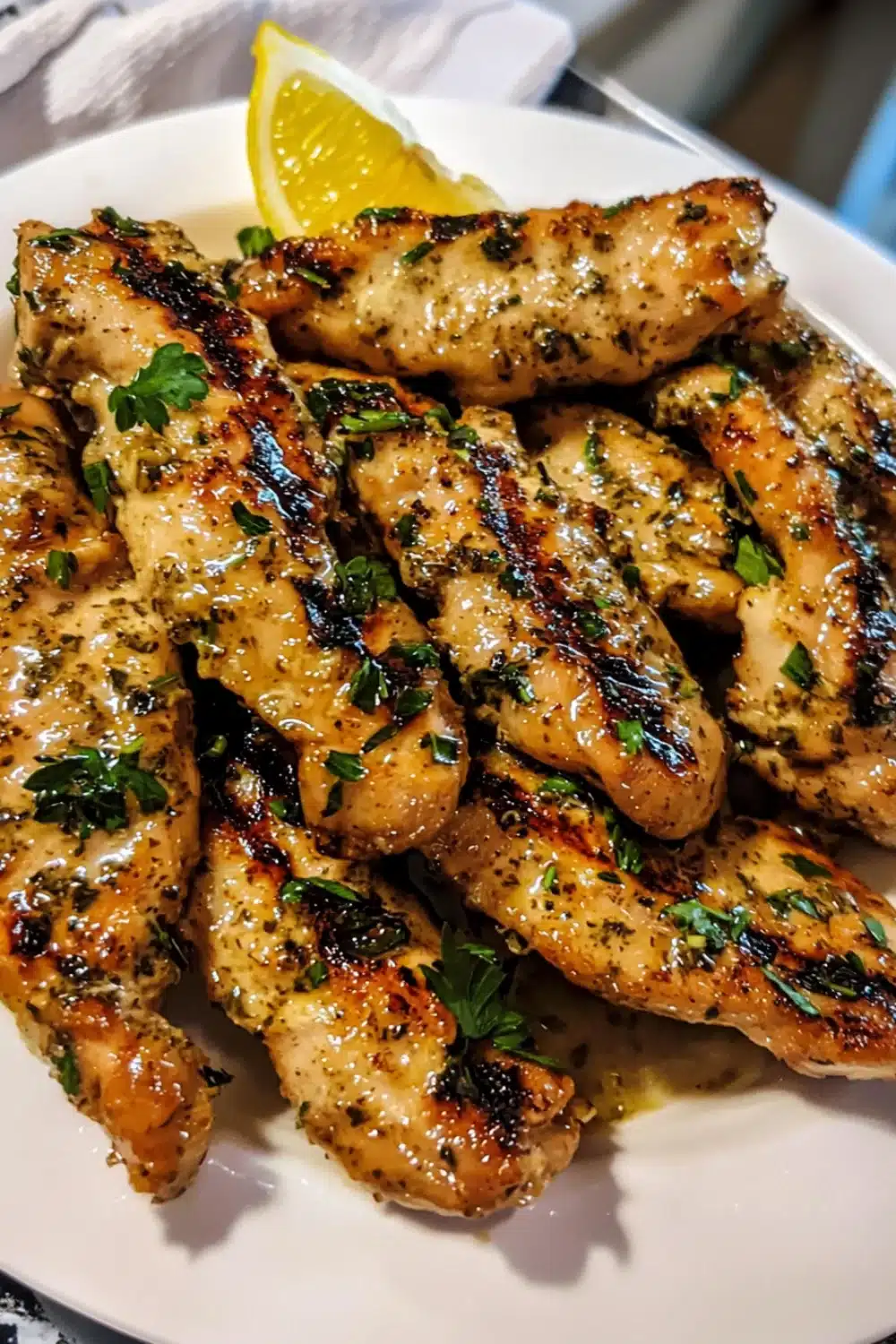
These come out juicy, lemony, and heavily herbed, and they’re on the table in under an hour.
Table of Contents
Why You’ll Love This Recipe
- Ten minutes of actual work, and the fridge does the rest
- The yogurt marinade is forgiving, so timing isn’t critical
- Cooks in about 15 minutes on a grill or in a skillet
- Good hot, good cold, good the next day in a wrap
- Naturally high-protein and low-carb without trying to be
It’s also one of those recipes that stretches in a lot of directions. Same chicken over a salad, in a pita, or on a plate with rice.
Ingredients You’ll Need
1 lb chicken tenders – Already the right size and shape, which is most of the appeal. If you only have breasts, slice them lengthwise into strips about an inch wide.
⅓ cup plain full-fat Greek yogurt – The backbone of the marinade, and the thing that makes this version work. It coats the chicken in a way thin marinades don’t, and its lactic acid tenderizes slowly and gently. Full-fat is worth it; low-fat is thinner and can split on the heat.
2 tbsp extra virgin olive oil – Carries the fat-soluble flavor from the herbs and garlic, and helps with browning.
2 tbsp fresh lemon juice – About one lemon. Use fresh; bottled tastes flat and metallic in a marinade this simple.
1 tsp lemon zest – This is the small addition I’d argue hardest for. Zest holds the lemon’s aromatic oils, which is where most of the actual lemon flavor lives, and it brings almost no acid with it. More lemon character, none of the extra protein damage.
3 cloves garlic, minced – Fresh, minced fine. The yogurt mellows garlic considerably, so this isn’t as much as it sounds.
1½ tsp dried oregano – The signature Greek herb. Dried genuinely works better than fresh here; it’s more concentrated and stands up to the marinade.
1 tsp dried thyme – Earthier, rounds out the oregano.
1 tsp paprika – Warmth and color, and it helps the tenders take on a better shade on the grill.
¾ tsp salt and ¼ tsp black pepper – A little more salt than you might expect, because yogurt mutes seasoning.
2 tbsp fresh parsley, chopped – Scattered over at the end. Fresh, not dried, and it does more than decorate.
How to Make This Recipe
Whisk the yogurt, olive oil, lemon juice, lemon zest, garlic, oregano, thyme, paprika, salt, and pepper together in a bowl until it’s smooth and evenly colored. It’ll be thick, closer to a dressing than a liquid.
Add the tenders and turn them until every piece is coated. Cover and refrigerate. Thirty minutes is the minimum, two to four hours is the sweet spot, and eight is as far as I’d push it.
When you’re ready to cook, heat a grill or skillet to medium — not medium-high. This is the part most recipes get wrong for a yogurt marinade. Yogurt contains milk sugars that brown much faster than oil does, so high heat chars the outside before the middle is cooked.
Wipe the excess marinade off each tender before it goes on the heat. You want a thin coating clinging to the meat, not a thick layer. A thick layer burns instead of searing.
Cook 4 to 6 minutes per side, until the outside is golden with some darker spots and the thickest part reads 165°F. Tenders are thin and go from done to overdone quickly, so start checking early.
Let them rest 5 minutes before serving. Scatter the parsley over the top.
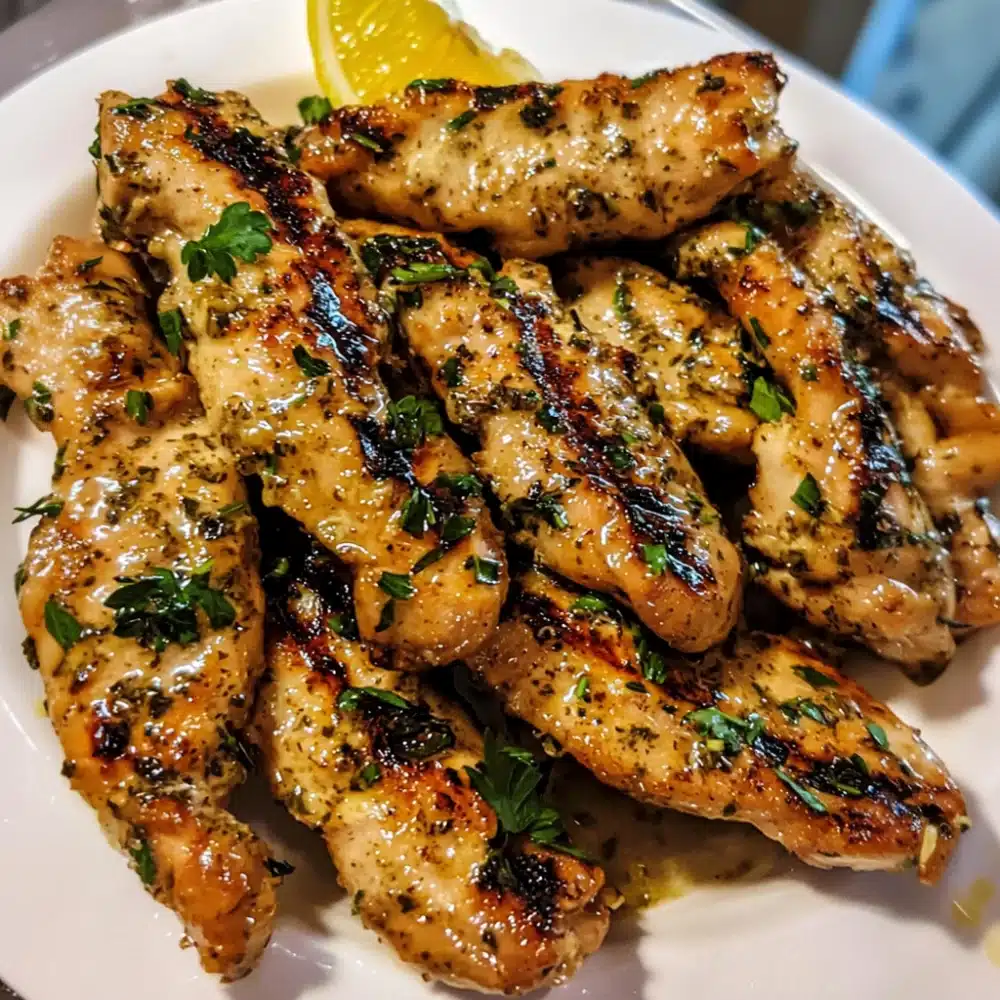
Greek-Style Grilled Chicken Tenders
Ingredients
Method
- In a large bowl, whisk together the Greek yogurt, olive oil, lemon juice, lemon zest, minced garlic, oregano, thyme, paprika, salt, and pepper until smooth and evenly combined. The marinade will be thick, closer to a dressing than a liquid.
- Add the chicken tenders and turn until every piece is coated. Cover and refrigerate at least 30 minutes. Two to four hours is ideal; do not exceed 8 hours.
- Heat a grill or heavy skillet to medium heat, not medium-high, and oil it lightly. Yogurt contains milk sugars that brown faster than oil, so high heat will char the outside before the chicken cooks through.
- Wipe the excess marinade off each tender before cooking, leaving a thin coating. A thick layer of marinade burns rather than sears.
- Cook 4-6 minutes per side, until golden with some darker spots and the thickest part reaches 165 degrees F. Tenders are thin and overcook quickly, so start checking early.
- Rest 5 minutes before serving, then scatter the chopped parsley over the top. Serve with tzatziki, in a pita, or over a salad.
Notes
My “Marinade Clock” Mini Guide
Almost every marinade recipe tells you that longer is better. For anything with lemon in it, that’s wrong, and it’s worth understanding why.
What acid actually does to chicken
Lemon juice denatures protein — it unwinds the tightly coiled protein structures in the meat. A little of that is good. It loosens the surface, helps the chicken hold moisture, and gives you a more tender bite.
But it doesn’t stop. It’s the same process that turns raw fish into ceviche, just slower. Researchers have found that marinades in the acidity range of straight lemon juice start degrading surface texture after about two to three hours. Past that, the proteins break down too far and you get the chalky, slightly grainy texture I described up top.
Chicken tenders are especially vulnerable. They’re thin, with a lot of surface area for their size, so acid reaches through them much faster than it would a thick breast.
Why the yogurt changes the math
Yogurt does two useful things at once. It dilutes the lemon juice, raising the overall pH of the marinade so the chicken sits in a much gentler environment. And its own acid is lactic acid, which works far more slowly and evenly than citric acid does.
That’s why this version tolerates four hours comfortably when a straight lemon marinade wouldn’t.
The practical clock
- Under 30 minutes — fine, but the flavor stays mostly on the surface
- 30 minutes to 2 hours — good, and the minimum I’d aim for
- 2 to 4 hours — the sweet spot for this marinade
- 4 to 8 hours — still safe thanks to the yogurt, though the texture softens
- Over 8 hours — don’t
And two things that make it worse
Don’t add extra lemon juice thinking it’ll boost the flavor. Use the zest instead, which gives you the aroma without the acid.
Don’t marinate at room temperature. Warmth speeds up the protein breakdown considerably, on top of being a food safety problem.
Helpful Tips
Pound them if they’re uneven. Tenders often have one thick end and one thin one, and the thin end overcooks while you wait for the thick end. A few taps with the flat of your hand evens them out.
These are excellent cold. Leftovers sliced over a salad the next day are honestly one of my favorite lunches, and they don’t suffer the way reheated chicken usually does.
For a pita, add sliced cucumber, tomato, red onion, and a spoonful of tzatziki. The yogurt in the marinade ties in nicely with a yogurt sauce.
If you don’t have a grill, a heavy skillet works fine. You’ll get less char but the same result, and a cast iron pan gets you closest.
To freeze, put the raw tenders and marinade in a bag together and freeze flat. They marinate as they thaw, which is the one situation where the timing takes care of itself.
Frequently Asked Questions
How long should I marinate chicken tenders?
Between 30 minutes and 4 hours for this recipe, with 2 to 4 hours being ideal. Don’t go past 8. With a straight lemon marinade and no yogurt, you’d want to stay under 2 hours, because acid keeps breaking down the protein and eventually turns the texture chalky.
Can I bake these instead of grilling?
Yes. Bake at 400°F for about 18 to 20 minutes on a rack set over a sheet pan so the heat circulates. You’ll lose the char but keep the juiciness. A minute or two under the broiler at the end helps with color.
Can I use chicken breasts?
Sure. Slice them lengthwise into strips about an inch wide so they cook in roughly the same time. Whole breasts work too, but they’ll need longer and the marinade won’t penetrate as evenly.
Why did my chicken burn on the outside?
Almost certainly heat that was too high, or too much marinade left clinging. Yogurt browns faster than oil because of its milk sugars. Cook at medium and wipe the excess off before the chicken hits the pan.
How long do leftovers keep?
Three to four days in an airtight container in the fridge. Reheat gently, or eat them cold, which I’d argue is better.
Final Thoughts
The version of this recipe I made for years was fine. Lemon, oil, garlic, oregano, done.
Adding the yogurt wasn’t about making it fancier. It was about making it harder to get wrong — and it turns out the traditional way of doing something is often traditional for a practical reason nobody bothered writing down.
Thirty minutes if you’re rushing, a few hours if you’re not. Medium heat. Wipe off the extra.
That’s the whole thing.