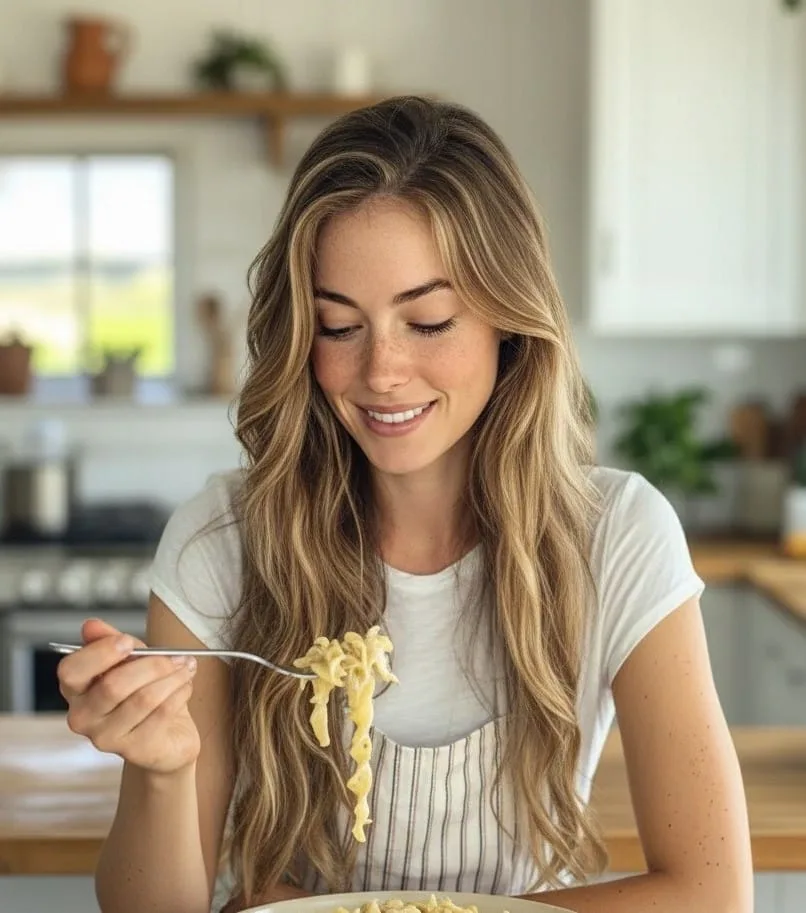
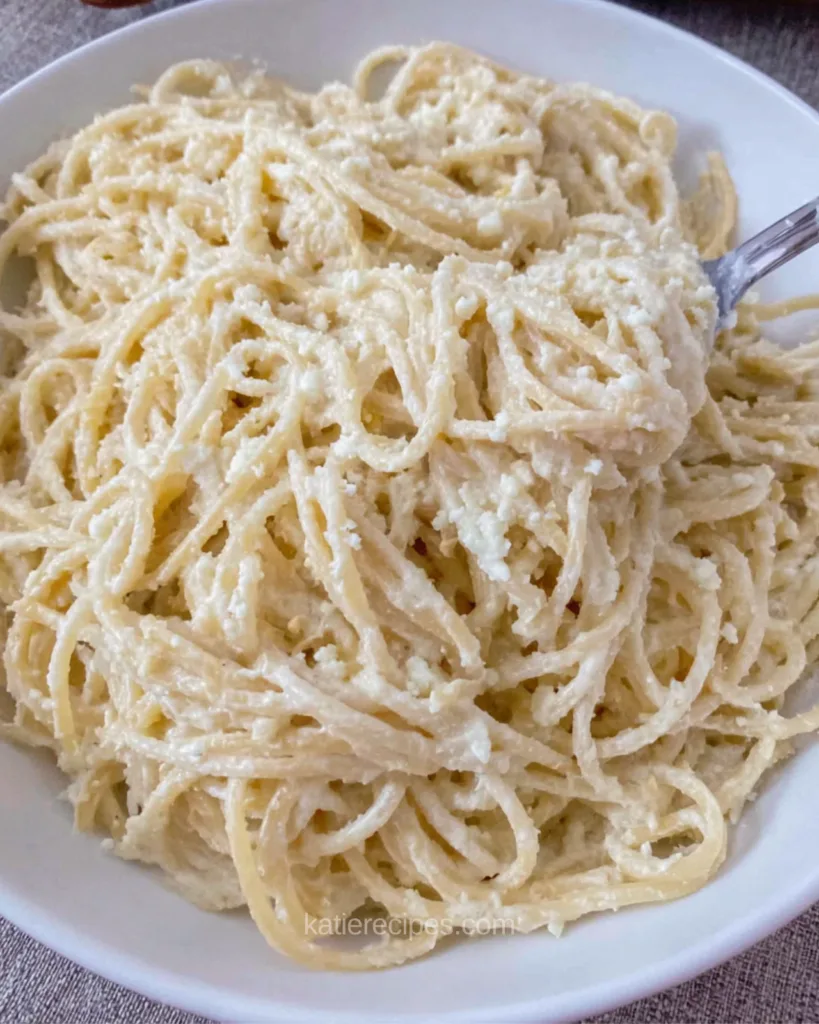
White spaghetti was one of those dishes I didn’t question growing up. It was just there. At birthday parties. Next to arroz rojo. On those random Tuesdays when someone needed dinner to happen fast but still wanted it to feel… comforting.
We called it espagueti blanco, sometimes spaghetti blanco, sometimes just “the white one.” I didn’t really realize until I was older that white Mexican spaghetti isn’t something everyone grew up eating. To me it felt normal — creamy noodles, bay leaf warmth in the background, queso fresco on top, and everybody going back for a little extra.
If you’re expecting Alfredo, this isn’t that. White spaghetti is smoother and gentler, and the bay leaves are the quiet part that makes you pause and think, wait… what is that?
This is the version I make all the time now. It tastes like home and it comes together in about 20 minutes, which is honestly a big reason it keeps showing up.
Table of Contents
Why You’ll Love This White Spaghetti
There’s something very low-stress about this recipe. White spaghetti doesn’t ask much from you.
It’s creamy, yes, but it’s not heavy in a way that knocks you out. It’s also one of those dishes that can sit next to almost anything — grilled chicken, carne asada, beans, or just a salad if that’s what you’ve got.
I love that this white Mexican spaghetti:
- Feels cozy without being intense
- Uses simple ingredients (and still tastes like something)
- Works as a side dish or a main bowl of dinner
- Reheats well if you do it gently
- Has that classic espagueti blanco flavor without extra fuss
And the best part is it doesn’t need a bunch of add-ins to be good. The flavor is kind of… built in. Butter + garlic + crema + bay leaves is a surprisingly solid little team.
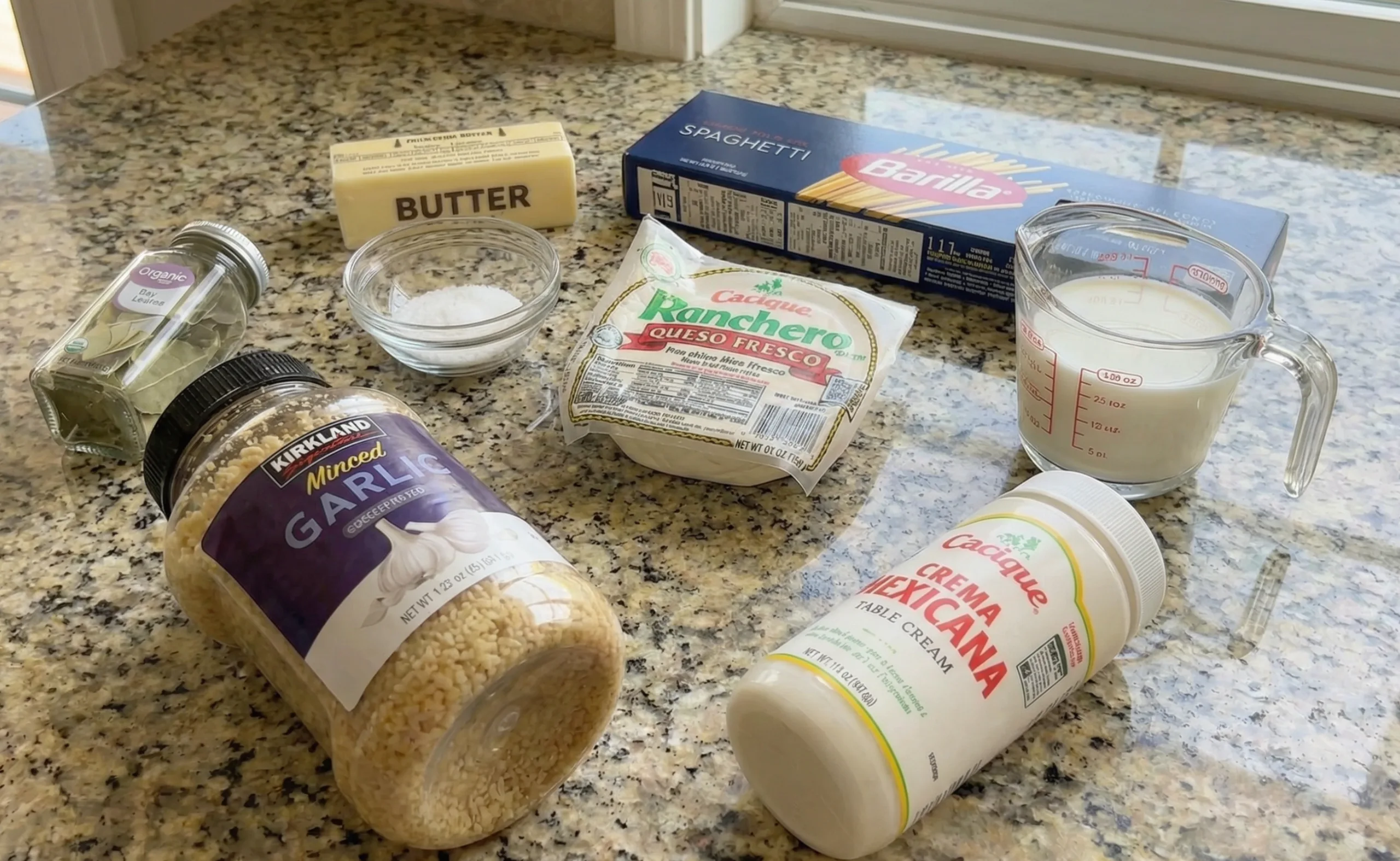
Ingredients You’ll Need
This is one of those recipes where the list looks almost too simple, and then you taste it and you’re like—oh. Okay. I get it.
16 oz spaghetti – Just regular spaghetti. Nothing fancy. This is not the time to overthink noodle shape.
4 tbsp butter – Four tablespoons always looks dramatic written out, but it melts into the sauce and makes everything taste like it belongs together.
1 tbsp garlic, minced – I keep the heat low for this so the garlic doesn’t turn bitter. (Garlic can be a little dramatic if you rush it.)
1½ cups Mexican crema (crema) – This is the whole vibe. It’s smoother and less tangy than sour cream, and it makes the sauce silky instead of sharp.
½ cup milk – Just enough to loosen the sauce so it coats the spaghetti instead of sitting heavy.
1 tsp salt (plus more to taste) – Start here and taste at the end. Queso fresco and different brands of crema can change how salty it needs to be.
6–8 bay leaves – I’m saying 6–8 because bay leaves vary a lot. Some are strong, some are basically sleepy. You’re tasting for it, not blindly obeying a number.
½ cup queso fresco, crumbled – Salty little crumbles that soften into the pasta. It’s not meant to become a full cheese sauce. It’s more like… pockets of flavor.
How to Make This Recipe
Start with a big pot of salted water and cook the spaghetti until it’s just al dente. I always aim slightly under because it softens a bit once it’s tossed in warm sauce.
While the pasta cooks, get a skillet going on medium-low heat. Add the butter and let it melt slowly, then add the minced garlic. Stir it around for about 2–3 minutes until it smells fragrant. You’re not trying to brown it. Just wake it up.
Add the Mexican crema, milk, and salt. Turn the heat down to low. Stir gently until it looks smooth.
Now add the bay leaves and let the sauce simmer softly for a few minutes, stirring often. Not boiling. Just a gentle simmer. You’ll notice the sauce starts to smell warmer and a little more “finished.” That’s the bay leaf infusion happening.
Once you can taste the bay leaf flavor in the sauce (it’s subtle but noticeable), remove the bay leaves with a spoon.
Drain the pasta really well and return it to the pot. Pour the sauce over the spaghetti and toss gently. Add the queso fresco and toss again.
Taste. Adjust salt if needed. Sometimes I add a little extra queso fresco too, depending on how salty the batch tastes.
Serve right away while it’s silky.
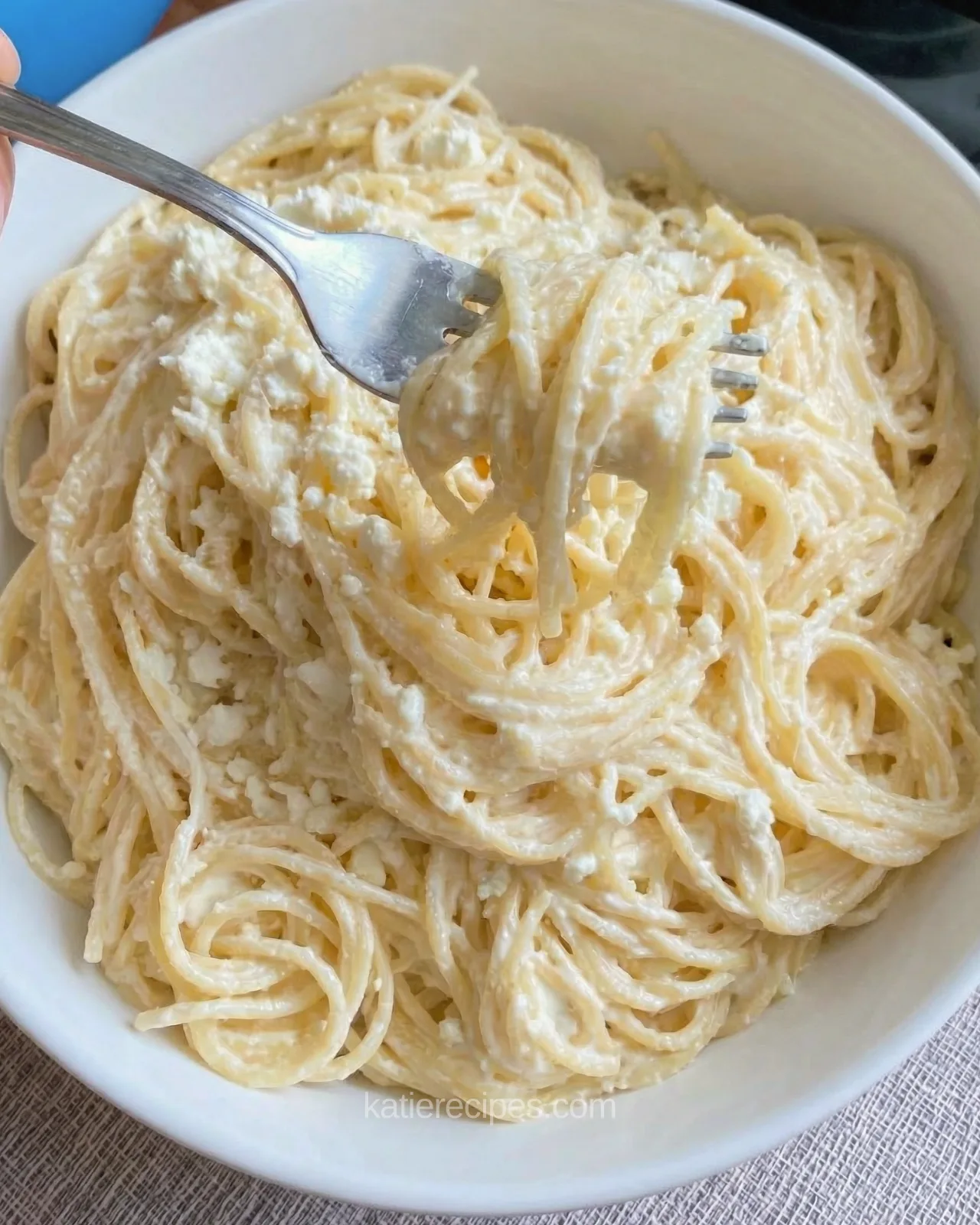
White Spaghetti (Espagueti Blanco) – Creamy Mexican Classic
Ingredients
Equipment
Method
- Bring a large pot of salted water to a boil. Cook the spaghetti until just al dente according to package directions. Before draining, reserve about 1/4 cup pasta water (optional). Drain the pasta well.
- While the pasta cooks, make the sauce: set a large skillet over medium-low heat. Melt the butter, then add the minced garlic. Cook for 2–3 minutes, stirring often, until fragrant (do not brown the garlic).
- Reduce heat to low. Stir in the Mexican crema, milk, and salt until smooth and combined. Keep the heat gentle—avoid boiling to prevent the crema from separating.
- Add 6 bay leaves (up to 8 if your bay leaves are mild). Simmer on low for 3–6 minutes, stirring often, until the sauce thickens slightly and you can taste a warm bay leaf flavor in the background.
- Remove the bay leaves with a spoon. If the sauce looks too thick, stir in a splash of milk or a little reserved pasta water until silky.
- Return the drained spaghetti to the pot (or add it directly to the skillet if it fits). Pour the sauce over the noodles and toss gently to coat.
- Add the crumbled queso fresco and toss again just until mixed. Taste and adjust with more salt or extra queso fresco if desired. Serve immediately while creamy.
Notes
My “Don’t-Break-the-Crema” Mini Guide
This is the part people don’t talk about enough, and it’s also where white spaghetti can go slightly wrong.
- Keep the heat low once the crema goes in. If you boil it hard, it can separate and look grainy.
- If it does start to look broken: take it off the heat and whisk it gently. Then add a small splash of milk and whisk again. It usually comes back.
- Don’t try to “fix it” by turning the heat up. That’s the instinct, but it makes it worse.
- Add queso fresco at the end. It should soften into the pasta, not cook aggressively in the sauce.
Crema is easy. It just wants calm energy.
Bay Leaf Timing: What You’re Actually Looking For
Bay leaves are the whole identity of espagueti blanco, but they’re sneaky about it.
Here’s what happens:
- At first the sauce tastes like butter + cream + garlic. Good, but plain.
- After a few minutes, it tastes warmer, almost like there’s a soft herbal note behind everything.
- That’s what you want.
If you simmer too long, bay leaves can start tasting flat or slightly bitter. If you don’t simmer long enough, you’ll wonder why people make a big deal about this dish.
So I don’t cook it by a strict timer. I simmer and taste. When I can clearly pick up that bay leaf warmth, I pull the leaves and call it done.
Helpful Tips
Drain the spaghetti well. Water thins the sauce fast, and then it feels like it never quite clings the way you want it to.
If the sauce thickens too much (especially if the pasta sits for a few minutes), add a splash of warm milk and toss gently. It loosens right back up.
If you’re using sour cream instead of crema, thin it with milk and keep the heat extra low. Sour cream is more likely to separate.
And honestly… white spaghetti is best right after it’s tossed. It’s still good later, but fresh is when it’s at its silkiest.
Frequently Asked Questions
Is white spaghetti the same as Alfredo?
No. Alfredo is usually heavier and more cheese-forward. White spaghetti (espagueti blanco) is smoother and has that bay leaf flavor in the background. Different vibe.
Why use bay leaves at all?
Because that’s the signature. Without bay leaves, it’s basically just creamy pasta. With them, it tastes like spaghetti blanco.
Can I make white Mexican spaghetti ahead of time?
You can, but it’s best fresh. If you do make it ahead, reheat gently with a splash of milk so it doesn’t dry out.
What can I add to spaghetti blanco without changing it too much?
Roasted poblano strips are really good. Corn is also common. Extra queso fresco works too. I’d keep it simple so it still feels like espagueti blanco.
What if I can’t find Mexican crema?
You can use sour cream thinned with milk. It’ll be tangier and a little thicker, but it’s still tasty. Just keep the heat low.
Storing and Reheating
White spaghetti stores well, but it thickens in the fridge because pasta soaks up sauce like it’s its job.
- Fridge: up to 3 days in an airtight container.
- Best reheat: low heat on the stove with a splash of milk, stirring gently.
- Microwave: works, but do short bursts and stir in between. Add a splash of milk first so it stays creamy.
If it looks thick at first, that’s normal. It loosens up.
Final Thoughts
White spaghetti isn’t flashy. It’s not trying to be. It’s just creamy and comforting in a way that feels very familiar once you’ve had it.
Espagueti blanco has been on Mexican tables for years, quietly holding its place next to louder dishes. And somehow it always gets eaten.
When I make white Mexican spaghetti now, it still feels like something that belongs at a family table — even if it’s just my kitchen and a regular weeknight.
It’s simple. Warm. Steady.
And that’s kind of the whole point.