The first time I made this, I was convinced I’d done something wrong.
You pour a thin batter over a puddle of melted butter and you’re told not to stir. Then you spoon a whole can of pie filling on top of that and you’re told not to stir again. It sits there in the dish looking like three separate mistakes stacked on each other, and you close the oven door mostly out of curiosity.
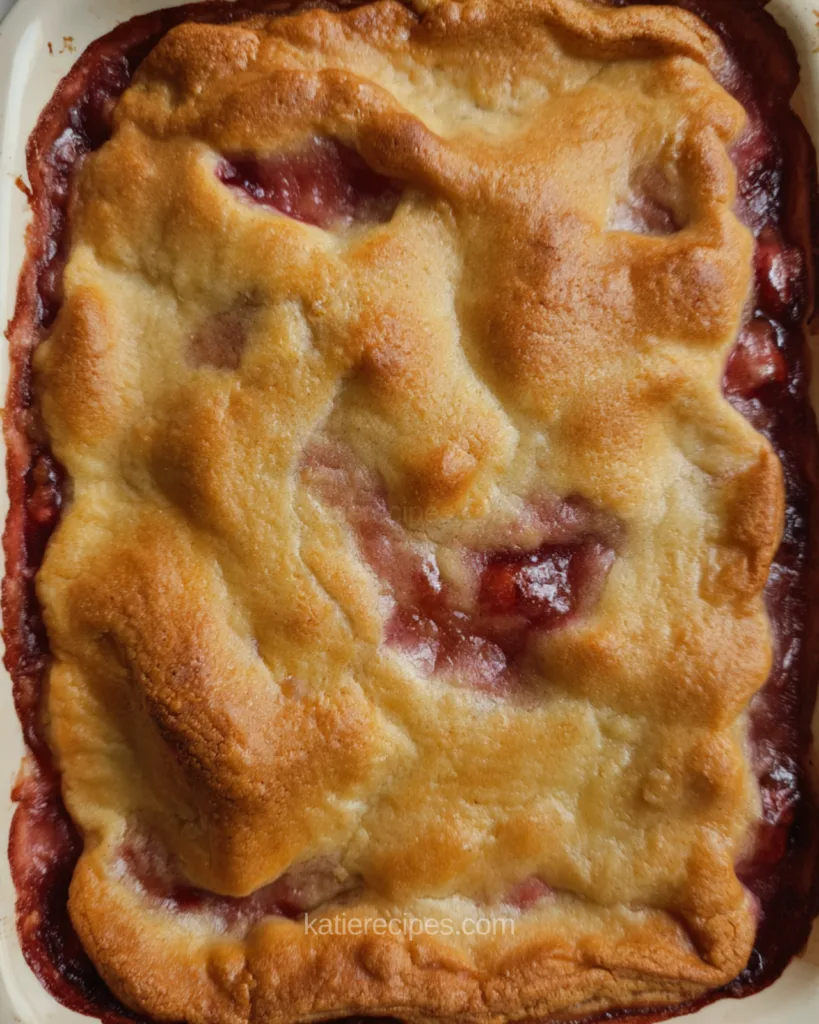
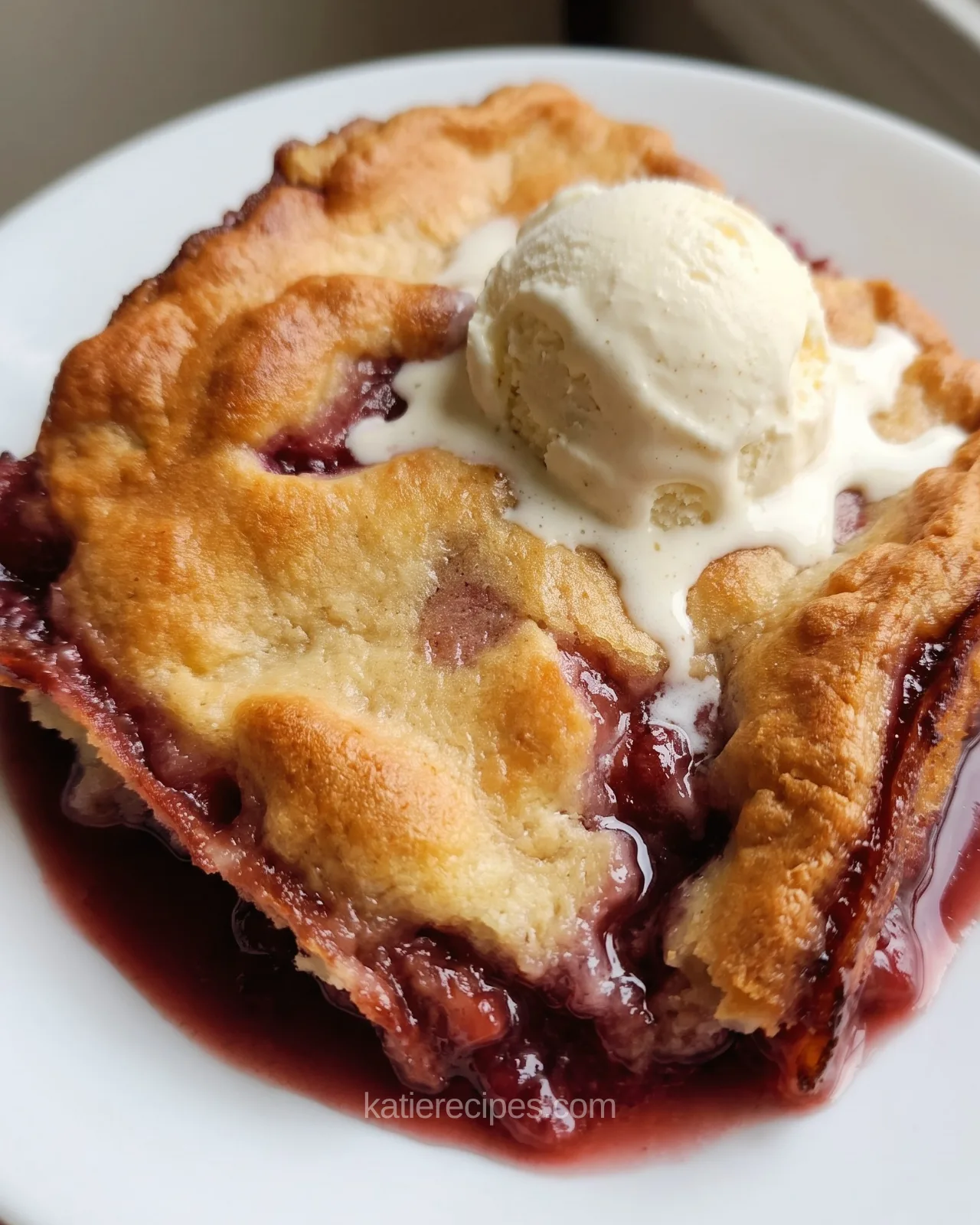
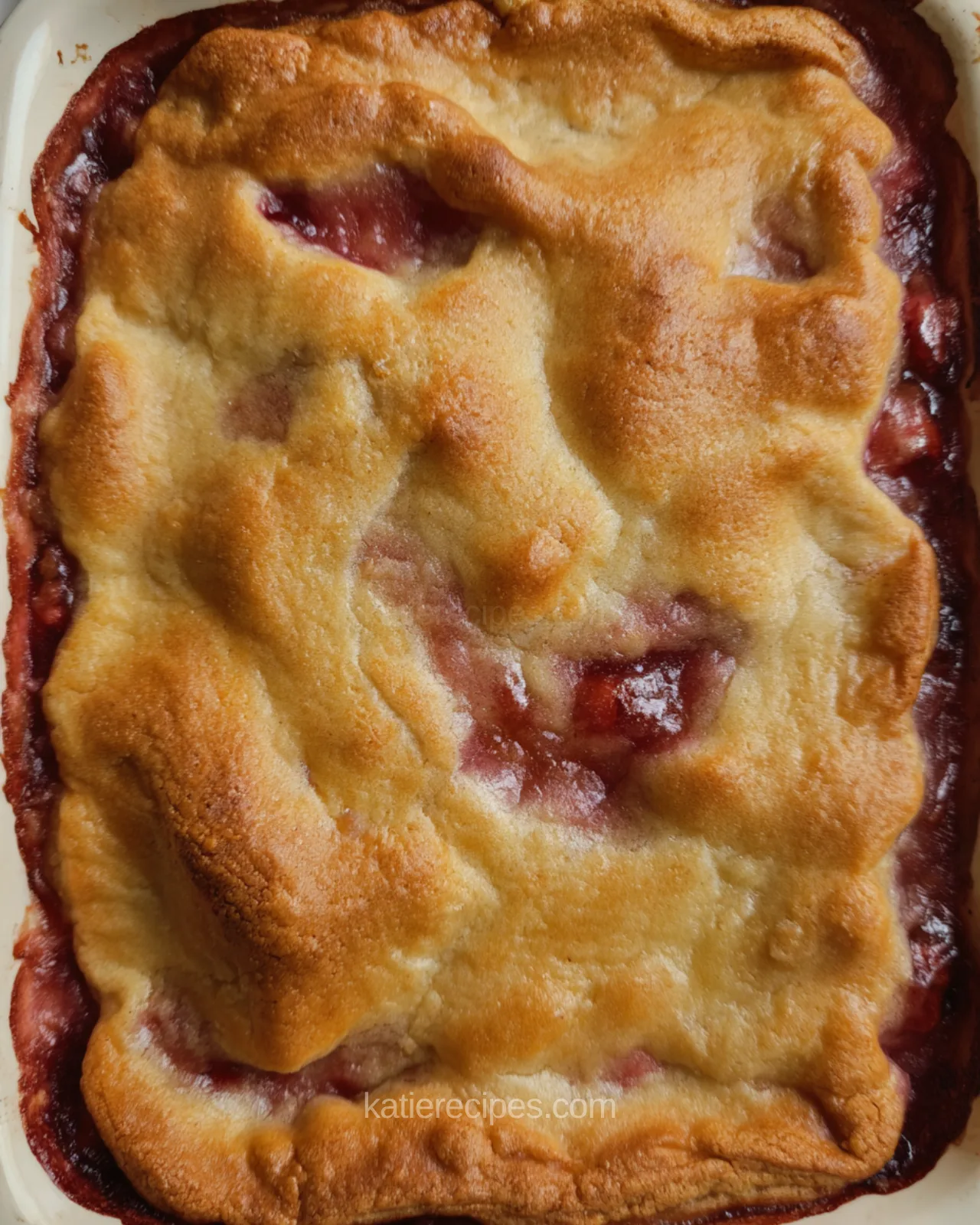
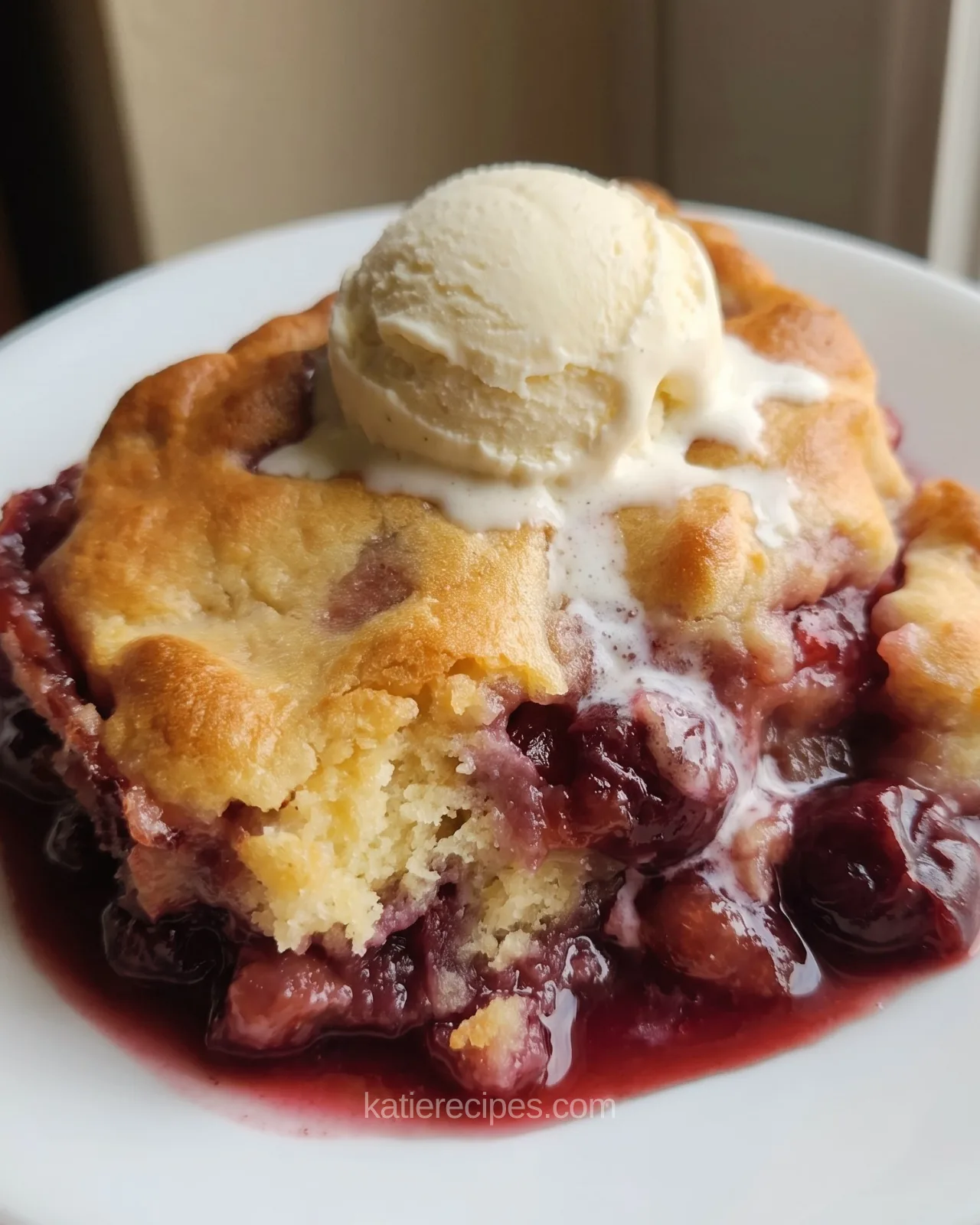
Forty-five minutes later it comes out as a proper dessert. Golden, crackly-edged crust, soft cake underneath, fruit bubbling up through it. Nothing about the assembly suggested that was going to happen.
This is Depression-era baking, and the name tells you why it exists. Five ingredients, all of them cheap, all of them probably already in your kitchen. It’s called Poor Man’s Pie because it was built for kitchens that didn’t have much, and it’s stayed around because it turns out that was never a limitation.
I’ll also flag one thing early, because it trips people up: nearly every version of this recipe online calls for a 12-ounce can of pie filling, and that size doesn’t really exist. More on that below.
Table of Contents
Why You’ll Love This Recipe
- Five ingredients, and four of them are pantry staples
- No mixer, no pastry, no rolling, no chilling
- Ten minutes of actual work before it goes in the oven
- Feeds eight for a couple of dollars
- Works with whatever fruit filling you have or like
It’s also close to impossible to get wrong, as long as you resist the urge to stir. Which is harder than it sounds.
Ingredients You’ll Need
1 stick (½ cup) unsalted butter – Goes in the dish first and melts while the oven heats. It’s not mixed in, and that’s deliberate — it fries the outside of the batter into a crust.
1 cup self-rising flour – Flour, baking powder, and salt already combined. If you don’t have it, use 1 cup all-purpose flour plus 1½ teaspoons baking powder and ¼ teaspoon salt. Don’t skip the salt in that substitution; it’s doing real work against all that sugar.
1 cup granulated sugar – Sweetens the batter, and it’s also what gives you those crisp caramelized edges where the batter meets the butter.
1 cup whole milk – Thins the batter enough to spread and float. Whole milk gives a richer crust, but any milk works.
1 (21 oz) can fruit pie filling – Cherry, apple, peach, or blueberry all work. Twenty-one ounces is the standard can size at every grocery store. If you’ve seen this recipe elsewhere calling for 12 ounces, that’s a typo that got copied around; you’d have to buy two cans and measure to hit it.
How to Make This Recipe
Heat the oven to 350°F. Put the stick of butter in a 9×9-inch or 2-quart baking dish and slide it into the oven while it preheats. By the time the oven’s ready, the butter will have melted into an even layer. Keep an eye on it toward the end — you want it melted, not browned.
While that’s happening, whisk the self-rising flour, sugar, and milk together in a bowl until smooth. It’ll be thin, more like pancake batter than cake batter. That’s correct.
Take the dish out of the oven and pour the batter evenly over the melted butter. Do not stir. The batter will spread out and sit on the butter, and it’ll look wrong. Leave it.
Spoon the pie filling evenly over the batter. Do not stir this either. Just distribute it so it’s spread across the surface rather than piled in the middle.
Bake 45 to 50 minutes. You’re looking for three things: the top should be deep golden brown, the edges should be visibly bubbling, and a toothpick poked into a batter-only spot should come out clean. That last part matters — if you hit a pocket of fruit, the toothpick will come out wet no matter how done the pie is.
Let it rest 15 minutes before serving. Canned pie filling comes out of a hot oven genuinely molten, and the crust firms up as it cools.
Hillbilly Pie (Poor Man’s Pie)
Ingredients
Method
- Heat the oven to 350 degrees F. Place the butter in a 9×9-inch or 2-quart baking dish and set it in the oven to melt while the oven preheats. Watch it toward the end; you want it melted, not browned.
- In a mixing bowl, whisk the self-rising flour, sugar, and milk until smooth. The batter will be thin, closer to pancake batter than cake batter.
- Carefully remove the dish from the oven and pour the batter evenly over the melted butter. Do not stir.
- Spoon the fruit pie filling evenly over the batter, spreading it across the surface rather than piling it in the middle. Do not stir.
- Bake 45-50 minutes, until the top is deep golden brown, the edges are bubbling, and a toothpick inserted into a batter-only spot (not a fruit pocket) comes out clean.
- Let the pie rest 15 minutes before serving. The filling is molten straight from the oven, and the crust firms up as it cools. Serve warm, on its own or with vanilla ice cream.
Notes
My “Don’t Stir It” Mini Guide
Everyone tells you not to stir. Nobody tells you why, which makes it feel like superstition. It isn’t.
What’s actually happening in there
When you pour the batter over the melted butter, the batter is heavier, so it sinks and displaces the butter up around the edges. For the first few minutes, you basically have a layer of batter sitting in a moat of fat.
Then the baking powder activates. The batter starts producing gas and rising, and as it lightens it pushes up through the butter. Meanwhile the butter it’s rising through is doing something closer to frying than baking — that’s what gives you the crisp golden crust on top and around the edges, which you’d never get from a batter that was simply mixed together.
The fruit does the opposite. It’s dense and heavy, so it sinks down as the batter rises past it, ending up suspended through the middle.
Stir it and you get none of this. You get one homogeneous fruit cake. Perfectly edible, and not what you came for.
A few things worth knowing
- The 30-minute bake time floating around is too short. Most versions of this recipe online say 30 minutes, and at that point the top is browning but the center is still batter. Forty-five to fifty gets it through.
- Test in a batter spot, not a fruit spot. The single most common reason people pull this out underbaked is testing through a cherry and reading the wet fruit as raw batter, or the reverse — testing a set edge and assuming the middle matches.
- Watch your pan size. A full 21-ounce can plus the batter fills a 9×9 nicely. In an 8×8 it comes right up to the rim and will boil over. Use the 8×8 if it’s what you have, but put it on a rimmed baking sheet.
- Melted, not browned. If the butter starts browning while the oven preheats, pull it early. Browned butter tastes good, but it’s already partway to burnt by the time the pie is done.
- Rest it. Fifteen minutes. The filling is hot enough to hurt straight out of the oven, and the crust needs a few minutes to set up.
Helpful Tips
Any fruit filling works, and they’re not interchangeable in cook time so much as in sweetness. Cherry and blueberry are tart enough to balance the sugar in the batter. Apple and peach are sweeter, so the whole thing comes out sweeter too.
A pinch of cinnamon or nutmeg in the batter is a nice addition, especially with apple or peach.
Leftovers keep in the fridge for about 3 days. Reheat individual portions for 15 to 20 seconds in the microwave; the crust softens but the flavor holds up.
A cast iron skillet works instead of a baking dish, and gives you a slightly crisper edge. Melt the butter in it on the stovetop rather than in the oven.
Frequently Asked Questions
What size can of pie filling do I actually need?
A standard 21-ounce can. Many versions of this recipe online say 12 ounces, but that isn’t a size pie filling is commonly sold in — Comstock, Duncan Hines, Great Value, and Lucky Leaf all use 21-ounce cans. If you want a lighter fruit layer, use about two-thirds of a can.
Why can’t I stir it?
Because the separation is the recipe. The batter rises up through the melted butter as it bakes, which is what creates the crust, and the fruit sinks down through the batter. Stirring it together gives you a plain fruit cake instead of layers.
Is this the same as a cobbler or a dump cake?
Close, and the names get used loosely. It’s built like a classic butter-swim cobbler, and it’s related to dump cake, though dump cake uses boxed cake mix rather than a batter. Hillbilly Pie and Poor Man’s Pie are two names for the same Depression-era recipe.
Can I use fresh fruit instead of canned filling?
You can, but you’ll need to sweeten and thicken it yourself — canned filling comes pre-thickened with starch. Toss about 4 cups of fresh fruit with ½ cup sugar and 2 tablespoons cornstarch, and expect to add 5 to 10 minutes to the bake.
Can I make it ahead?
It’s best the day it’s baked, while the crust is still crisp. You can bake it a few hours ahead and leave it at room temperature, but the crust softens as it sits.
Final Thoughts
There’s something worth appreciating about a recipe that came out of people not having much and still works this well when you do.
You don’t cream anything. You don’t fold anything. You don’t roll out pastry or blind bake a shell. You pour three things into a dish in the wrong order on purpose, and the oven sorts it out.
Just don’t stir it. That’s the entire skill.