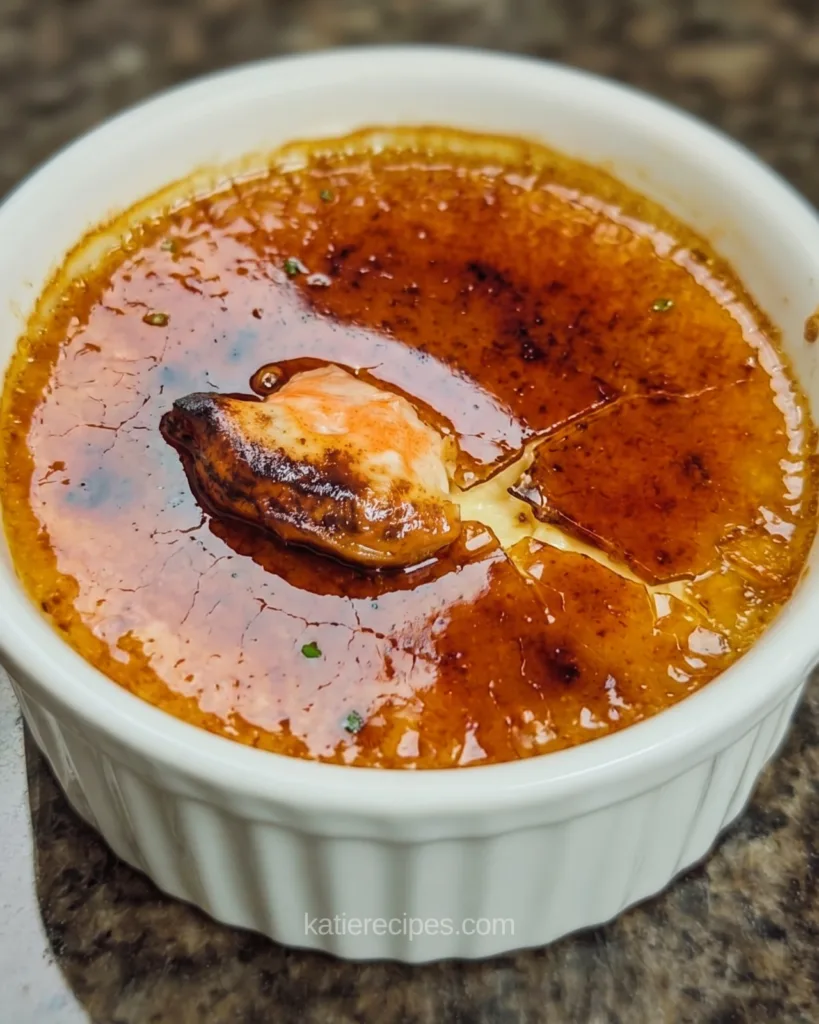
The first time I made this, I torched it about twenty minutes out of the oven and watched the whole top slide sideways.
The sugar melted, sure. But underneath it the custard was still warm and loose, so instead of a crisp lid sitting on something firm, I got caramel sinking into soup. It tasted fine. It looked like an accident.
Turns out the chilling isn’t optional, and it isn’t just about temperature. A custard doesn’t finish setting in the oven — it finishes setting in the fridge, over several hours, while the proteins keep tightening. Torch it before that happens and there’s nothing solid for the crust to sit on.
So this crab brulee recipe has a four-hour wait built into it, which is annoying but is also the entire dish. (It’s also secretly convenient — you make it the day before and torch it while people are sitting down.)
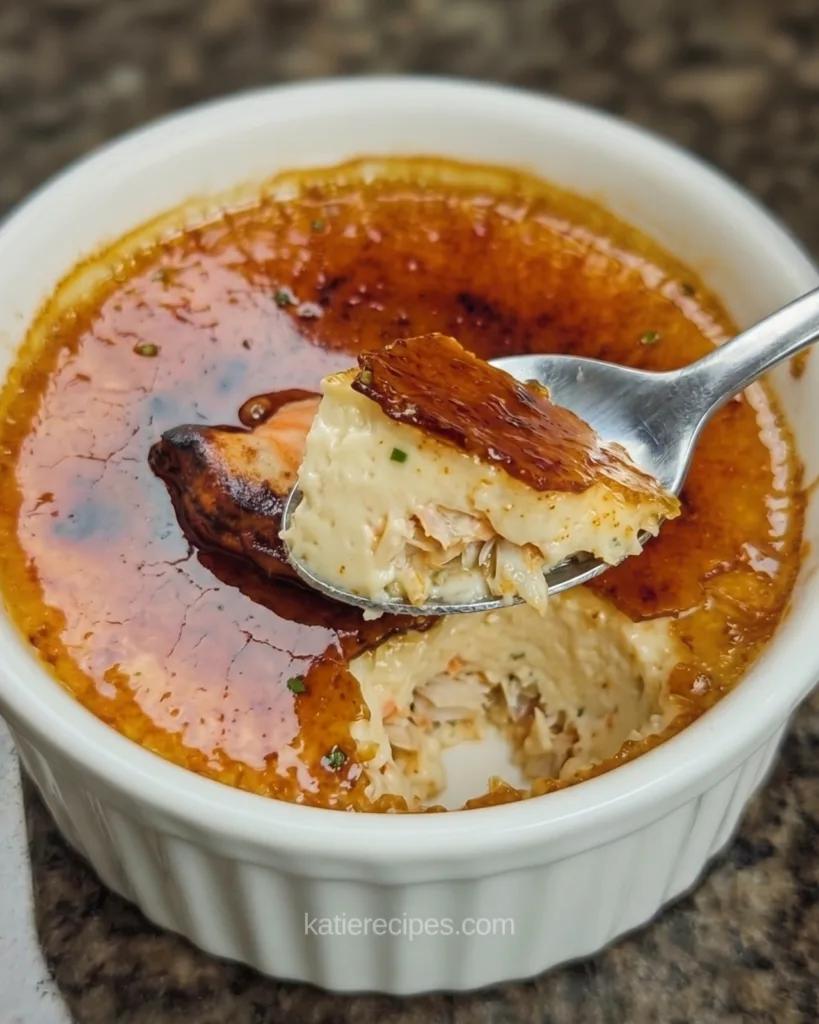
Savory custard, sweet crab, and a sheet of caramel you crack with a spoon.
Table of Contents
Why You’ll Love This Recipe
- It looks like you tried much harder than you did
- Almost all of it happens the day before
- Six ingredients, and three of them are seasoning
- The crack when the spoon goes through is genuinely satisfying
- Nobody has ever been served this before
It’s also a small dish that eats big. Four ramekins go a long way as a starter.
Ingredients You’ll Need
1½ cups heavy cream – The whole body of the custard. Don’t substitute milk or half-and-half; you need the fat for it to set properly and stay silky rather than eggy.
4 large egg yolks – What actually thickens it. Save the whites for something else. Four is the number for this amount of cream — more and it goes dense, fewer and it won’t hold.
8 oz lump crab meat – Lump if you can get it, so you get actual pieces rather than shreds. Fresh is best but good pasteurized crab from the refrigerated case works well. Drain it and pat it dry — this matters more than it sounds and I’ll explain below.
1 tsp Old Bay seasoning – Does a lot of work for one teaspoon. If you don’t have it, use a pinch each of celery salt, paprika, and cayenne.
½ tsp fine sea salt and ¼ tsp white pepper – White pepper rather than black, purely so you don’t get dark specks through a pale custard.
1 tbsp fresh chives, chopped, and 1 tsp lemon zest – Chives for a mild oniony lift, zest for brightness. Zest rather than juice because acid would thin the custard and risk curdling it.
3 tbsp turbinado sugar and ¼ tsp flaky sea salt – For the top. Turbinado’s bigger crystals give you a thicker, crunchier crust than fine sugar. Mixing a little flaky salt in is the thing that stops the crust tasting like dessert on top of a savory dish.
How to Make This Recipe
Heat the oven to 300°F. That’s lower than a lot of recipes say, and it’s on purpose — custard is mostly egg, and egg is easy to overcook. Low and slow gets you silky rather than grainy.
Set four 6-oz ramekins in a deep baking dish and put a kettle on.
Drain the crab properly and pat it dry with paper towels. Any water clinging to it ends up in your custard, and a watery custard never really recovers. Divide it between the ramekins.
Warm the cream in a small saucepan with the Old Bay, fine salt, and white pepper. You want it just steaming, not simmering — when you see the surface start to shimmer, take it off.
Whisk the yolks in a bowl until smooth, then pour the warm cream in slowly, in a thin stream, whisking the whole time. Going slowly here is what keeps the eggs from scrambling. (You can absolutely wreck this in three seconds by dumping it all in at once. Ask me how I know.)
Pour the whole thing through a fine-mesh sieve into a jug. This catches any bits of cooked egg and is the difference between silky and nearly silky. Stir in the chives and lemon zest.
Pour the custard over the crab, filling each ramekin about three-quarters full. Slide the dish into the oven, then pour hot water into the baking dish until it comes halfway up the sides of the ramekins.
Bake 30 to 35 minutes. They’re done when the edges are set but the middle still wobbles when you nudge the dish. It’ll look underdone. It isn’t.
Lift the ramekins out of the water bath straight away — leaving them in means they keep cooking. Cool to room temperature, then cover and refrigerate at least 4 hours. Overnight is better.
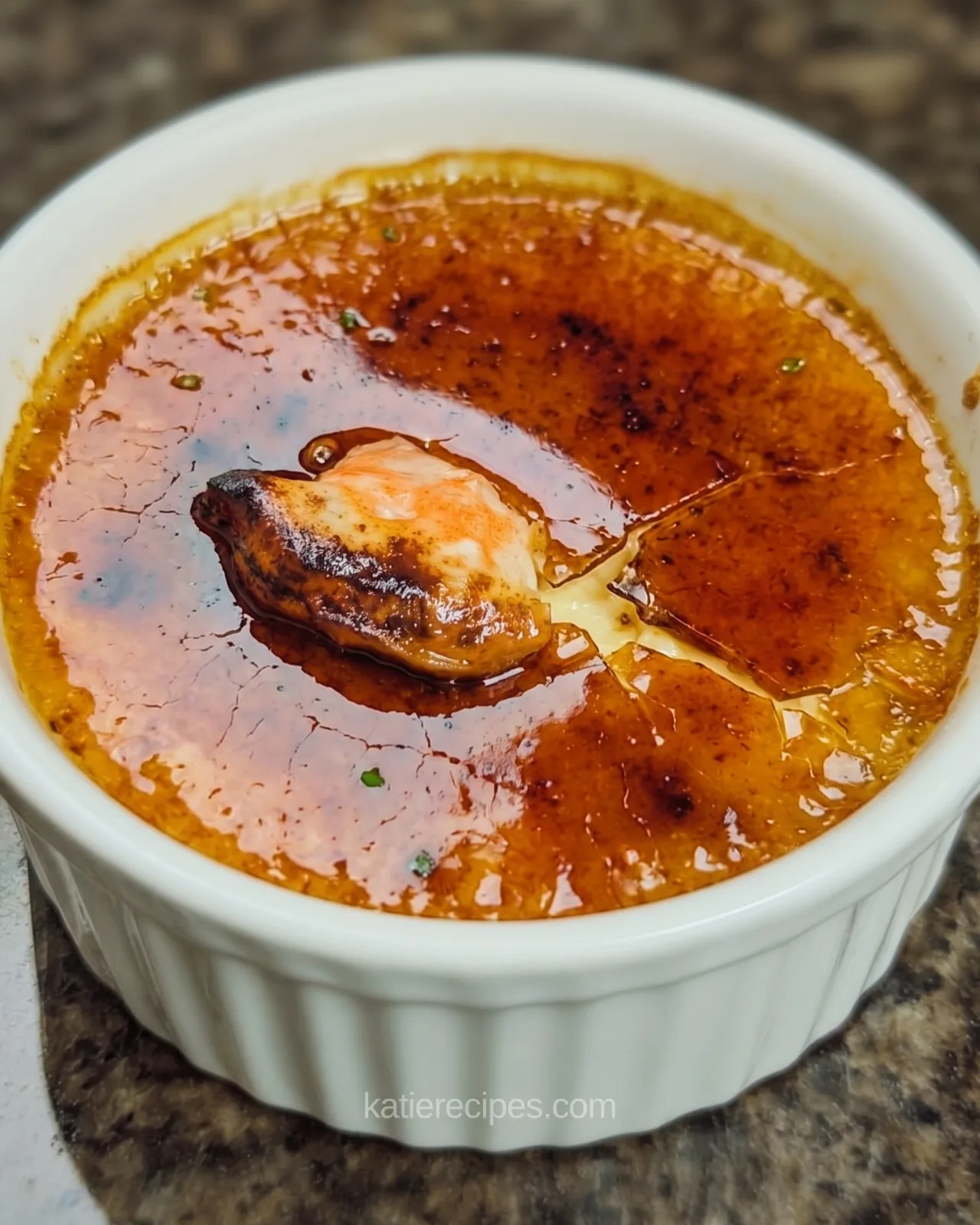
Right before serving, mix the turbinado sugar with the flaky salt, sprinkle a thin even layer over each one, and torch until it goes deep amber. Not pale gold. Amber. Scatter over a few chives and take them to the table within a couple of minutes.
Crab Brulee
Ingredients
Method
- Heat the oven to 300 degrees F. Set four 6-oz ramekins in a deep baking dish and put a kettle on to boil.
- Drain the crab meat well and pat it dry with paper towels. Any water clinging to it ends up in the custard. Divide it evenly between the ramekins.
- Warm the cream in a small saucepan with the Old Bay, fine sea salt, and white pepper until just steaming, not simmering. Remove from the heat as soon as the surface begins to shimmer.
- Whisk the egg yolks in a bowl until smooth, then pour in the warm cream slowly, in a thin stream, whisking constantly. Adding it too fast will scramble the eggs.
- Strain the mixture through a fine-mesh sieve into a jug, then stir in the chives and lemon zest.
- Pour the custard over the crab, filling each ramekin about three-quarters full. Slide the dish into the oven, then pour hot water into the baking dish until it comes halfway up the sides of the ramekins.
- Bake 30-35 minutes, until the edges are set but the center still wobbles when you nudge the dish. It will look underdone; it isn’t.
- Lift the ramekins out of the water bath immediately so they stop cooking. Cool to room temperature, then cover and refrigerate at least 4 hours, or overnight.
- Right before serving, mix the turbinado sugar with the flaky salt. Sprinkle a thin, even layer over each chilled custard and torch until deep amber. Scatter with chives and serve within a couple of minutes.
Notes
My “Cold Custard, Hot Crust” Mini Guide
Everything that makes or breaks this dish comes down to temperature and timing.
The chill is structural, not just cooling
This is the one everybody skips, and it’s the reason home versions come out disappointing.
A baked custard is barely set when it leaves the oven. The proteins keep tightening as it cools, and it takes hours in the fridge before it’s genuinely firm. Torch it warm and the sugar melts into a surface that has no structure — you get caramel sinking in rather than sitting on top.
Four hours is the minimum. Overnight is better and makes it a make-ahead dish, which is honestly the best thing about it.
Sugar goes on at the last possible moment
Custard is wet, and sugar dissolves. Sprinkle it more than about fifteen minutes before you torch and the crystals start absorbing moisture from the surface. Then instead of melting into glass, they turn into syrup and never set hard.
Sugar, torch, serve. In that order, quickly.
Go darker than feels comfortable
Pale gold caramel tastes like sugar. Deep amber tastes like caramel, and it’s noticeably crunchier. Keep the flame moving in small circles and push it further than your nerve suggests. It’s meant to be almost-but-not-quite burnt — that’s what brûlée means.
Dry the crab or the custard weeps
Crab holds a surprising amount of water, especially pasteurized or thawed frozen. That water separates out during baking and pools at the bottom of the ramekin.
Drain it, spread it on paper towels, and press gently. Two minutes of work.
Pull them out of the water bath immediately
Hot water keeps cooking the custard after the oven’s off. Leave them sitting in it and the edges go grainy while you’re not watching.
If the surface cracks or looks curdled, it was too hot — either the oven ran high or the cream was too warm when it hit the yolks. Drop to 300°F next time and let the cream cool for a minute before tempering.
Helpful Tips
Make it the day before. This is genuinely better after a night in the fridge, and it turns a fussy dish into one you can serve without stress.
Lobster or shrimp both substitute well — chop them small so they distribute the way lump crab does. Skip imitation crab; it’s mostly starch and won’t sit properly in a custard.
Serve with something crisp — toasted baguette, or a green salad with a sharp dressing to cut the richness.
Frequently Asked Questions
Do I really have to chill it for four hours?
Yes. The custard isn’t fully set when it comes out of the oven — it firms up in the fridge over several hours. Torch it warm and the caramel sinks into a soft surface instead of sitting on a firm one.
Can I make crab brulee ahead of time?
That’s the ideal way to do it. Bake and chill up to two days ahead, then sugar and torch right before serving. The custard is better for the wait.
Why is my custard watery?
Almost always wet crab. Drain it well and pat it dry with paper towels before it goes in the ramekins. Overbaking can also cause the eggs to weep.
What crab should I use?
Lump crab meat — blue crab, Dungeness, or jumbo lump all work. Fresh is best, but good pasteurized crab from the refrigerated section is perfectly fine. Avoid imitation crab.
Is it served warm or cold?
Cold custard, warm crust. The contrast is the whole point. You torch a chilled ramekin and serve within a couple of minutes, so the top is hot and crisp while the custard underneath is still cool.
Can I use a broiler instead of a torch?
Yes. Position them as close to the element as possible and watch the entire time — 30 seconds to 2 minutes. Rotate the pan so it browns evenly.
Final Thoughts
This is the rare dish that looks difficult and mostly isn’t. You warm cream, whisk it into yolks, pour it over crab, and leave it alone.
The only skill involved is patience — waiting the four hours, and then holding the torch a bit longer than feels sensible.
Cold underneath, hot on top. That’s it.