Ingredients
Method
- Heat the oven to 300 degrees F. Set four 6-oz ramekins in a deep baking dish and put a kettle on to boil.
- Drain the crab meat well and pat it dry with paper towels. Any water clinging to it ends up in the custard. Divide it evenly between the ramekins.
- Warm the cream in a small saucepan with the Old Bay, fine sea salt, and white pepper until just steaming, not simmering. Remove from the heat as soon as the surface begins to shimmer.
- Whisk the egg yolks in a bowl until smooth, then pour in the warm cream slowly, in a thin stream, whisking constantly. Adding it too fast will scramble the eggs.
- Strain the mixture through a fine-mesh sieve into a jug, then stir in the chives and lemon zest.
- Pour the custard over the crab, filling each ramekin about three-quarters full. Slide the dish into the oven, then pour hot water into the baking dish until it comes halfway up the sides of the ramekins.
- Bake 30-35 minutes, until the edges are set but the center still wobbles when you nudge the dish. It will look underdone; it isn't.
- Lift the ramekins out of the water bath immediately so they stop cooking. Cool to room temperature, then cover and refrigerate at least 4 hours, or overnight.
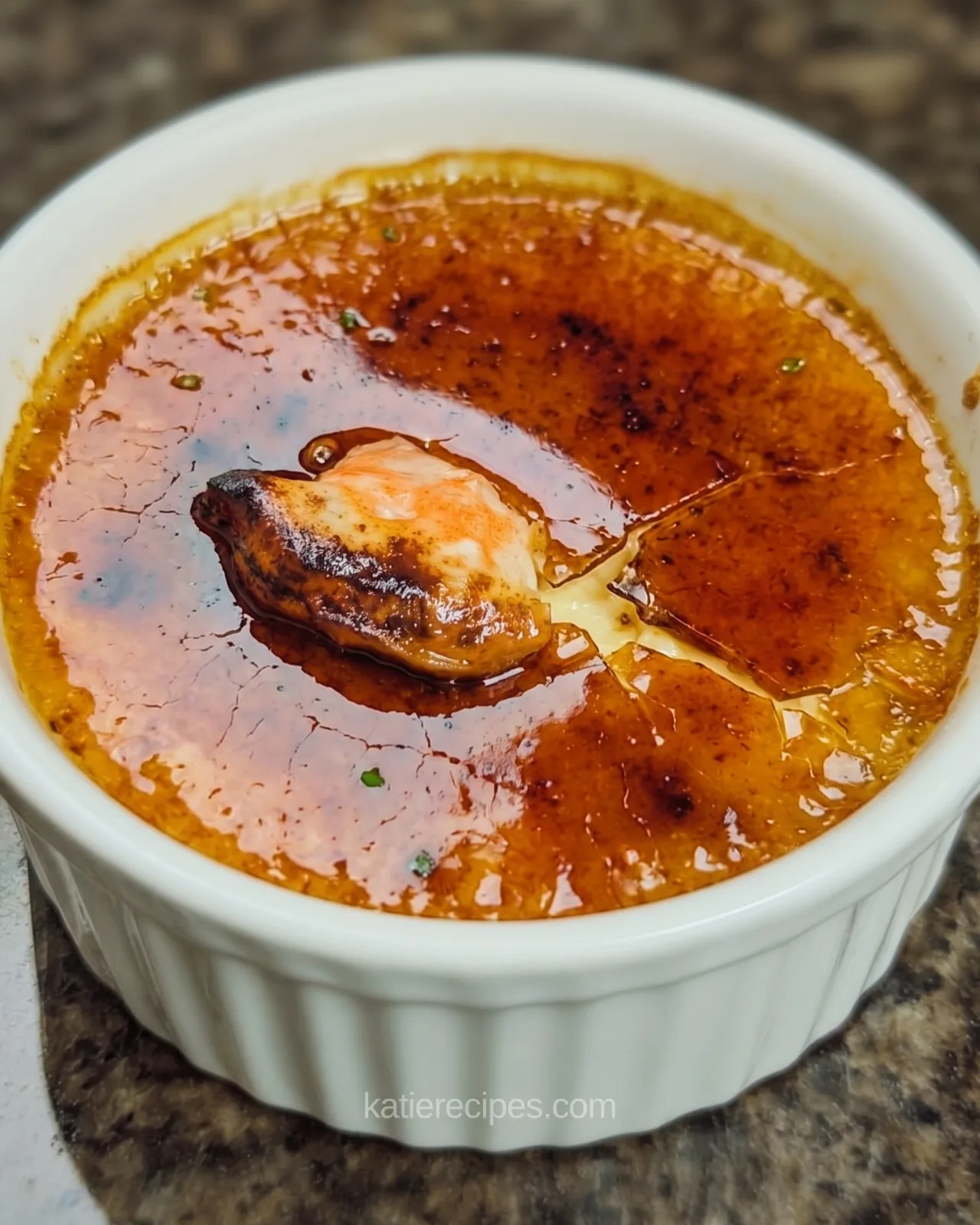
- Right before serving, mix the turbinado sugar with the flaky salt. Sprinkle a thin, even layer over each chilled custard and torch until deep amber. Scatter with chives and serve within a couple of minutes.
Notes
The chill is structural, not just cooling. A baked custard is barely set when it leaves the oven; the proteins keep tightening for hours in the fridge. Torch it warm and the caramel sinks into a soft surface instead of sitting on a firm one. Four hours minimum, overnight is better.
Sugar goes on immediately before torching. Custard is wet and sugar dissolves, so sprinkling it more than about 15 minutes ahead means the crystals absorb moisture and turn to syrup instead of setting into a hard crust.
Torch it darker than feels comfortable. Pale gold tastes like sugar; deep amber tastes like caramel and is noticeably crunchier.
Drain and pat the crab dry. Crab holds a lot of water, especially pasteurized or thawed frozen, and it separates out during baking and pools at the bottom.
Pull the ramekins out of the water bath as soon as they come out of the oven. Hot water keeps cooking the custard and turns the edges grainy.
If the surface cracks or curdles, it was too hot: either the oven ran high or the cream was too warm when it hit the yolks.
No torch? Broil 30 seconds to 2 minutes as close to the element as possible, watching constantly and rotating the pan.
Make ahead: bake and chill up to 2 days in advance, then sugar and torch just before serving.
Lobster or shrimp substitute well, chopped small. Avoid imitation crab, which is mostly starch and won't set properly in custard.