I don’t really like pumpkin cheesecake.
Which is an awkward thing to admit at the top of a pumpkin cheesecake recipe, but there it is. Every version I’d tried came out dense and wet and closer to a chilled pumpkin pie than anything I’d call cheesecake. All that purée has to go somewhere, and where it goes is into the texture.
So I kept the spices and the colour and threw out most of the pumpkin.
This one uses a small amount, cooked down first to concentrate it. You get the warm autumn flavour and the golden tan colour, but the filling stays creamy and light. It tastes of cinnamon and ginger and nutmeg more than it tastes of pumpkin — which is what most people want from an autumn dessert anyway.
Then apples and crumble on top, because a cheesecake with something to chew on is a better cheesecake.
Table of Contents
Why You’ll Love This Recipe
- All the autumn spice without the heaviness of a full pumpkin cheesecake
- The apples stay on top instead of sinking, and there’s a reason for that
- Crumble that’s genuinely crisp rather than soft
- No water bath, and the crumble hides any imperfection anyway
- It’s better made a day ahead, which makes it a good one for hosting
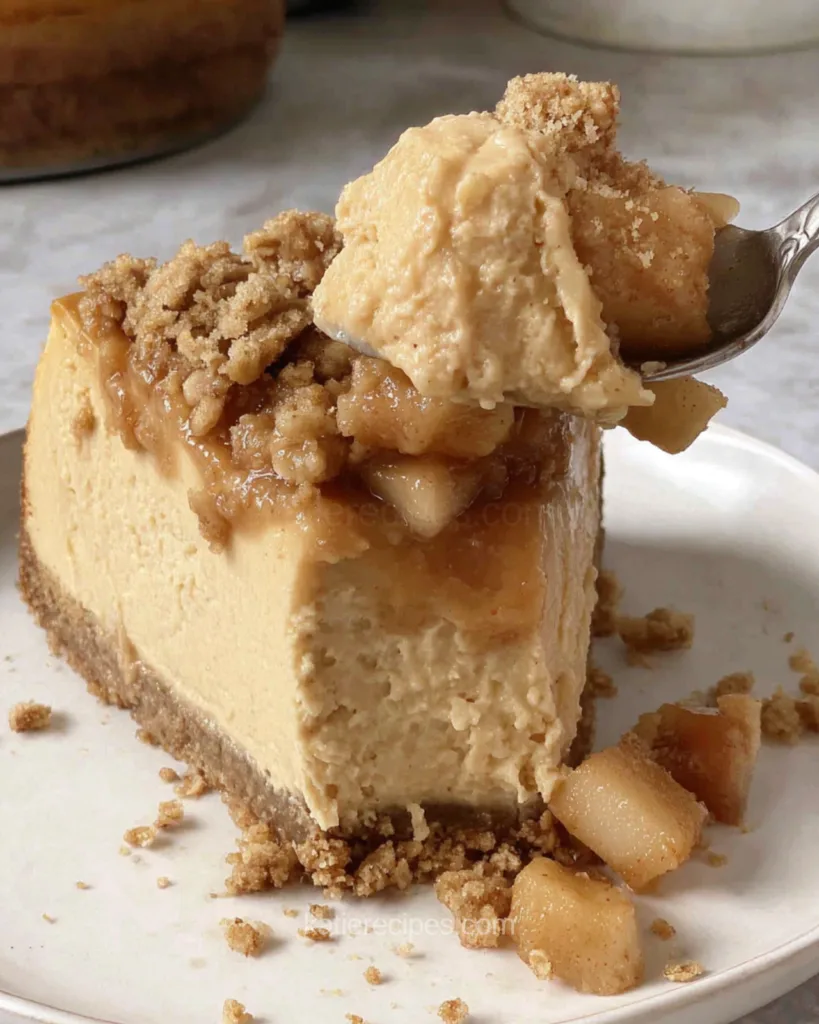
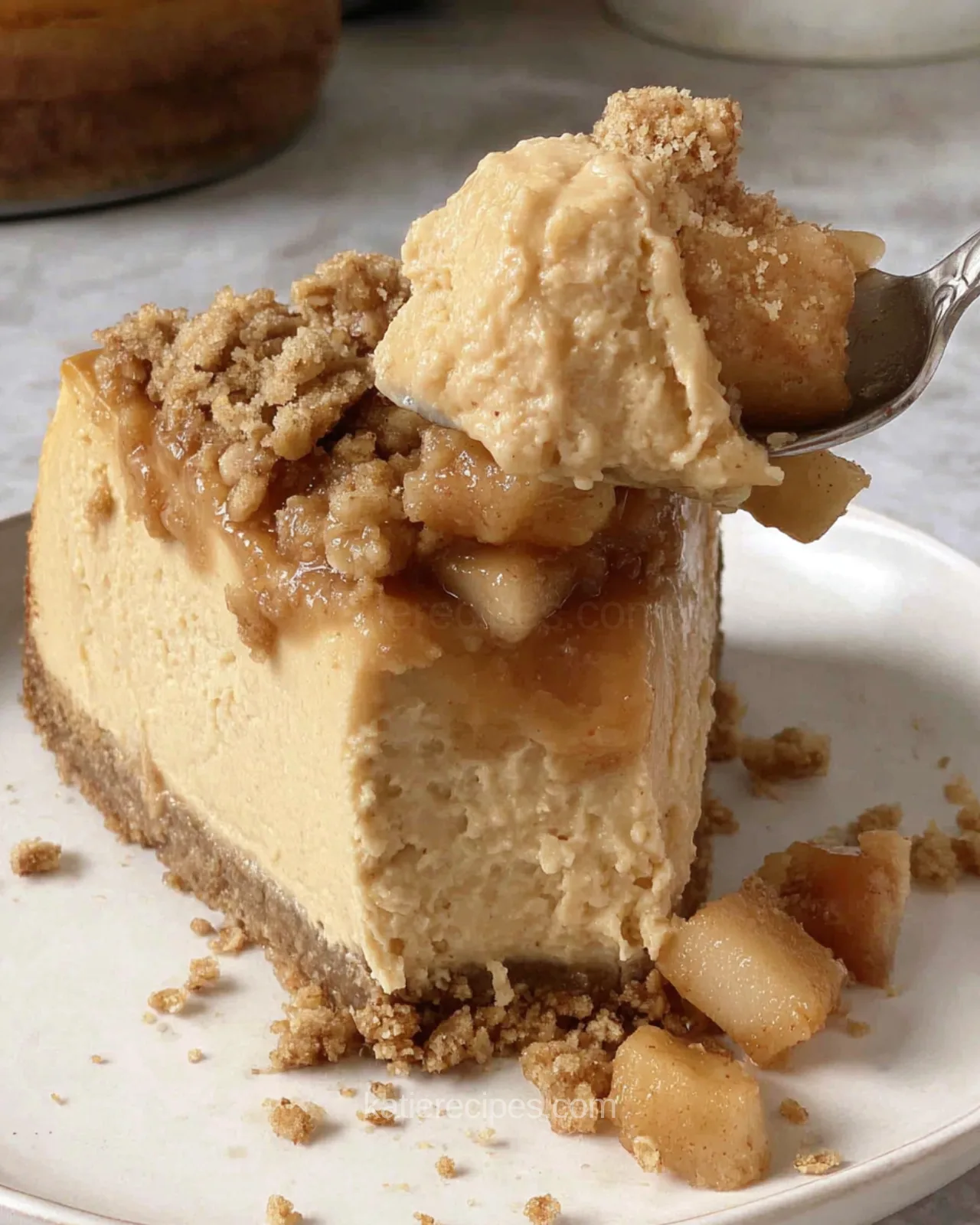
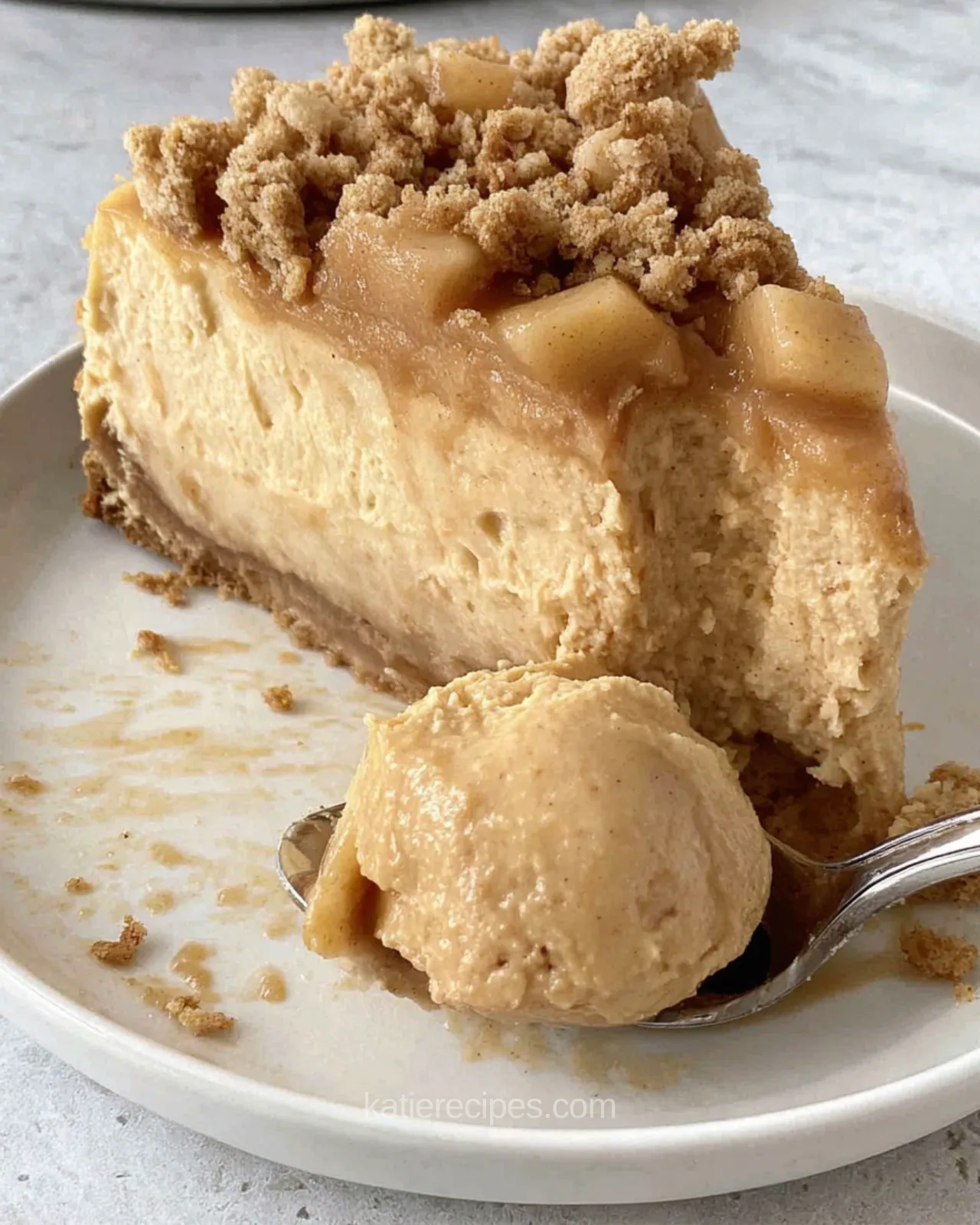
Four textures in a slice: crisp crust, creamy filling, soft apples, craggy crumble.
Ingredients You’ll Need
For the crust
200 g graham cracker crumbs, 40 g light brown sugar, ½ tsp cinnamon, ¼ tsp salt, 100 g melted butter – The brown sugar in the crust matters more than you’d think; it deepens the colour and gives you a proper toasted band at the base rather than a pale sandy one.
For the filling
200 g pumpkin purée – Not pie filling. This gets cooked down to about 130 g before it goes anywhere near the batter, and that step is the reason this works.
560 g full-fat block cream cheese, room temperature – Block, not spreadable. Room temperature genuinely matters; cold cream cheese leaves lumps you’ll never beat out without overworking the batter.
150 g granulated sugar and 60 g light brown sugar – The brown sugar adds a little molasses depth that suits the spices.
100 g sour cream, room temperature – Keeps it creamy and adds a slight tang against all that sweetness.
2 tbsp cornstarch – Insurance. Pumpkin brings water even after reducing, and the cornstarch makes sure the filling sets firm enough to hold apples on top of it.
3 large eggs, room temperature – In one at a time, on the lowest speed.
2 tsp vanilla, 1½ tsp cinnamon, ¾ tsp ginger, ½ tsp nutmeg, ¼ tsp allspice, ½ tsp salt – This is where the flavour actually lives. Don’t cut the salt; it’s what stops the whole thing tasting flatly sweet.
For the apples
2 large tart apples (about 400 g), diced ¼-inch – Diced rather than sliced. Small cubes distribute their weight and hold their shape, where slices tend to slump.
15 g butter, 40 g light brown sugar, ½ tsp cinnamon, 1 tsp lemon juice, 1½ tsp cornstarch – Cooked into a thick, jammy layer. The cornstarch tightens the juices so they don’t run down the side of the slice.
For the crumble
60 g flour, 45 g rolled oats, 50 g light brown sugar, ¼ tsp cinnamon, pinch of salt, 60 g cold butter – Cold butter, rubbed in with your fingertips. Melted butter makes a paste that bakes into a slab; cold butter gives you the irregular clumps you want.
How to Make This Recipe
Reduce the pumpkin first. Put the purée in a small saucepan over medium heat and stir it fairly often for 6 to 8 minutes. It’ll darken a shade and start pulling away from the sides of the pan. You’re aiming for about 130 g left from 200 g. Let it cool completely.
Crust. Heat the oven to 325°F. Mix the graham crumbs, brown sugar, cinnamon, salt, and melted butter until it looks like wet sand. Press it firmly into the base and about an inch up the sides of a parchment-lined 9-inch springform. Bake 10 minutes and cool.
Apples. Melt the butter in a skillet over medium heat, then add the diced apples, brown sugar, cinnamon, and lemon juice. Cook 5 to 6 minutes until just tender — not soft. Sprinkle over the cornstarch and stir for 30 seconds until the juices thicken. Cool completely.
Crumble. Rub the cold cubed butter into the flour, oats, brown sugar, cinnamon, and salt with your fingertips until you have clumps in a range of sizes. Chill it while you do the filling.
Filling. Beat the cream cheese and both sugars on low for about 2 minutes, until completely smooth. Add the sour cream, cooled pumpkin, cornstarch, vanilla, spices, and salt and mix until just combined. Then add the eggs one at a time on the lowest speed your mixer has, stopping the second each one disappears. Air beaten in now is what cracks it later.
First bake — 40 minutes. Pour the batter over the cooled crust and put an empty sheet pan on the rack below to catch any leaks. Bake 40 minutes. The edges will look set and the middle will still be very loose. That’s correct.
Second bake — 25 to 30 minutes. Scatter the cooled apples evenly over the surface, then the crumble on top of them. Back into the oven until the centre has only a slight wobble.
Then cool it slowly. Turn the oven off, prop the door open with a wooden spoon, and leave it in there an hour. Then out to room temperature, then into the fridge for at least 6 hours. Overnight is better.
Run a spatula around the edge before you release the pan.
Apple Crumble Pumpkin Cheesecake
Ingredients
Method
- Cook the pumpkin puree in a small saucepan over medium heat, stirring often, for 6-8 minutes, until it darkens slightly and pulls away from the sides of the pan. You want about 130 g left. Cool completely.
- Heat the oven to 325 degrees F. Mix the graham crumbs, 40 g brown sugar, 1/2 tsp cinnamon, 1/4 tsp salt, and melted butter until it looks like wet sand. Press firmly into the base and 1 inch up the sides of a parchment-lined 9-inch springform pan. Bake 10 minutes, then cool.
- Melt the 15 g butter in a skillet over medium heat. Add the diced apples, 40 g brown sugar, 1/2 tsp cinnamon, and lemon juice. Cook 5-6 minutes until just tender. Sprinkle over the 1 1/2 tsp cornstarch and stir 30 seconds until the juices thicken. Cool completely.
- Rub the cold cubed butter into the flour, oats, 50 g brown sugar, 1/4 tsp cinnamon, and a pinch of salt with your fingertips until you have irregular clumps. Chill until needed.
- Beat the cream cheese with the granulated and brown sugars on low for 2 minutes, until completely smooth. Add the sour cream, cooled reduced pumpkin, 2 tbsp cornstarch, vanilla, spices, and salt. Mix until just combined.
- Add the eggs one at a time on the lowest speed, stopping as soon as each disappears. Beating air into the batter at this stage is what causes cracks later.
- Pour the batter over the cooled crust. Set an empty sheet pan on the rack below to catch any leaks. Bake 40 minutes. The edges will be set and the center will still be very loose; that’s correct.
- Scatter the cooled apples evenly over the surface, then the crumble on top. Return to the oven for 25-30 minutes, until the center has only a slight wobble.
- Turn the oven off, prop the door open with a wooden spoon, and leave the cheesecake inside 1 hour. Then cool to room temperature.
- Refrigerate at least 6 hours, ideally overnight. Run a spatula around the edge before releasing the pan, and warm your knife between slices.
Notes
My “Bake It Twice” Mini Guide
Two things separate this from every other apple crumble cheesecake, and they’re both about timing.
Why the apples don’t sink
Every recipe of this type tells you to lay the apples on gently so they sit on the surface. It doesn’t work, and it can’t — cooked apples are dense and wet, raw cheesecake batter is essentially thick liquid, and gravity gets a vote.
So don’t fight it. Bake the cheesecake alone for 40 minutes first. The surface sets firm enough to hold weight, and then the apples go on. You’ll see it in the slice — a clean band of apple on top rather than fruit scattered halfway down.
Why the crumble stays crisp
Same fix, second benefit. A crumble sitting on wet batter for 70 minutes doesn’t bake, it steams. Adding it for the last 25 to 30 minutes means it goes into a hot oven on a set surface and comes out craggy instead of soft.
Why the pumpkin gets cooked first
Canned pumpkin is around 90% water. Stir it straight into a cheesecake and that water thins the batter and softens the set — which is exactly why full pumpkin cheesecakes come out dense and slightly wet.
Cooking 200 g down to 130 g drives off the water and concentrates what’s left. You get more flavour from less pumpkin, and the batter stays thick enough to behave.
It’s a standard move in pumpkin pie and almost nobody does it for cheesecake.
Why it tastes of spice more than pumpkin
Worth being straight about: this reads as warm spice rather than pumpkin-forward. That’s deliberate. If you want a cheesecake that tastes emphatically of pumpkin, this isn’t it — use 400 g of purée and accept the heavier texture. This is for people who want autumn flavour and a cheesecake that still feels like cheesecake.
And cool it slowly
Oven off, door propped, one hour. Going from a 325°F oven straight into room air makes the surface contract faster than the middle, which is what cracks it. The crumble would hide a crack anyway, but there’s no reason to have one.
Helpful Tips
Use tart apples — Granny Smith, Braeburn, Honeycrisp. Sweet varieties collapse into mush and make the layer too sweet against an already-sweet crumble.
Everything cold has to come to room temperature first: cream cheese, eggs, sour cream. Cold ingredients mean lumps, and beating hard enough to fix lumps is what puts air in the batter.
Make it the day before. Cheesecake genuinely improves overnight, and it turns a long recipe into a relaxed one. Warm your knife under hot water and wipe it between slices for clean cuts.
It keeps 5 days covered in the fridge and freezes for up to 2 months, though the crumble softens — freeze it before adding the crumble if you’re planning ahead.
Frequently Asked Questions
Does it taste strongly of pumpkin?
No, and that’s on purpose. It reads as warm autumn spice — cinnamon, ginger, nutmeg — with pumpkin providing the colour and a little body rather than dominating. If you want a pumpkin-forward cheesecake, this isn’t the recipe.
Why do I have to cook the pumpkin purée first?
Canned pumpkin is roughly 90% water. Reducing it concentrates the flavour and removes the moisture that would otherwise thin your batter and soften the set. It takes 6 to 8 minutes and it’s the difference between creamy and wet.
Why bake it in two stages?
Because apples sink into raw batter no matter how gently you place them. Forty minutes gives the surface time to set, so the apples stay on top. It also keeps the crumble crisp instead of steaming it for over an hour.
Do I need a water bath?
No. Baking at 325°F and cooling slowly in the switched-off oven does the job, and the crumble covers the surface anyway.
Can I use a different crust?
Biscoff or gingersnaps both work and lean more spiced. Graham keeps it lighter, which suits the filling.
Why is my cheesecake cracked?
Usually too much air beaten into the batter after the eggs went in, or cooling too fast. Mix on the lowest speed once the eggs are in, and let it cool in the oven with the door ajar.
Final Thoughts
This started as a complaint. I wanted the autumn dessert without the pumpkin pie texture, and it turned out the fix was mostly about restraint — less purée, cooked down, doing more with less.
Two techniques carry it. Reduce the pumpkin before it goes in, and bake it in two stages so the apples have something solid to sit on.
Everything else is just a cheesecake, and cheesecakes are mostly patience.