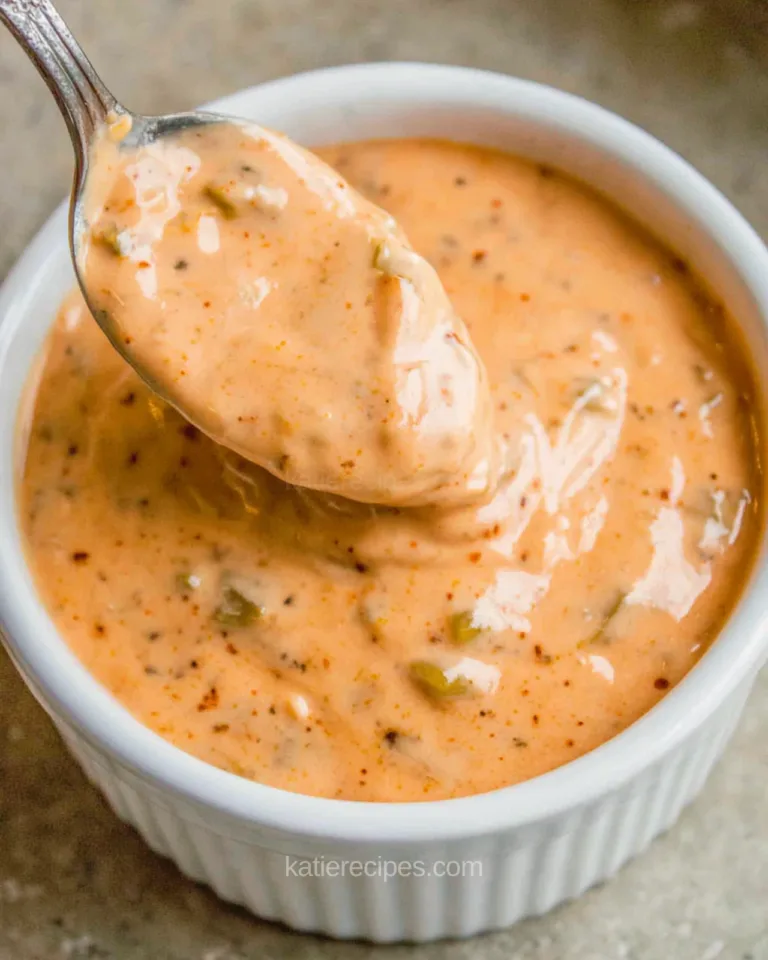

I made this sauce three times before it tasted right.
Same ingredients each time. Same measurements. And the first two batches tasted like someone had stirred ketchup into mayonnaise — which, technically, is what I had done. It was fine. It was not Cane’s.
The third time, I made it the night before because I ran out of time. Pulled it out of the fridge the next day, and it was a completely different sauce. Tangy, peppery, savory, with that specific something that makes you eat more fries than you meant to.
Nothing about the recipe had changed. Only the waiting.
That’s the whole thing with this Cane’s sauce recipe. Five ingredients, two minutes of work, and then a stretch of doing absolutely nothing, which turns out to be the part that matters most.
Table of Contents
Why You’ll Love This Recipe
- Five pantry ingredients, no cooking, no blender
- Costs about a dollar and makes a full cup
- Tastes genuinely close to the drive-thru version
- Good on chicken, fries, burgers, onion rings, and vegetables
- Keeps for a couple of weeks, so one batch covers a lot of dinners
The catch, and I want to be upfront about it: this is not a make-it-and-eat-it recipe. Plan a day ahead and it’s worth every minute.
Ingredients You’ll Need
½ cup mayonnaise – The base, and it carries everything else. Use a full-fat one you’d happily eat plain, because you’re going to taste it clearly. Its expiry date also determines how long your sauce keeps, which I’ll get to below.
¼ cup ketchup – Sweetness and tang, and it’s what turns the sauce that pale orange-pink. Regular ketchup is fine here; nothing fancy needed.
1 tsp Worcestershire sauce – The savory backbone. You won’t taste it as Worcestershire — you’ll just notice the sauce tastes like more than mayo and ketchup. Recipes vary wildly on this one, from a quarter teaspoon up to a full one. I’m firmly in the full-teaspoon camp.
½ tsp garlic powder – Powder, not fresh. Fresh garlic turns sharp and aggressive in a cold sauce, and it never softens the way powder does.
¼ tsp onion powder – A small savory addition. Most copycat versions skip it, but it fills in a gap behind the garlic that I kept noticing.
¾ tsp coarsely cracked black pepper, plus ¼ tsp finely ground – Pepper is the signature flavor here, so it’s worth splitting. The coarse pepper gives you visible flecks and little bursts of bite; the fine pepper spreads through the whole sauce so every spoonful tastes peppery, not just the ones that happen to catch a piece. Same total pepper, better distribution.
¼ tsp fine sea salt – Small amount. The mayo, ketchup, and Worcestershire all bring salt already, so start here and adjust after it’s rested.
How to Make This Recipe
Whisk the mayonnaise and ketchup together first, before anything else goes in. Keep going until the color is completely even and there are no pink streaks left. This takes maybe twenty seconds, and it matters more than it sounds like it should — a uniform base means the spices disperse evenly instead of clumping up against the streaks.
Add the Worcestershire, garlic powder, onion powder, both peppers, and the salt. Whisk again until it’s smooth and the pepper is scattered evenly throughout.
Cover it and put it in the fridge. Eight hours minimum, twenty-four if you can manage it.
Give it a stir before serving, and taste it then rather than now. It’ll be a noticeably different sauce after the rest, and the seasoning you’d add today would be wrong tomorrow.

Cane’s Sauce Recipe
Ingredients
Method
- In a medium bowl, whisk the mayonnaise and ketchup together first, until the color is completely uniform with no pink streaks. A smooth base helps the spices disperse evenly.
- Add the Worcestershire sauce, garlic powder, onion powder, both the coarse and fine black pepper, and the salt. Whisk until smooth and the pepper is evenly scattered throughout.
- Cover and refrigerate for at least 8 hours, or up to 24 hours for the fullest flavor.
- Stir before serving, and taste for seasoning at this point rather than before the rest.
Notes
My “The Fridge Does the Work” Mini Guide
Two questions come up constantly with this sauce, and the answers are more interesting than you’d expect.
Why the rest actually works
Everyone says “let the flavors meld,” which explains nothing. Here’s what’s really happening.
Garlic powder and onion powder are dehydrated. When they hit the sauce they’re still dry particles sitting in it, tasting dusty and flat. They need hours to rehydrate by pulling water out of the mayo and ketchup, and only then do they release their actual flavor. That’s why a fresh batch tastes like ketchup with a chalky edge.
Black pepper works the other way around. Its flavor compounds are oil-soluble, so they need time to migrate into the fat in the mayonnaise and spread out. Fresh, the pepper sits in isolated hot spots. Rested, it’s everywhere.
Eight hours gets you most of the way. Twenty-four gets you all of it.
How long it actually keeps
This is where the internet falls apart. Look around and you’ll find advice ranging from five days to a full month for the exact same ingredients, which isn’t helpful to anyone.
Here’s the rule that resolves it: your sauce lasts as long as your shortest-dated ingredient, which is almost always the mayonnaise.
Nothing in this recipe spoils on its own. Ketchup, Worcestershire, and the dried spices are all shelf-stable and mildly preservative. The mayo is the only perishable thing in the bowl, and mixing it with other things doesn’t extend its life.
So check the jar. If your mayonnaise is good for another three weeks, so is your sauce. If it’s a homemade or preservative-free mayo, you’ve got about a week. That’s the whole answer, and it’s why the advice online varies so much — everyone’s using different mayo.
A few practical notes on that:
- Store it in a sealed container, not an open bowl. Mayo picks up fridge smells fast, and onion is a common victim.
- Never dip directly into the storage container. Crumbs and used utensils are what actually spoil it, well before the mayo would have gone off on its own.
- A little separation is normal. Stir it and carry on. Separation isn’t spoilage.
- Don’t freeze it. Mayonnaise emulsions split when thawed and turn grainy and weepy. There’s no fixing it, and the sauce takes two minutes to make fresh.
Helpful Tips
If it tastes flat after resting, it’s almost always pepper or Worcestershire, not salt. Add a little of either and give it another hour.
If it’s too sweet, that’s your ketchup. Brands vary a lot in sugar. Add a bit more Worcestershire and pepper to push back rather than cutting the ketchup, which would thin the color.
For a spicy version, a pinch of cayenne or a few drops of hot sauce works well. Add it before the rest, not after, so it has time to settle in with everything else.
To thin it for drizzling, add water or a little pickle brine a teaspoon at a time. To thicken it, a spoonful more mayo.
Frequently Asked Questions
What’s the secret ingredient in Cane’s sauce?
There’s no consensus, and it’s worth knowing what people actually claim. Some copycat recipes swear by Madras curry powder, others use creole seasoning, Old Bay, or paprika. Each of those adds something real — curry brings warmth, creole and Old Bay bring celery-salt savoriness, paprika adds color and a touch of smoke. The official recipe is a trade secret, so nobody can prove any of them. This version sticks to the ingredients most copycats agree on, and adds the pepper and rest that actually get you closest.
How long do I really have to let it rest?
Eight hours will get you most of the way there. Twenty-four is better. If you eat it immediately, the garlic powder won’t have rehydrated and the pepper won’t have dispersed, so it’ll taste like seasoned ketchup-mayo rather than Cane’s sauce.
Can I use pre-ground pepper instead of cracking it?
You can, though you’ll lose the little bursts of bite that coarse pepper gives you. If pre-ground is what you have, use the full teaspoon and let the sauce rest the full 24 hours so the flavor has time to spread.
Can I freeze it?
No. Mayonnaise-based sauces separate when thawed and the texture goes grainy. Make a fresh batch instead; it takes two minutes.
What else can I put it on?
It’s genuinely versatile. Chicken tenders and fries are the obvious ones, but it’s excellent on burgers, chicken sandwiches, onion rings, fried pickles, and as a dip for raw vegetables in place of ranch.
Final Thoughts
This is one of those recipes where the work isn’t really the work.
You stir five things in a bowl. That part takes two minutes and you can’t get it wrong. Then you put it in the fridge and forget about it, and the sauce quietly becomes what it’s supposed to be while you’re asleep.
Make it the night before you want it. That’s the only tip that really matters.