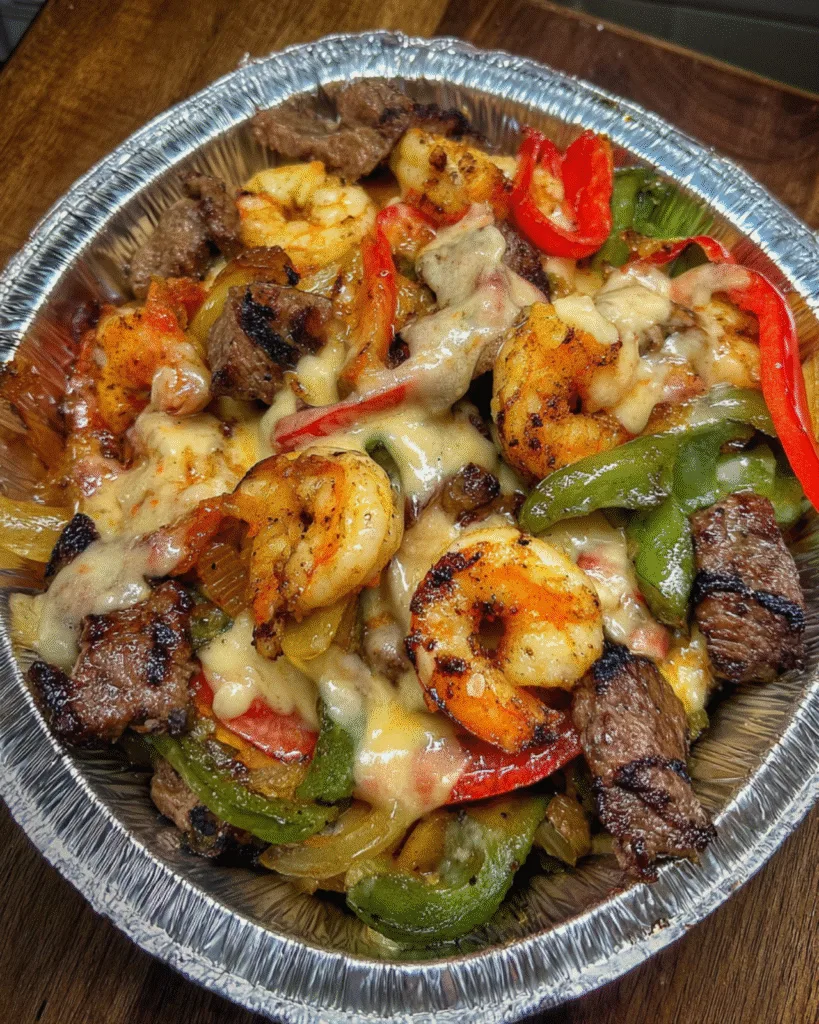
There’s something about this dish that gets people into the kitchen fast. Tender strips of steak, juicy shrimp, charred peppers and onions, and a creamy Cajun-Parmesan sauce poured over everything. It tastes like something from a restaurant, but it comes together in one skillet in under an hour.
I’ve made this more times than I can count. The first time, my family went quiet for the first few bites — and that’s always a good sign in our house. By the time they were asking for seconds, I already knew this was sticking around.
What I love most is how forgiving it is. Some nights I have both steak and shrimp. Other nights just one. It doesn’t really matter. The cheese sauce is what holds it all together, and once you taste it, you’ll get why this keeps showing up at our dinner table.
Table of Contents
Why You’ll Love This Recipe
It’s not just that it tastes good — it’s that it tastes like more effort than it actually is. You’re searing meat, sautéing vegetables, and making a quick cream sauce. That’s it. No fancy technique. No hard-to-find ingredients.
The flavor comes from layering. The steak goes in first on a hot pan, and that brown crust is where most of the flavor lives. The shrimp goes into the same pan right after, picking up everything left behind. Then the peppers and onions soak up whatever the steak and shrimp left in there. By the time the sauce goes on, every single layer has already done its job.
It’s also genuinely flexible. Keto-friendly without the potato base. Easy to dial up the spice or keep it mild. Good for meal prep. The kind of meal that works on a Tuesday and still feels special enough for a Saturday.
Ingredients You’ll Need
Steak:
1 lb ribeye or sirloin, cut into thin strips – Ribeye has more fat so it’s richer. Sirloin is leaner but still great here since the strips are thin and the cook time is short.
1 tsp chili powder – Goes on the steak before it hits the pan, not into the sauce.
Salt, black pepper, garlic powder to taste – Season more than you think you need. The steak is the base of everything.
Drizzle of olive oil – Just enough to coat the pan.
Shrimp:
1 lb large shrimp, peeled and deveined – Large, not medium. Smaller shrimp overcook in seconds and basically disappear into the bowl.
1 tsp olive oil – Toss the shrimp in it before they go in the pan so they get color instead of steaming.
Cajun seasoning or chili powder to taste – I usually go Cajun here since it echoes the sauce.
Vegetables:
1 green bell pepper, sliced – Gives a little bitterness that balances the richness of the sauce.
1 red bell pepper, sliced – Sweeter than green, and the color contrast looks really good in the bowl.
1 medium yellow onion, sliced – Softens and slightly caramelizes in the pan. Don’t skip it.
1 tbsp olive oil – For sautéing the vegetables after the steak and shrimp are done.
Salt, pepper, garlic powder to taste – Season the vegetables separately. Same rule applies.
Cheese Sauce:
1½ cups heavy cream – This is the base. Don’t sub with half-and-half — it won’t thicken the same way.
½ cup freshly grated Parmesan – Fresh from a block, not the pre-shredded bag. The difference in the sauce is noticeable, I promise.
1 tsp garlic powder – Adds depth without being sharp like raw garlic would be in a cream sauce.
½ tsp Cajun seasoning – This is what gives the sauce its personality. Taste and adjust at the end.
½ tsp Italian seasoning – A small amount, just enough to round out the flavor.
Salt and pepper to taste – Taste before it goes on everything. Last chance to fix it.
Optional Base:
1 large russet potato per serving – Baked. If you want the full loaded bowl version. Skip it and it’s a lighter meal, still just as good.
How to Make This Skillet Bowl
Start with the steak. Season your strips with chili powder, salt, pepper, and garlic powder. Get your cast iron skillet hot over medium-high — we’re talking a couple of minutes, until you can see a little smoke. Add the steak and leave it alone. About a minute per side for thin strips. You want a brown crust on the outside, still juicy inside. Don’t overcrowd the pan or it’ll steam instead of sear — do it in two batches if you need to. Pull the steak out just before your target temp. It keeps cooking on the plate.
Keep the skillet on for the shrimp. Add a little more oil if it looks dry. Season the shrimp and lay them flat — they need contact with the hot pan to get that golden color. Two to three minutes per side. When they curl into a C shape and turn pink-orange all the way through, they’re done. An O shape means overcooked. It happens fast, so don’t walk away. Pull them out and set them with the steak.
Now for the vegetables. Add a tablespoon of olive oil to the same skillet. Peppers and onions go in, seasoned. Let them cook for six to seven minutes, stirring here and there, until they soften and pick up a little char on the edges. Tender with some bite still left — not mushy.
For the cheese sauce, use a small saucepan over medium heat. Warm the heavy cream until it just starts to bubble — gentle bubbling, not a rolling boil. Add the Parmesan, garlic powder, Cajun seasoning, Italian seasoning, salt, and pepper. Stir for two to three minutes until it pulls together into a smooth, pourable sauce. Taste it before you pour. It should feel a little punchy on its own. It settles down once it hits everything else.
To assemble: vegetables first, then steak, then shrimp, then the sauce poured over the whole thing. If you’re doing the potato version, bake a large russet at 450°F for about an hour and fifteen minutes, cut it open, and fluff the inside with a fork. Pile everything on top.
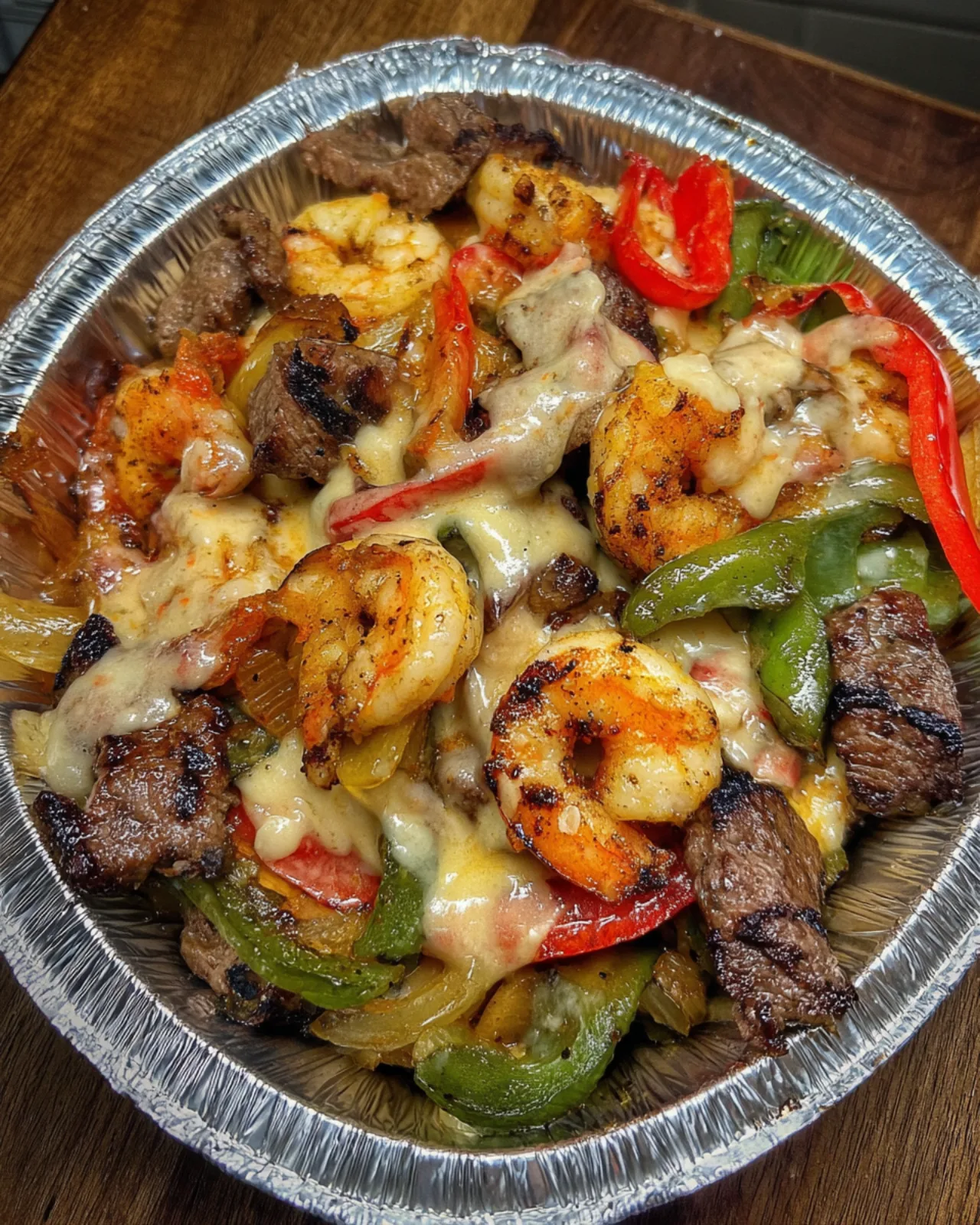
Cheesy Steak & Shrimp Skillet Bowl
Ingredients
Equipment
Method
- Sear the Steak: Season steak strips with chili powder, salt, pepper, and garlic powder. Heat a cast iron skillet over medium-high heat with a drizzle of olive oil until you see a little smoke. Add the steak in a single layer — do it in two batches if needed. Sear for about 1 minute per side until browned on the outside but still juicy inside. Remove and set aside.
- Cook the Shrimp: Keep the skillet on the heat. Add a little more oil if it looks dry. Toss shrimp in olive oil and Cajun seasoning, then lay them flat in the pan. Cook for 2–3 minutes per side until they curl into a C shape and turn pink-orange all the way through. Remove and set aside with the steak.
- Sauté the Vegetables: Add 1 tablespoon of olive oil to the same skillet. Add the sliced bell peppers and onion, season with garlic powder, salt, and pepper. Cook for 6–7 minutes, stirring occasionally, until they soften and pick up a little char on the edges. They should be tender with some bite — not mushy.
- Make the Cheese Sauce: In a small saucepan over medium heat, warm the heavy cream until it just starts to gently bubble — don’t let it boil hard. Add the freshly grated Parmesan, garlic powder, Cajun seasoning, Italian seasoning, salt, and pepper. Stir for 2–3 minutes until the sauce is smooth and creamy. Taste and adjust seasoning before pouring.
- Assemble: In a serving bowl or tray, layer the sautéed vegetables first, then top with the steak strips and shrimp. Pour the cheese sauce generously over everything and serve immediately.
- Optional Potato Base: Bake large russet potatoes at 450°F (230°C) for 1 hour and 15 minutes, seasoned with oil, salt, and pepper. Cut open and gently fluff the inside with a fork. Layer the steak, shrimp, vegetables, and cheese sauce directly on top.
Notes
My “Don’t-Ruin-the-Sauce” Mini Guide
This sauce is easy. But there are a few ways it can go sideways, and I’ve hit all of them.
- Don’t rush the cream. Medium heat, not high. If it boils hard before the Parmesan goes in, it can separate and turn greasy instead of creamy. Gentle bubbling only.
- Use freshly grated Parmesan. Pre-shredded has anti-caking powder in it. It doesn’t melt — it clumps. One extra step, big difference in the final sauce.
- If the sauce breaks, don’t panic. Take it off the heat, add a small splash of cream, and stir slowly. It usually comes back together. Going hotter will not fix it — it makes it worse.
- The sauce thickens fast once it’s off the heat. Pour it right when it’s done. If it gets too thick before you’re ready, a splash of warm cream and a quick stir loosens it right up.
- Taste before you pour. If it tastes flat before it goes on, it’ll taste flat after. The steak and vegetables won’t save an underseasoned sauce.
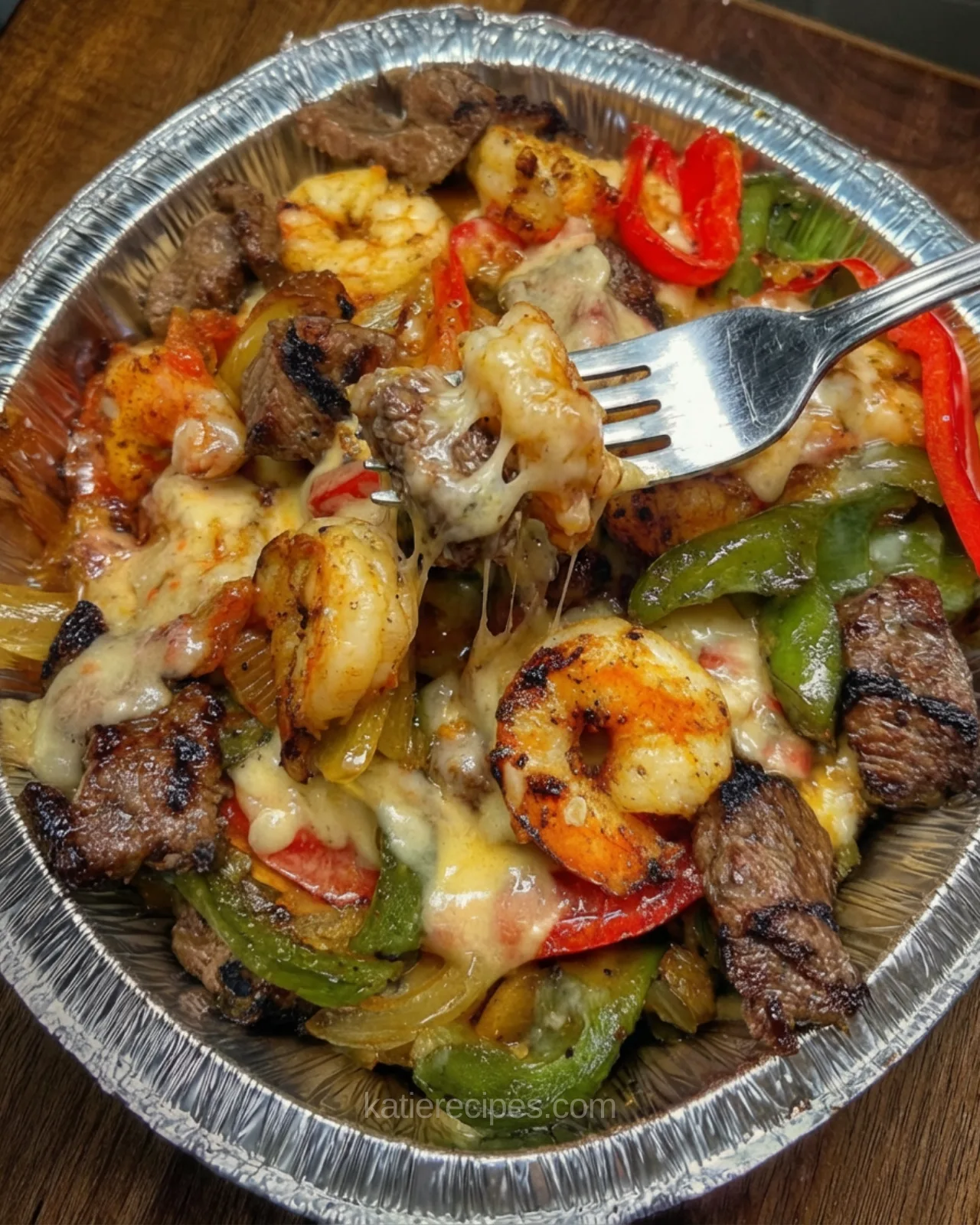
Helpful Tips
Slice the steak thin, against the grain. Thinner strips cook faster and cutting against the grain shortens the muscle fibers so it doesn’t feel chewy.
Get the pan properly hot before the steak goes in. A lukewarm pan gives you gray, sad meat. A hot pan gives you a crust.
Watch the shrimp. The moment they curl into a C, they’re done. Another thirty seconds and they go rubbery. It happens faster than you think.
Season every layer separately. Season the steak. Season the shrimp. Season the vegetables. Season the sauce. Each part should taste good on its own before you put it all together. That’s really the whole secret here.
For the potato version: Don’t skip the fluffing step. You want the inside loose and light so the sauce and toppings can sink in a little.
If you want more heat: Double the Cajun in the sauce and add a pinch of cayenne. Dice a jalapeño into the vegetables if you want real kick.
Want to mix up the cheese? Parmesan is what I use and it works great, but cheddar gives you a sharper flavor and Monterey Jack melts even smoother. All three are good options depending on what you have.
Add mushrooms if you have them. Cremini or baby bellas cooked in with the peppers and onions add a lot. Something about mushrooms and Cajun seasoning is really good together.
Skip the potato and serve it over rice. White or brown, both work. A little lighter than the baked potato version but just as satisfying. Cauliflower rice works too if you’re keeping it low-carb.
For dairy-free: Full-fat coconut milk instead of heavy cream, and a dairy-free Parmesan alternative. The sauce comes out a little thinner and slightly sweeter, but it holds together fine.
What to serve on the side: This bowl is a full meal on its own, but if you want something alongside it — garlic bread is great for getting the last of the cheese sauce out of the bowl, a simple green salad cuts through the richness nicely, and cornbread works really well if you want to lean into the comfort food angle.
Frequently Asked Questions
Do I have to use both steak and shrimp?
Nope. Just steak works. Just shrimp works. The cheese sauce and vegetables are good enough to carry either on their own.
What cut of steak is best?
Ribeye has the most flavor because of the fat marbling. Sirloin is leaner and slightly firmer — still great here because the strips are thin and the cook time is short. Skip tougher cuts like chuck. They need low-and-slow heat, not a quick sear, and they’ll come out chewy.
Can I use frozen shrimp?
Yes, just thaw them fully and pat them dry before cooking. Wet shrimp steam instead of sear, which means no golden color and a lot less flavor.
Can I make the cheese sauce ahead of time?
Yes. Let it cool, store it in the fridge for up to three days, and reheat on low with a splash of cream. Stir constantly and it comes back together. Don’t rush the reheat.
How do I store leftovers?
Store everything separately — steak, shrimp, vegetables, and sauce each in their own container. They all last about three days in the fridge. Mixed together, the shrimp gets rubbery when you reheat it. Warm the vegetables and steak in a skillet over medium-low. The shrimp goes in last and only needs about sixty to ninety seconds.
Is the potato base necessary?
Not at all. It just makes the bowl more filling. Without it, the dish is lighter — closer to a stir-fry bowl than a loaded baked potato situation. Both versions are good.
A Simple Bowl That Feels Special
This cheesy steak & shrimp skillet bowl is one of those meals that doesn’t ask much of you but delivers every time. The steak, the shrimp, the vegetables, and that creamy sauce just work together in a way that’s hard to explain until you’ve had it. My family has asked for it again and again, and I never get tired of making it.
If you try it, I think you’ll find a spot for it in your regular rotation too. It’s warm, it’s filling, and it’s simple enough for any night of the week. Serve it with a piece of garlic bread and you’ve got a dinner that feels like a lot more effort than it actually was. Those are my favorite kinds of meals.