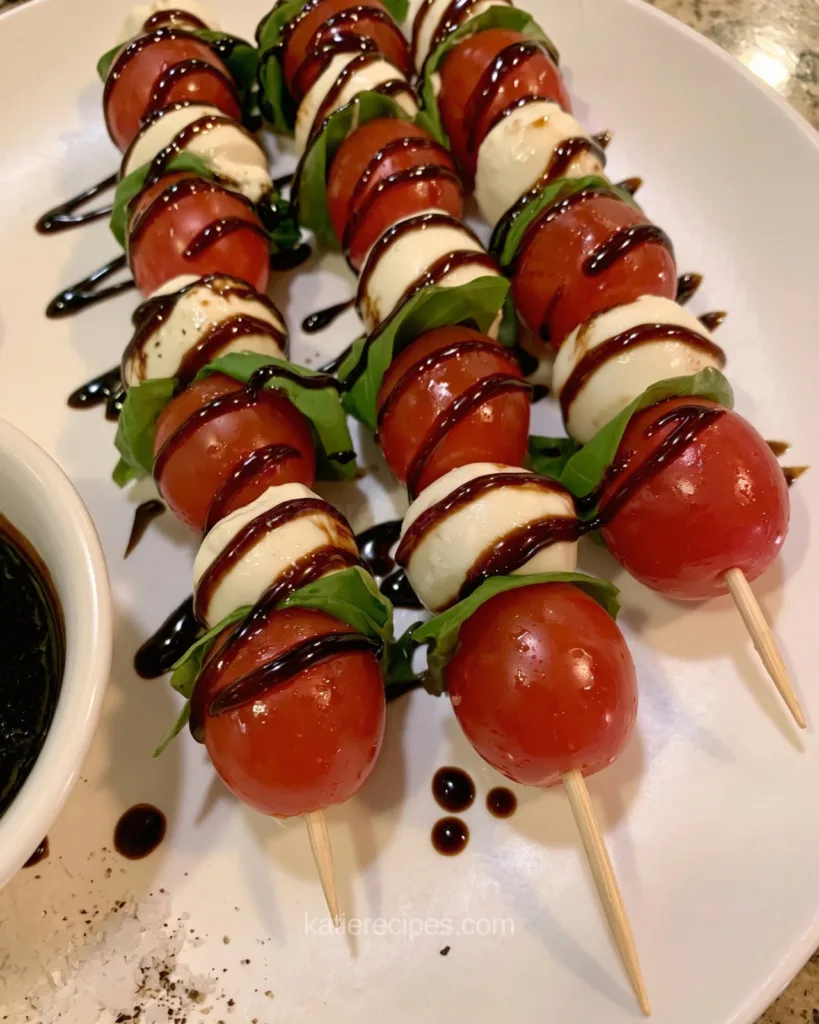
Caprese just means “of Capri,” and the red, white and green of tomato, mozzarella and basil is the Italian flag on a plate. Put that salad on a skewer and it’s easy to pass around. It also picks up the one problem a salad never had: a platter that slowly turns watery.
These caprese skewers with balsamic glaze are built around that problem. Dry ingredients, a glaze that has cooled all the way, and salt and drizzle only at the very end. None of it is hard. It’s the order that matters.
The glaze is homemade and takes about 15 minutes on the stove. You can buy one, and I’ll say how to pick a good bottle. But when you make it yourself, you control how thick it is, and that’s the difference between a glaze that coats a tomato and one that runs off onto the plate.
The whole thing takes about 35 minutes, and most of that is the glaze reducing while you get everything else ready.
Table of Contents
Why You’ll Love This Recipe
There’s no oven and nothing to keep warm. You assemble the skewers while the glaze cools, and then the platter just sits in the fridge until you need it.
Each skewer holds three bites of tomato, basil and mozzarella, so it’s easy to pick up with one hand. A tray of six looks like more than it is.
And it’s friendly to a busy day. The glaze can be made the day before, and the skewers hold for a few hours, so the only last-minute job is the drizzle.
Ingredients You’ll Need
Makes 6 long skewers, or 18 bites.
For the balsamic glaze
1 cup balsamic vinegar – It cooks down to about half a cup. A mid-priced bottle is fine, since you’re concentrating it anyway.
For the skewers
1 pint cherry or grape tomatoes – You need 18. Small, sweet ones work best. Big pale ones taste like very little next to the cheese, and in autumn I’d look for the ones labelled “sweet.”
8 oz ciliegine (small mozzarella balls), drained – You need 18, but counts vary by brand, so count yours before you start. Keep the extras for snacking.
18 fresh basil leaves – Whole leaves when you can. They fold in half and tuck in between the tomato and the cheese.
6 six-inch skewers – Wooden or bamboo. Six inches gives you three of everything and a little handle to hold.
For the finish
Flaky sea salt – A pinch on each skewer, right before serving and not a minute earlier.
Freshly ground black pepper – A few turns is plenty.
Extra-virgin olive oil (optional) – A light drizzle only. Too much and the glaze slides right off.
How to Make It
Start with the glaze, because it needs the longest to cool. Pour the vinegar into a small saucepan over medium-low heat and let it simmer for 12 to 15 minutes, stirring now and then. You’re looking for about half a cup that coats the back of a spoon. Pull it off the heat just before it looks thick enough, because it keeps thickening as it cools. Pour it into a small bowl and let it cool completely. It smells sharp at first and then turns sweeter. If it smells bitter or burnt, the heat was too high, and it’s best to start over with fresh vinegar.
While the glaze cools, dry everything. Wash the tomatoes and basil, then dry them well on a towel. Drain the mozzarella and pat it dry with paper towels. This is the part that matters most. The glaze needs a dry surface to grip.
Fold each basil leaf in half so it fits between the tomato and the cheese. If a leaf is very large, tear it in two, but only then. Torn edges darken faster than whole ones.
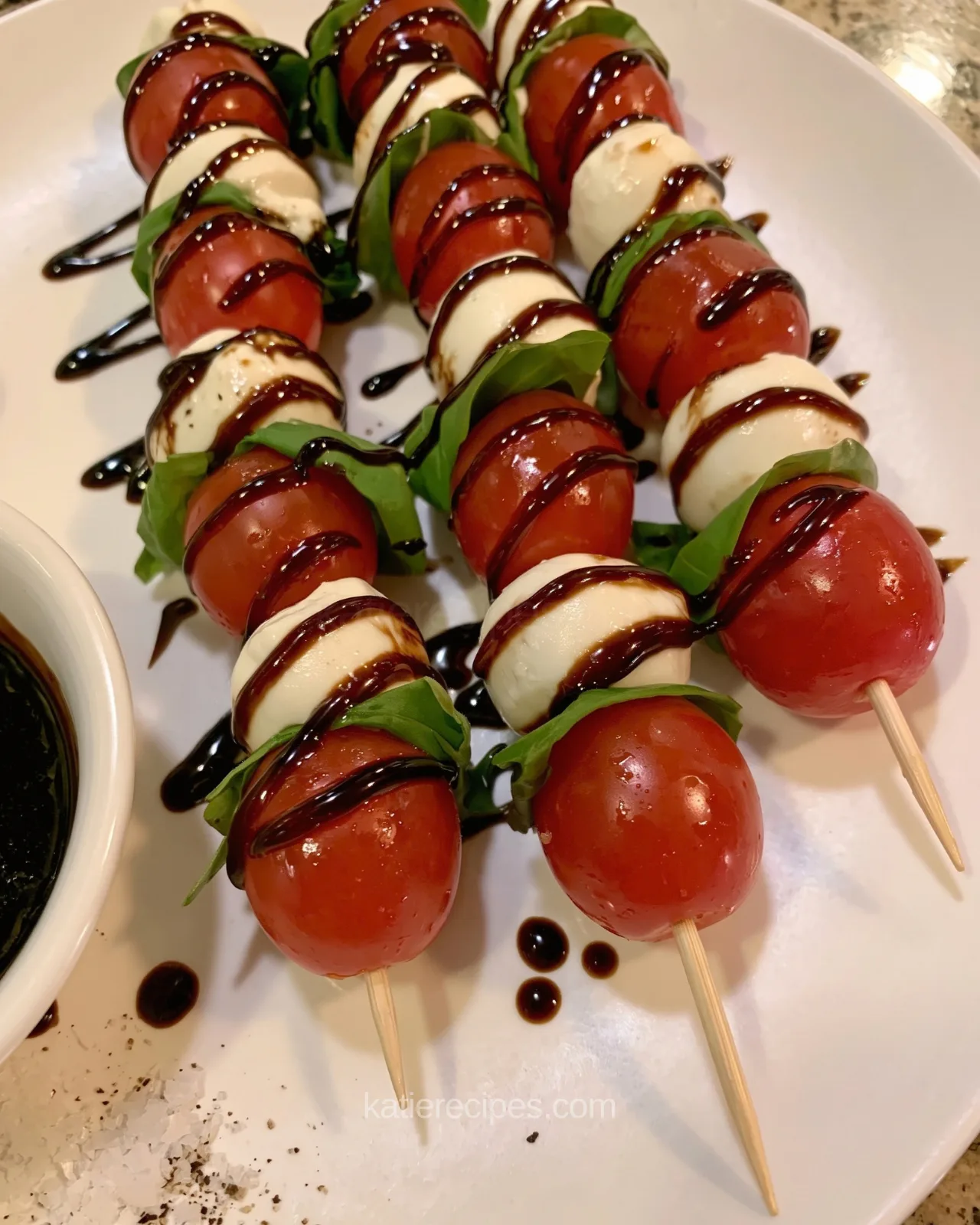
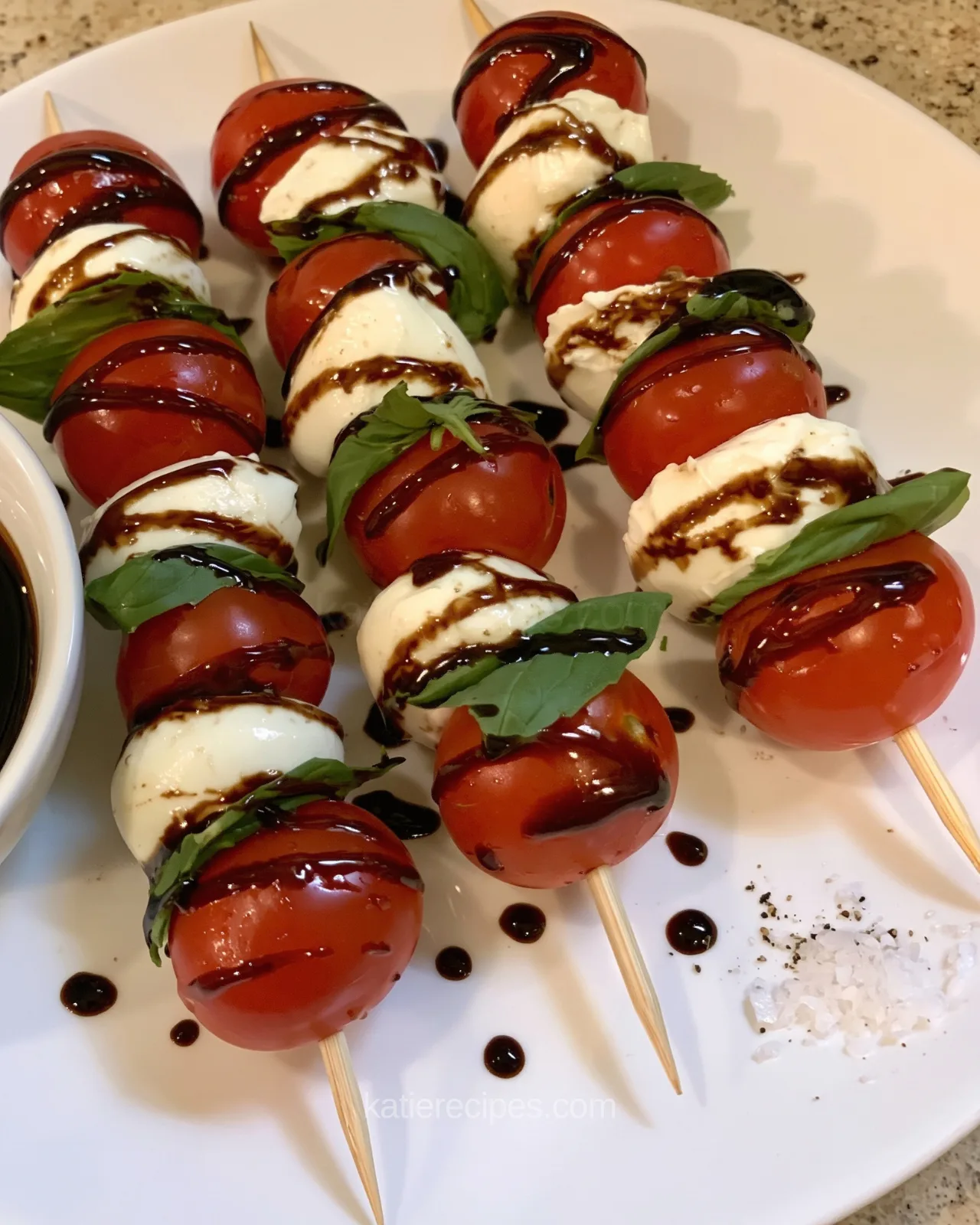
Now thread the skewers. Spear a tomato, then a folded basil leaf, then a mozzarella ball. Do that two more times on the same skewer, so each one carries three tomatoes, three leaves and three mozzarella balls. Leave about an inch of bare skewer at the tip.
Lay the skewers in a single layer on a platter lined with a paper towel. If you’re not serving right away, put the platter in the fridge.
Right before serving, take off the paper towel. Add a pinch of flaky salt and pepper to each skewer, a light drizzle of olive oil if you like, and then the cooled glaze in a zigzag across the top. Glaze them while they’re lying flat. Gravity keeps the lines where you put them, and they set as they sit. Serve at once, with the extra glaze in a small bowl alongside.
Caprese Skewers with Balsamic Glaze
Cherry tomatoes, fresh basil and small mozzarella balls threaded on skewers and finished with a thick, homemade balsamic glaze. No oven, and ready in about 35 minutes.
Ingredients 8 items
- Balsamic Glaze
- Skewers
- To Finish
Instructions 6 steps
-
1
Make the glaze
Pour the vinegar into a small saucepan over medium-low heat. Simmer 12 to 15 minutes, stirring occasionally, until it has reduced to about 1/2 cup and coats the back of a spoon. Pull it off the heat just before it looks thick enough, because it thickens as it cools. Pour into a small bowl and cool completely.
-
2
Dry everything
Wash the tomatoes and basil, then dry them well on a towel. Drain the mozzarella and pat it dry with paper towels.
-
3
Prep the basil
Fold each leaf in half so it fits between the tomato and the cheese. Tear only very large leaves in two, since torn edges darken faster than whole ones.
-
4
Thread the skewers
Spear a tomato, then a folded basil leaf, then a mozzarella ball. Repeat that sequence two more times on the same skewer, so each skewer carries three tomatoes, three leaves and three mozzarella balls. Leave about an inch of bare skewer at the tip.
-
5
Arrange and chill
Lay the skewers in a single layer on a platter lined with a paper towel. Refrigerate if you are not serving right away.
-
6
Finish and serve
Remove the paper towel. Add a pinch of flaky salt and pepper, a light drizzle of olive oil if you like, and the cooled glaze in a zigzag across each skewer while they lie flat. Serve at once, with the extra glaze in a small bowl alongside.
Tips & Substitutions
Dry the tomatoes, basil and mozzarella well. Wet ingredients thin the glaze and it pools on the plate instead of clinging.
Cool the glaze completely before using it. A warm glaze softens the mozzarella on contact.
Salt, pepper, oil and glaze go on right before serving. Salt and acid pull juice out of tomatoes and the platter turns watery.
Make the glaze up to a day ahead and keep it in a jar in the fridge. Bring it to room temperature and stir before using. Assemble the skewers unseasoned up to 4 hours ahead, covered and refrigerated. Up to 12 hours is possible if the tomatoes are whole and the mozzarella is dry, but the basil may darken.
If the glaze is too thin, simmer it 2 to 3 minutes more. If it is too thick, stir in warm water 1 teaspoon at a time. If it smells burnt, start over with fresh vinegar.
A store-bought glaze works. Choose a thick one that coats a spoon, with vinegar as the first ingredient. Nutrition is an estimate per skewer and does not include the olive oil or the finishing salt.
My “Don’t-Let-the-Platter-Go-Watery” Mini Guide
- Dry everything, even the mozzarella you just drained. Wet cheese and damp tomatoes thin the glaze, and it pools on the plate.
- Cool the glaze all the way. A warm glaze softens the mozzarella the second it lands.
- Salt at the end. Salt and acid pull juice out of tomatoes. Season early and the platter weeps. Season at the last minute and the skewers stay firm and bright.
- Glaze too thin? Put it back on low heat for 2 to 3 minutes and test again. Too thick? Stir in warm water, 1 teaspoon at a time.
- Bitter or burnt smell? It cooked too hot or reduced too far. Start again with fresh vinegar. It’s annoying but quick.
- Keep the skewers cold until the last moment. The mozzarella stays firmer and the tomatoes taste fresher.
Helpful Tips
Use a squeeze bottle or a spoon for the glaze. You get thin, even lines instead of puddles. A small bowl of extra glaze alongside lets guests dip, and the skewers stay clean.
A store-bought glaze works too. Pick a thick one that coats a spoon, and check that the first ingredient is vinegar, not sugar.
The make-ahead schedule I use:
- Day before: Make the glaze and keep it in a jar in the fridge. Let it come to room temperature before you use it.
- Up to 4 hours ahead: Assemble the skewers unseasoned, cover them tightly and refrigerate. This is the safest window.
- Up to 12 hours ahead: Possible if the tomatoes stay whole and the mozzarella is dry. The basil may darken a little.
- Just before serving: Salt, pepper, oil and glaze.
I wouldn’t go past 12 hours. The basil is the first thing to show it.
If you want more flavor, toss the drained mozzarella in olive oil and herbs for a few hours before threading. Pat off the excess oil first so the glaze still clings. A small bowl of pesto next to the platter also makes a nice second sauce.
For a smaller appetizer, thread just one tomato, one folded basil leaf and one mozzarella ball on a 4-inch skewer or pick. The same ingredients make about 18 mini skewers.
How many to make: plan on 1 skewer per guest when these are one of several appetizers, and 2 per guest for a main-course spread. A batch of 6 serves about 6 people alongside other dishes, so double it for 12. Those numbers are guidelines, not tested rules.
Frequently Asked Questions
Can I make caprese skewers ahead of time?
Yes. Up to 4 hours ahead is the safe window, and up to 12 if the ingredients are dry. Add the salt and glaze only at serving time.
Why does my balsamic glaze slide off the skewers?
The tomatoes or mozzarella are wet. Pat both dry and let the glaze cool completely before you drizzle.
What’s the difference between balsamic glaze and balsamic reduction?
Almost nothing. Both are balsamic vinegar simmered until syrupy. “Glaze” often also means a thick bottled product.
Can I use store-bought balsamic glaze?
Yes. Pick one that coats a spoon.
How long does homemade glaze last?
About a couple of weeks in a sealed jar in the fridge. It thickens when cold, so let it warm to room temperature and give it a stir.
Can I skip the skewers?
Yes. Toss the same ingredients in a bowl and serve with a spoon, with the glaze on top.
Can I use strawberries or roasted tomatoes?
I haven’t tried either. If you want to, swap a halved strawberry for each tomato, or use roasted cherry tomatoes if fresh ones taste flat and cool them completely first.
What do I serve with caprese skewers?
Cold sparkling water or sparkling cider, plus something warm and savory on the table so the platter has some contrast.
Final Thoughts
Set the glaze in a small bowl at the end of the platter. Guests who like more can dip, and the skewers stay crisp for the whole party.
That’s all they need. Dry tomatoes, cold cheese and a bowl at the end of the table.