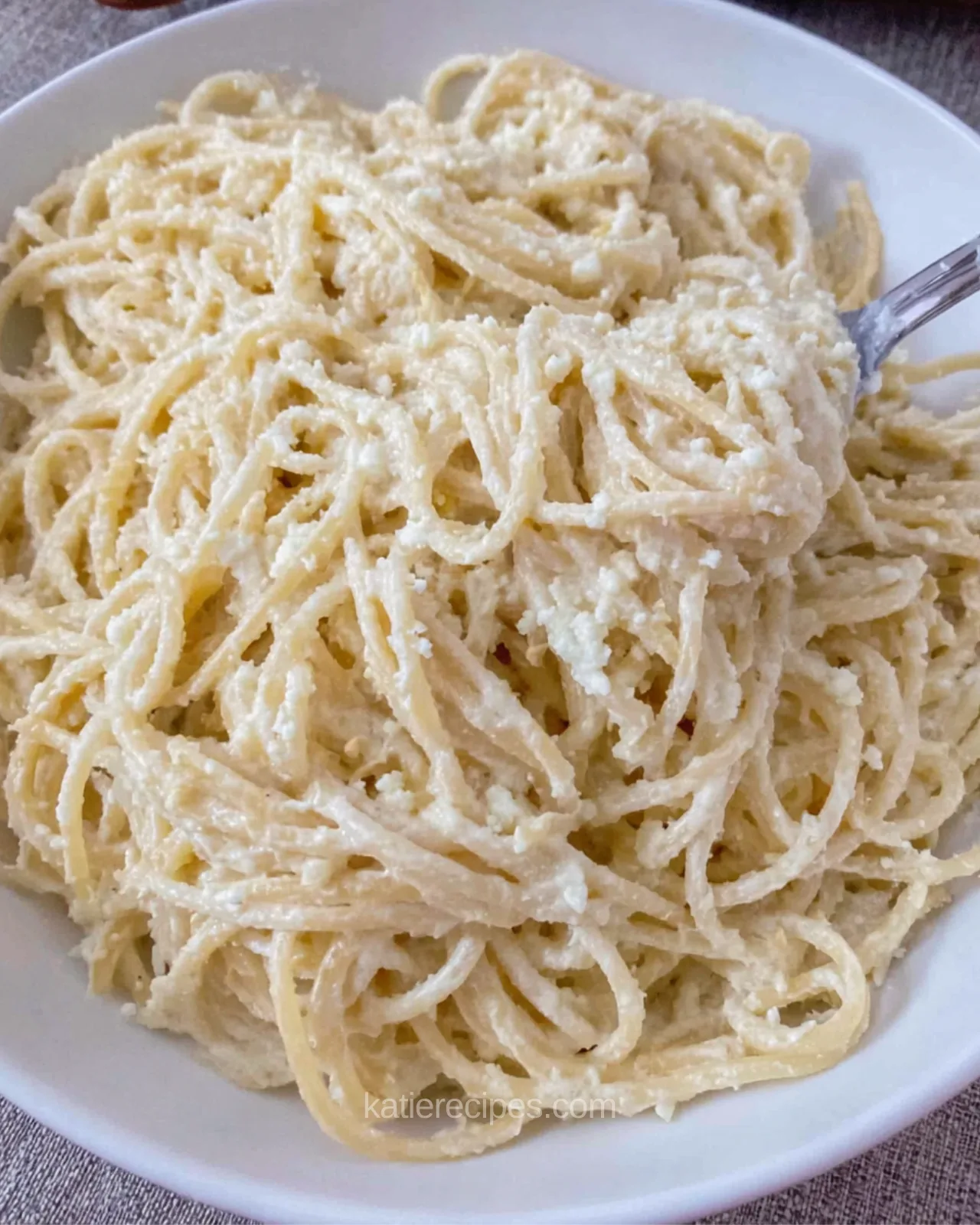
White spaghetti was one of those dishes I didn’t question growing up. It was just there. At birthday parties. Next to the rice at family cookouts. On random weeknights when something quick but comforting needed to happen.
We called it espagueti blanco, sometimes spaghetti blanco, sometimes just “the white one.” I didn’t realize until I was older that white Mexican spaghetti isn’t something everyone grows up eating. To me, it felt normal. Creamy noodles with that soft bay leaf flavor in the background and little bits of queso fresco melting into everything.
If you’re expecting Alfredo, this isn’t that. White spaghetti is smoother, gentler, less cheesy and more… cozy. It’s simple on purpose. And the best part? It really is ready in about 20 minutes, which still feels like cheating a little.
This version is the one I make all the time now. It tastes like home but works on a busy Tuesday.
Table of Contents
Why You’ll Love This White Spaghetti
There’s something very low-stress about this recipe. White spaghetti doesn’t ask much from you.
It doesn’t require fancy ingredients or a long simmer. The sauce comes together in one pan while the pasta boils. That’s it.
I love that this white Mexican spaghetti:
- Feels comforting without being heavy
- Uses ingredients that are easy to find
- Works as a side dish or a simple main
- Is kid-friendly without being bland
- Reheats surprisingly well
And honestly, spaghetti blanco fits into so many situations. I’ve served it next to grilled chicken at a party. I’ve also eaten a bowl of it by itself while standing in the kitchen. It works both ways.
It’s creamy, yes. But it’s not rich in an overwhelming way. The Mexican crema keeps it light and silky. And the bay leaves — which might seem like a small detail — are what quietly make white spaghetti taste like white spaghetti.
Ingredients You’ll Need
This is one of those recipes where the ingredient list looks almost too simple.
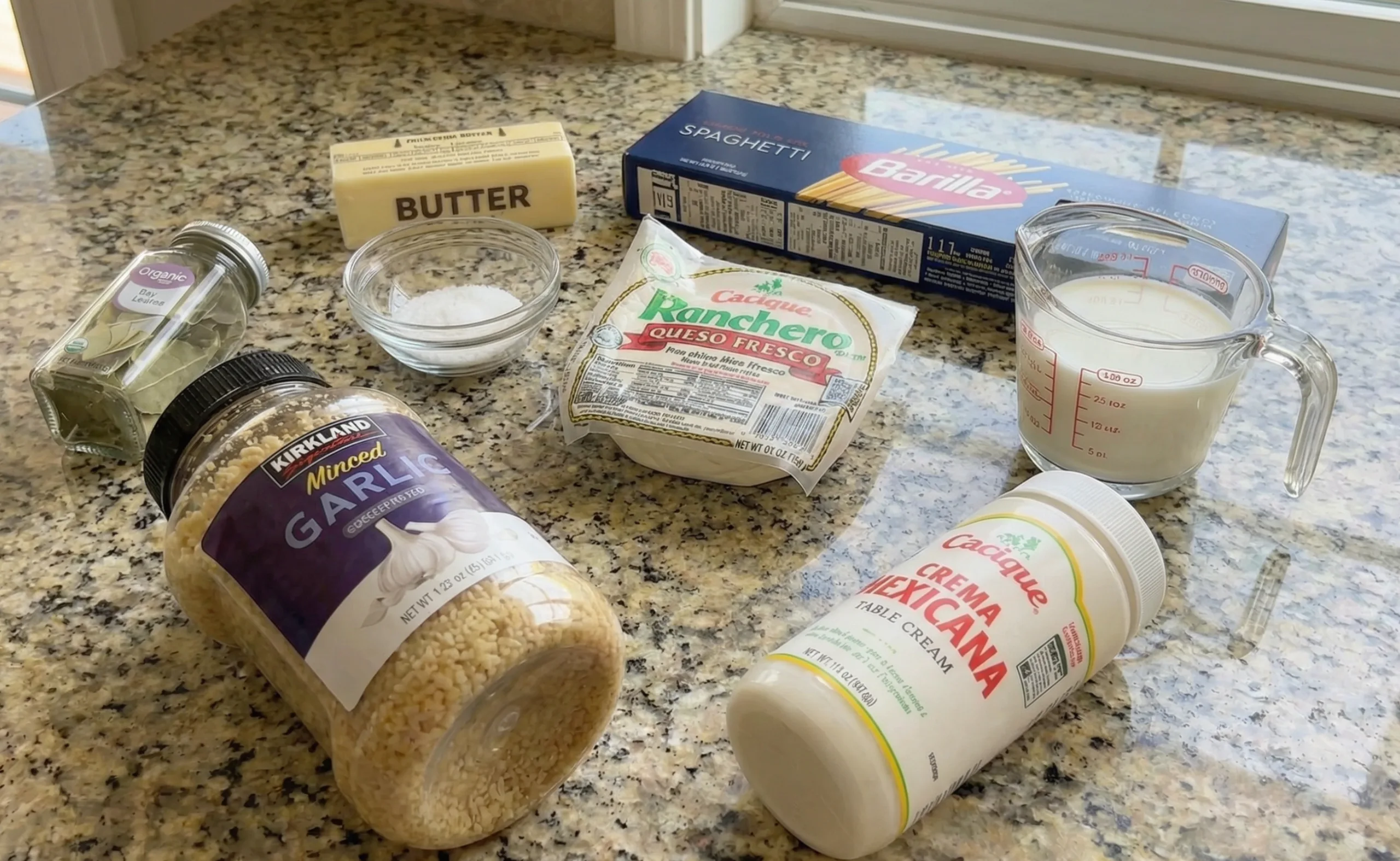
You’ll need a pound of spaghetti. Just regular spaghetti. Nothing fancy or artisanal. White spaghetti is meant to be practical.
Butter. Four tablespoons. It melts down and becomes the base of the sauce, carrying the garlic flavor through everything.
Garlic — minced. I say one tablespoon, but if you’re the kind of person who scoops a little extra, I understand. I do too.
Mexican crema is really important here. It’s thinner and smoother than sour cream, and not as tangy. That’s what gives espagueti blanco that silky texture instead of a thick, heavy sauce.
A little milk to loosen things up. Not much. Just enough so the sauce coats the noodles nicely.
Salt. Simple.
And bay leaves. Eight of them. It sounds like a lot every time I say it out loud. But this is where the subtle flavor comes from. White Mexican spaghetti doesn’t rely on spices or herbs. The bay leaves gently infuse the cream while it simmers.
Then queso fresco. Crumbled. It softens into the pasta and adds little salty bites without turning the sauce into a cheese bomb.
That’s it. No flour. No complicated steps. Just simple ingredients working together.
How to Make This Recipe
Start by bringing a large pot of water to a boil. I salt it well. Pasta needs seasoned water or it just tastes flat later. Once it’s boiling, add the spaghetti and cook it according to the package directions until it’s just al dente.
While that’s going, grab a medium or large skillet and set it over medium-low heat. Add the butter and let it melt slowly. Once melted, stir in the minced garlic.
Keep the heat gentle here. You want the garlic soft and fragrant, not browned. Burned garlic will completely change the flavor of your white spaghetti, and not in a good way. After a couple of minutes, it should smell warm and buttery.
Pour in the Mexican crema and the milk. Stir gently to combine. Add the salt. Lower the heat to low.
Now add the bay leaves. All of them. Let the sauce simmer softly for about five minutes. Not bubbling aggressively — just a gentle simmer. Stir occasionally so nothing sticks.
As it cooks, the sauce will thicken slightly. You’ll notice the aroma shift a little too. That’s the bay leaves doing their quiet work. I usually taste it after a few minutes. If you can pick up that subtle herbal warmth in the background, it’s ready.
Carefully remove the bay leaves with a spoon. They like to hide, so double-check.
Once the spaghetti is done, drain it really well. Extra water will thin your sauce. Return the noodles to the pot they cooked in and pour the warm white sauce over the top.
Sprinkle in the crumbled queso fresco. Gently toss everything together until the noodles are coated. It might look like a lot of sauce at first, but it settles in.
Taste it. Maybe a pinch more salt. Maybe a little extra queso fresco if you’re feeling it.
Serve the white spaghetti right away while it’s creamy and warm.
Helpful Tips
Over time, I’ve learned a few small things that make spaghetti blanco turn out better.
Keep the heat low when cooking the garlic. Rushing this step changes everything.
Use real Mexican crema if you can find it. Sour cream works in a pinch, but it makes the sauce thicker and tangier. White Mexican spaghetti is supposed to be smooth and mellow.
Don’t skip the bay leaves. I know it feels excessive. But without them, it just tastes like creamy pasta. With them, it tastes like espagueti blanco.
Drain the pasta thoroughly. Water dilutes the sauce fast.
If your white spaghetti thickens too much while sitting, just stir in a small splash of warm milk before serving. It brings everything back to life.
And one more thing — this isn’t meant to swim in sauce. It should be coated, not drowning.
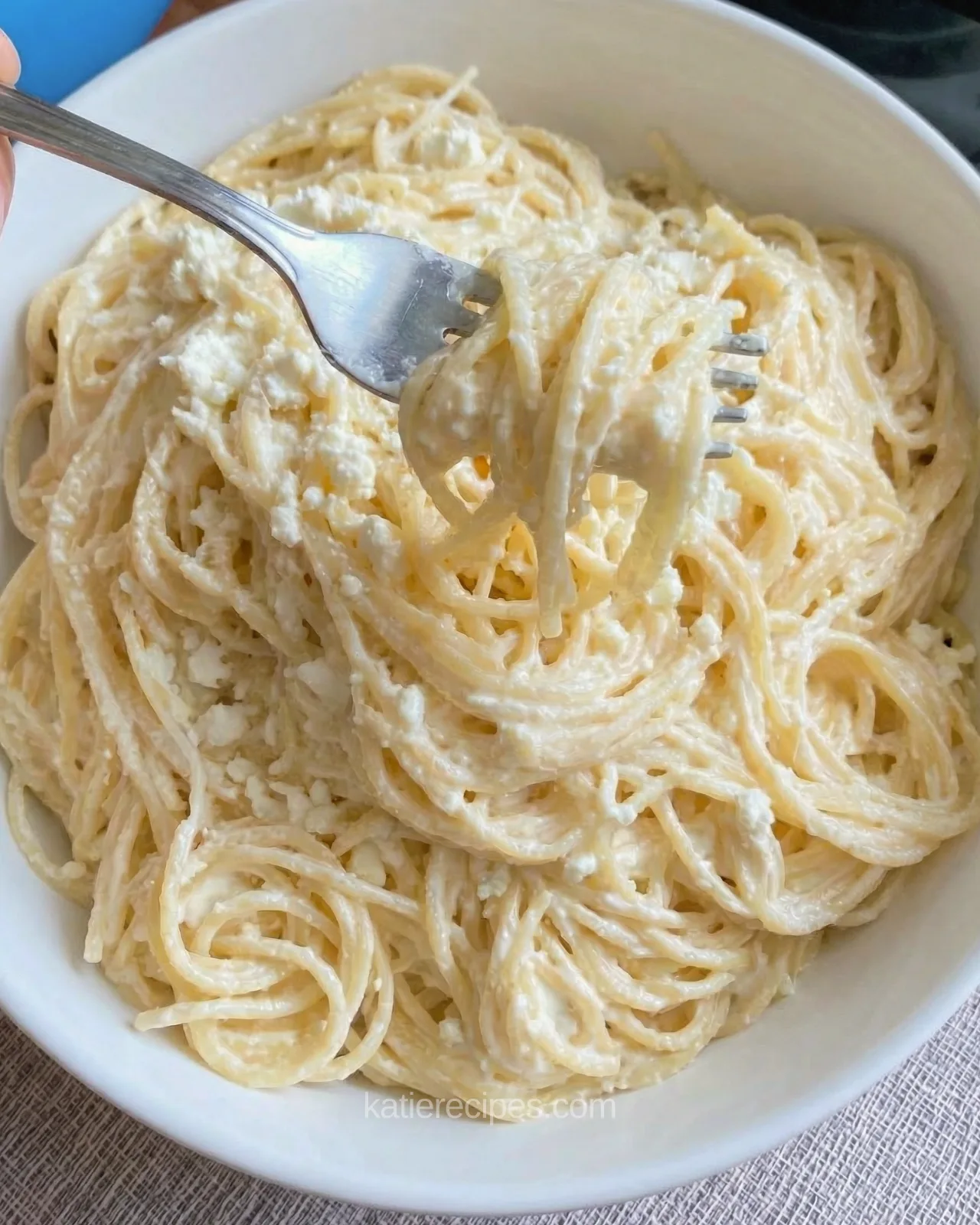
White Spaghetti (Espagueti Blanco)
Ingredients
Equipment
Method
- Bring a large pot of salted water to a boil. Add the spaghetti and cook according to package directions until al dente. Drain well.
- While the pasta cooks, heat a large skillet over medium-low heat. Add the butter and minced garlic, stirring for 2–3 minutes until the butter is melted and the garlic is fragrant, being careful not to brown it.
- Pour in the Mexican crema and milk, then stir in the salt. Reduce the heat to low and whisk gently until the sauce is smooth and fully combined.
- Add the bay leaves and let the sauce simmer gently on low heat for about 5 minutes, stirring often, until slightly thickened. Remove and discard the bay leaves. Adjust salt to taste if needed.
- Return the drained spaghetti to the pot. Pour the creamy sauce over the pasta, add the crumbled queso fresco, and toss gently until everything is evenly coated and warmed through.
- Serve immediately, topped with additional queso fresco if desired.
Notes
Frequently Asked Questions
Is white spaghetti the same as Alfredo?
No. Alfredo relies heavily on Parmesan and sometimes heavy cream. White spaghetti, or espagueti blanco, uses Mexican crema and bay leaves. The flavor is softer and more subtle.
Can I make white Mexican spaghetti ahead of time?
You can, but it’s best fresh. If you do refrigerate it, reheat gently with a splash of milk to loosen the sauce.
Why are there so many bay leaves in spaghetti blanco?
That’s the main flavor infusion. Since there aren’t a lot of spices, the bay leaves give the sauce its distinct taste.
Can I add other ingredients?
Yes. Some people add diced ham, corn, or roasted poblano strips. But the classic white spaghetti recipe keeps things simple.
What’s the difference between spaghetti blanco and white spaghetti?
Nothing really. Spaghetti blanco is just the Spanish name for white spaghetti. White Mexican spaghetti and espagueti blanco are the same comforting dish.
Final Thoughts
White spaghetti isn’t flashy. It’s not dramatic or trendy. It’s just steady. Creamy noodles, gentle flavor, simple ingredients.
Espagueti blanco has been part of Mexican family tables for years, quietly sitting next to louder dishes and holding its own. And I think that’s why I keep coming back to it.
It’s easy. It’s familiar. It doesn’t try too hard.
When I make white Mexican spaghetti now, it still feels like something that belongs at a big family gathering — even if it’s just a regular weeknight in my kitchen.
It’s soft. Warm. Comforting.
And sometimes that’s exactly what you need.