My mum makes these, and for years I made them wrong.
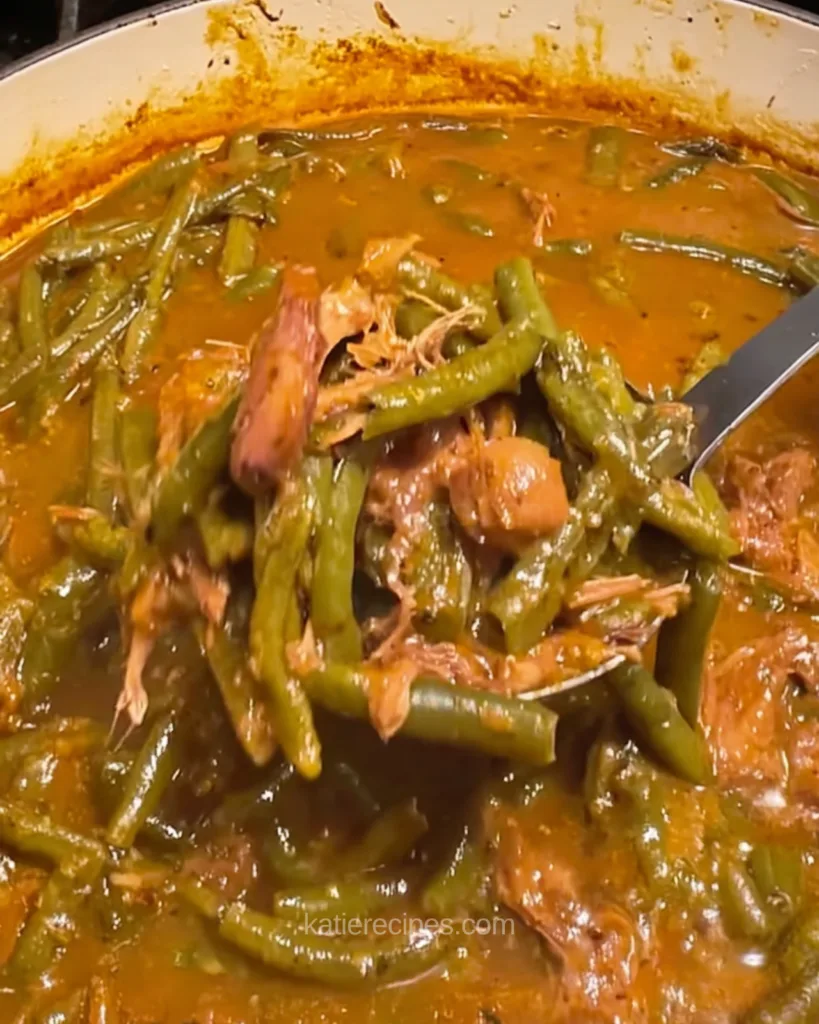
Not badly wrong. They tasted fine. But mine came out brothy — green beans sitting in a thin, smoky liquid that ran straight off the spoon onto the plate. Hers didn’t do that. Hers had a gravy that clung to every bean, and I couldn’t work out what she was doing differently.
It was a spoonful of flour.
That’s the whole thing. Before the broth goes in, you cook a little flour into the butter and onions, and the liquid turns from a broth into something with body. Which is what smothered has always meant in Southern cooking — cooked down in a gravy, not simmered in stock.
Almost every green bean recipe online is the brothy version. This is the other one.
Table of Contents
Why You’ll Love This Recipe
- One pot, and most of the time is hands-off simmering
- The gravy actually clings instead of pooling on the plate
- Smoked turkey does all the heavy lifting — barely any seasoning needed
- No pork, so it works for a lot more tables
- It’s better the next day, which makes it good for holidays
It also fills the house with smoke and onions for three hours, which is half the appeal.
Ingredients You’ll Need
1–2 large smoked turkey legs – The engine of the whole dish. One large leg is usually plenty for six; two if you want more meat in every bite. They’re already cooked and already smoked, so what you’re doing is coaxing the flavour out into the liquid.
2 lbs fresh green beans, washed and trimmed – Fresh, not frozen or canned. They need to hold up to an hour of simmering, and frozen beans fall apart. Snap the bigger ones in half.
1 medium yellow onion, diced, and 4 cloves garlic, minced – The base. Cooked soft in the butter before anything else happens.
2 tbsp butter – What the roux is built on.
1–2 tbsp all-purpose flour – The ingredient nobody else uses, and the reason this is smothered rather than brothy. One tablespoon gives you a light gravy; two gives you something closer to a proper sauce.
3–4 cups chicken broth or stock – Enough to cover the turkey. Start at three and add more if it’s getting low during the long simmer.
Cajun seasoning, garlic powder, onion powder, black pepper, smoked paprika — all to taste – And go easy. There’s a reason these are listed without amounts, which I’ll explain below.
No salt at the start. I mean it. Wait until the very end.
How to Make This Recipe
Melt the butter in a large pot or Dutch oven over medium heat. Add the onion and garlic and cook until they’ve softened and gone translucent — four or five minutes, no colour needed.
Now the flour. Sprinkle it over and stir it into the butter and onions, cooking for a minute or two until it smells toasty rather than raw. This is your roux, and it’s what gives the broth enough body to cling to the beans later instead of sliding off them.
Pour in the broth slowly, stirring the whole time so it stays smooth. Adding it all at once is how you get lumps you’ll never fully stir out.
Add the turkey legs and season with the Cajun, garlic powder, onion powder, black pepper, and smoked paprika. Season lightly here. Smoked turkey legs are cured and they’re salty, and over a couple of hours the broth pulls a lot of that salt out into the liquid. What tastes underseasoned now will taste right later.
Cover and simmer on low for 1½ to 2 hours, until the turkey is tender and the meat is letting go of the bone.
Lift the legs out and let them cool enough to handle. Pull the meat off, discard the skin and cartilage and bone, and shred it. Then back into the pot it goes.
Add the green beans, cover, and simmer another 45 minutes to an hour, until they’re very tender and have taken on all that smoke.
Now taste it. Now you decide about salt.
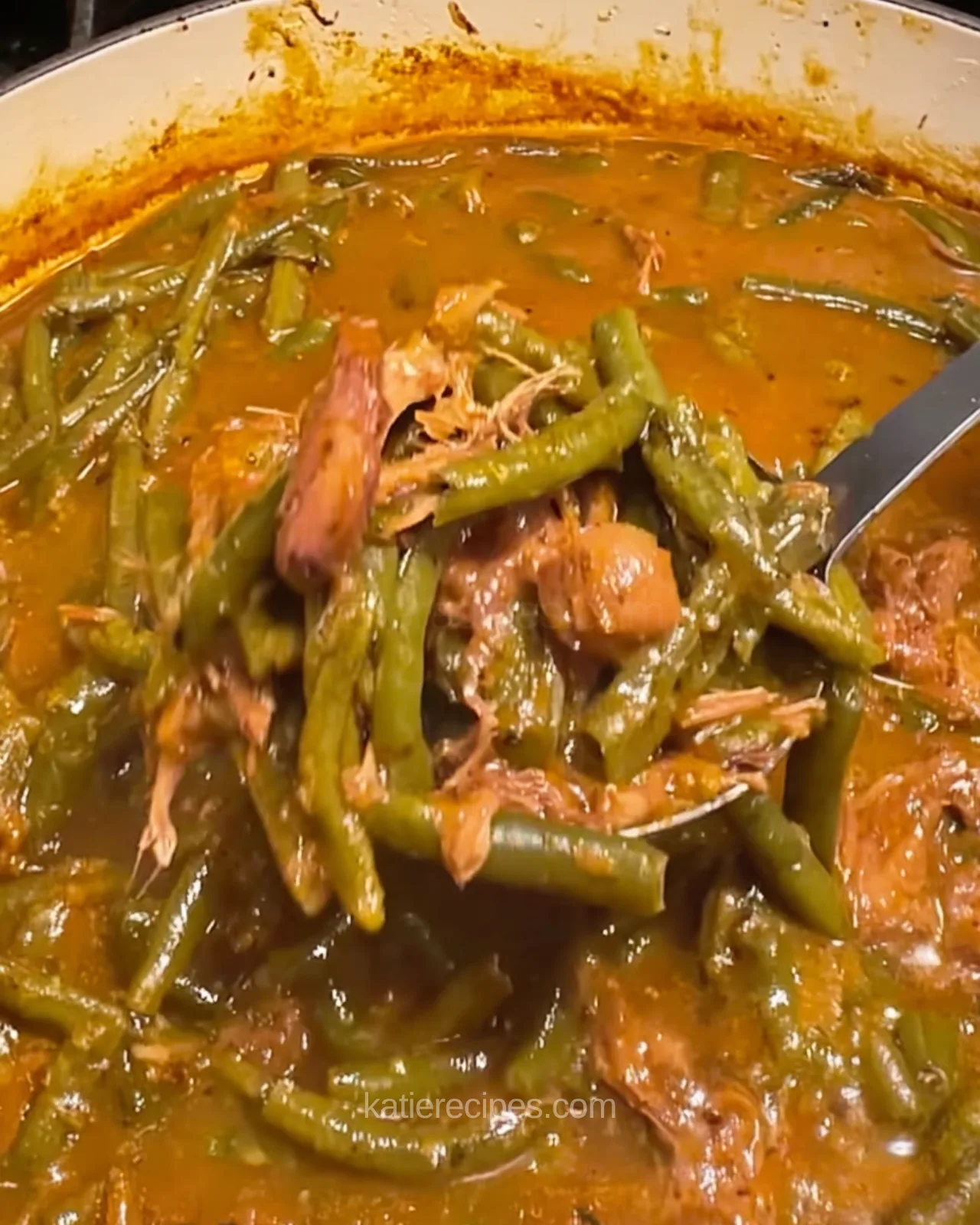
Smothered Green Beans with Smoked Turkey Legs
Ingredients
Method
- Melt the butter in a large pot or Dutch oven over medium heat. Add the onion and garlic and cook 4-5 minutes, until softened and translucent. Don’t let them take colour.
- Sprinkle the flour over and stir it into the butter and onions. Cook 1-2 minutes, until it smells toasty rather than raw. This roux is what gives the broth enough body to cling to the beans instead of sliding off them.
- Pour in the broth slowly, stirring constantly so it stays smooth and lump-free.
- Add the turkey legs and season lightly with Cajun seasoning, garlic powder, onion powder, black pepper, and smoked paprika. Do not add salt yet; smoked turkey is cured and releases a lot of salt into the broth as it simmers.
- Cover and simmer on low for 1 1/2 to 2 hours, until the turkey is tender and the meat is letting go of the bone.
- Lift out the legs and cool slightly. Pull the meat from the bones, discard the skin, cartilage, and bone, and shred the meat.
- Return the shredded turkey to the pot along with the green beans. Cover and simmer another 45 minutes to 1 hour, until the beans are very tender and have absorbed the smoky gravy.
- Taste now, and only now decide about salt. Adjust the other seasonings if needed and serve.
Notes
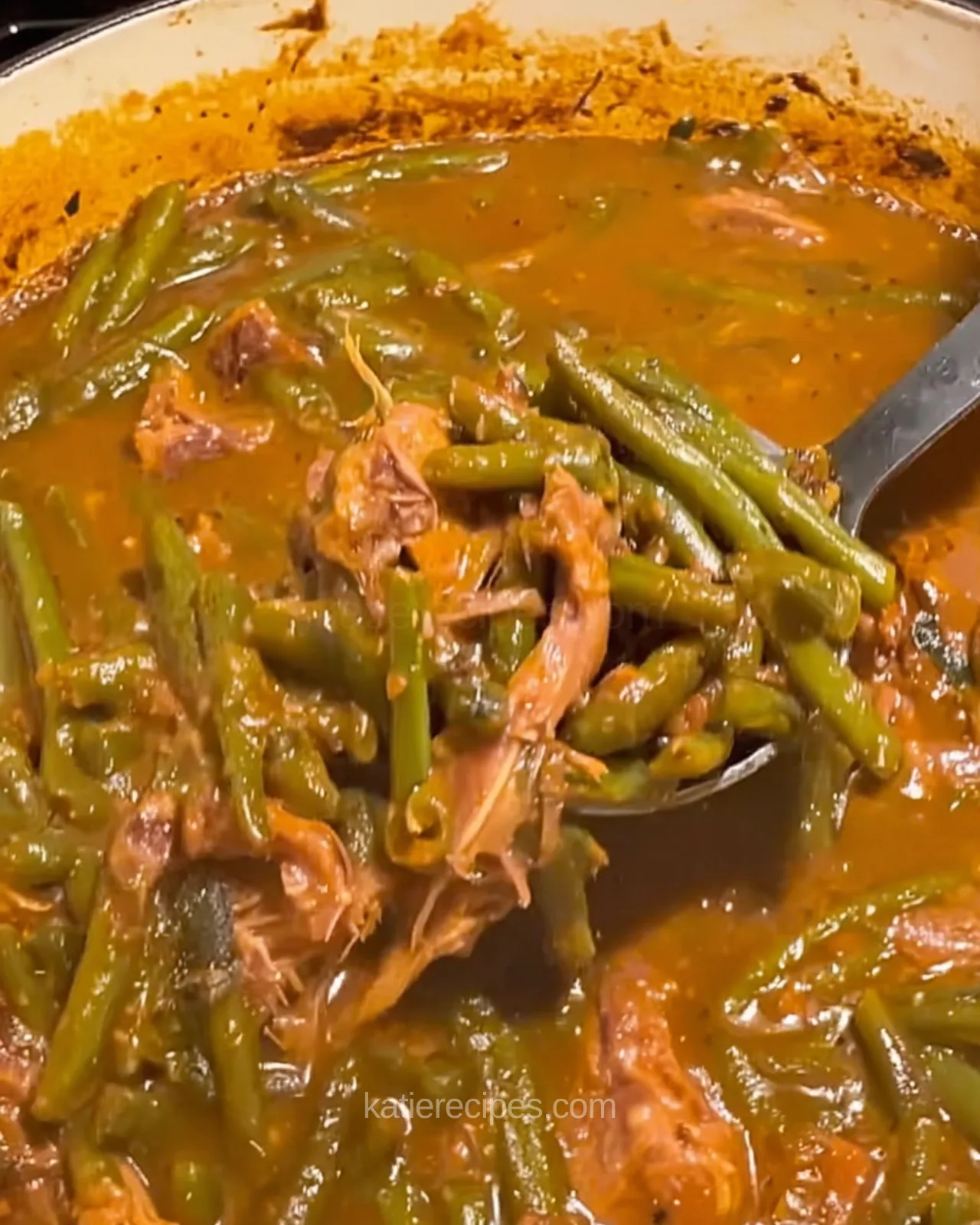
My “Brothy vs Smothered” Mini Guide
Two things separate this from every other Southern green bean recipe, and they’re both worth understanding rather than just following.
The roux is the whole difference
Look up Southern green beans with smoked turkey and you’ll find dozens of recipes. Nearly all of them do the same thing: simmer the turkey in broth or water, add the beans, done. The result is green beans in a smoky liquid, and it’s good — but it’s brothy.
Smothered means something specific in Southern and Creole cooking. It means braised in a gravy. And a gravy needs a thickener, which is what the flour is doing.
One or two tablespoons doesn’t turn it into a thick sauce. It just gives the liquid enough body to coat the beans and hold onto them instead of draining to the bottom of the dish. You’ll notice it when you serve — the beans come out glossy rather than wet.
If you want it heavier, use the full two tablespoons. If you’d rather it stayed light, one is plenty.
Why you don’t salt it at the start
Smoked turkey legs are brined and smoked, and they carry a lot of salt. Over a two-hour simmer, that salt migrates out of the meat and into your broth.
So a pot that tastes perfectly seasoned at the start will taste aggressively salty by the end, and there’s nothing you can do about it once it’s there. Season lightly, taste at the very end, and add salt then if it needs it. Half the time it won’t.
This is also why every seasoning in the list says “to taste” rather than giving you a measurement. The saltiness of smoked turkey varies enormously between brands.
And now the argument: soft or crisp?
This one genuinely divides people, and it’s worth knowing both sides before you decide.
The traditional position, which is my mum’s and mine: cook them until they’re very soft, almost silky, with no snap left. That’s how Southern green beans have always been made, and the reason is practical rather than stubborn — soft beans have broken down enough to actually absorb the smoke and the gravy. A crisp bean is still mostly a crisp bean with flavour on the outside.
The other position: overcooked green beans are mushy and drab, and there’s no reason a smothered dish can’t keep some texture.
They’re not wrong that it’s a matter of taste. But pull them at crisp-tender and you’ve made sautéed green beans with gravy on them. The long simmer isn’t a technique failure, it’s the point.
Make them soft the first time, exactly as written. If you’d rather have more bite, pull them at 30 minutes next time — at least then you’re choosing.
A note on the gravy over a long simmer
Flour-thickened liquid can loosen over a couple of hours on the heat. If yours has thinned by the time the beans go in, it’s not a mistake — whisk another teaspoon of flour into a little cold broth and stir it in.
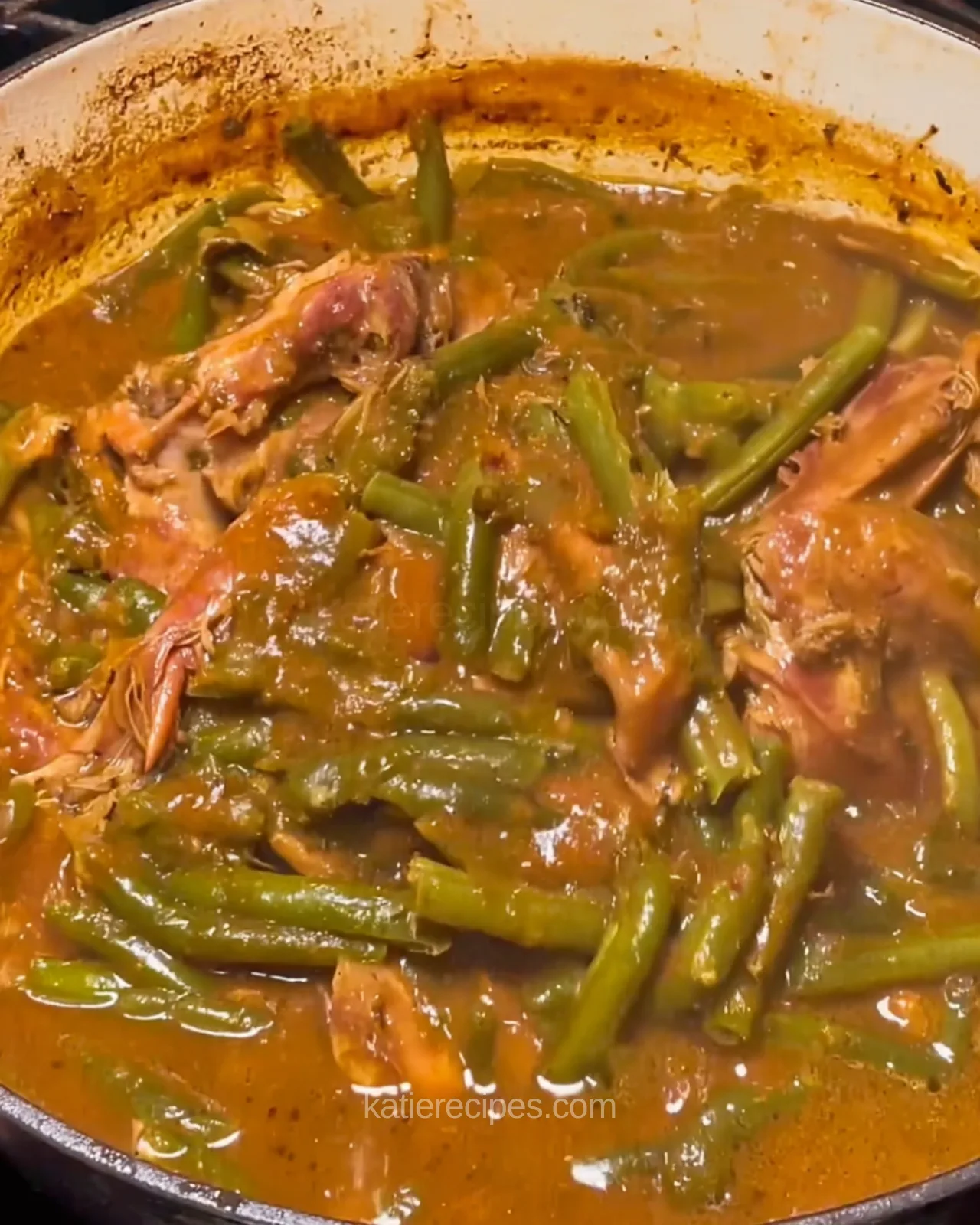
Helpful Tips
Smoked turkey wings or necks work in place of legs. Necks give the richest broth but the least meat, wings sit in between, and legs give you the most meat per piece — which is why they’re my default.
Don’t skip trimming the beans properly. Tough stem ends don’t soften even after an hour, and you’ll find them.
Make it a day ahead if you can. Like most smothered dishes it improves overnight, and it’s one less thing to cook on the day. Reheat gently on the stove with a splash of broth, since the beans will have drunk up more liquid.
Serve it with sweet potato cornbread, over rice, or alongside anything roasted.
Frequently Asked Questions
What does “smothered” actually mean?
In Southern and Creole cooking it means braised slowly in a gravy rather than simmered in broth. The flour cooked into the butter at the start is what makes the difference — without it you’ve made Southern green beans, which are lovely but a different dish.
Can I use canned or frozen green beans?
Fresh is much better here. Frozen beans break apart over a long simmer, and canned beans are already fully cooked — if you use them, add them in the last 10 minutes and skip the long bean simmer entirely.
Why are my green beans so salty?
Almost certainly salt added too early. Smoked turkey releases a lot of its cure into the broth over a long simmer. Season lightly at the start and only adjust at the end.
Can I use turkey necks or wings instead of legs?
Yes. Necks give the richest broth but the least meat, wings are in between, and legs give you the most meat. All three work with the same timings.
Should the beans be soft or still have a bite?
Traditionally very soft — soft enough to have absorbed the gravy. That’s what this recipe is built for. If you prefer some texture, pull them at around 30 minutes instead of the full hour.
How long does it keep?
Three to four days in the fridge, and it’s genuinely better on day two. Reheat gently with a splash of broth.
Final Thoughts
For years I thought my green beans were nearly as good as my mum’s and couldn’t work out the gap.
It was a spoonful of flour and knowing when to stop seasoning.
Cook the flour into the butter before the broth goes in. Leave the salt alone until the end. And let the beans go properly soft, because that’s what they’re supposed to do.
If you like this kind of slow, savoury cooking, my Loaded Cabbage Skillet works on the same principle — cheap ingredients, a long simmer, and a gravy that ties it together.
That’s it. That’s the recipe.