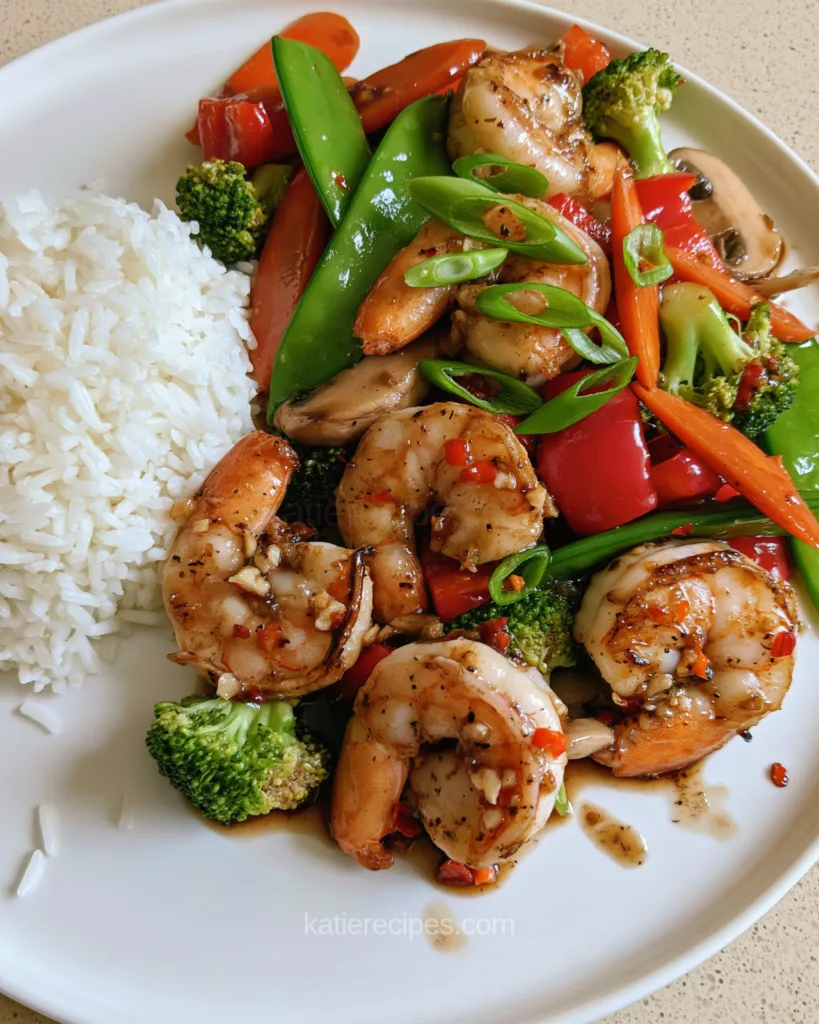
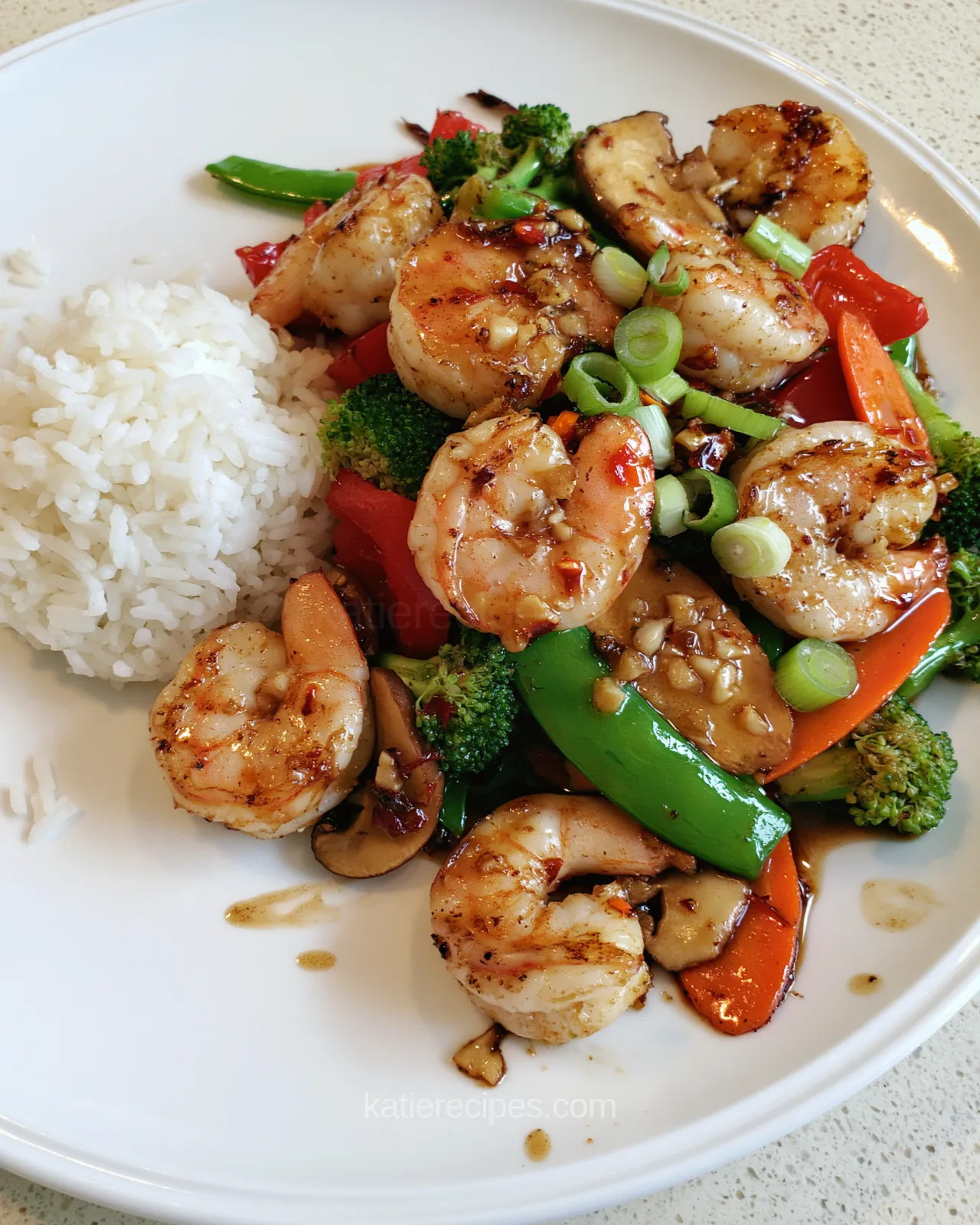
Hunan shrimp is the dish I order when I want dinner to hit hard: spicy, garlicky shrimp in a glossy brown sauce, with vegetables that still snap. Some menus call it “Shrimp Hunan Style,” and it’s been my takeout favorite for years.
This Hunan shrimp recipe takes about 25 minutes and uses one pan. It’s fresher than what comes in the white box, less oily, and the heat is yours to set, so my kids and I can eat the same dinner with different amounts of chili paste. It took me several tries to get right, and I’ll share the mistakes I made along the way.
Table of Contents
Why You’ll Love This Recipe
The sauce clings. Cornstarch on the shrimp and in the sauce gives you a glossy, garlicky coating that stays on everything.
The vegetables still snap. A hot pan and a short cook keep them crisp-tender, not limp.
And it’s quick. Fifteen minutes of prep and ten at the stove, with one pan and one bowl to wash.
Ingredients You’ll Need
Serves 4. You’ll need a 12-inch skillet or wok and a bowl for the sauce.
The shrimp
1 pound large shrimp (31 to 40 count), peeled, deveined, tails off – Large ones stay juicy, but they go from perfect to rubbery fast, so don’t wander off.
1 tablespoon cornstarch – The coating protects the shrimp in the hot pan and helps the sauce cling.
1 teaspoon low-sodium soy sauce – Seasons the shrimp through, not just the sauce.
1 teaspoon neutral oil – It loosens the cornstarch so it coats thinly instead of clumping.
The vegetables and aromatics
1 cup small broccoli florets – Small ones cook in the same time as everything else.
1 red bell pepper, cut into 1-inch pieces – Sweet, and the color matters here.
1 cup snow peas, strings removed – They’re where a lot of the snap comes from.
1 medium carrot, sliced thin on the diagonal – Thin, so it’s crisp-tender in 2 minutes.
1 cup sliced mushrooms (or 1 cup canned baby corn, drained) – Either works. Baby corn is the takeout classic.
4 garlic cloves, minced – Hunan shrimp is garlicky, so don’t skimp.
1 tablespoon minced fresh ginger – Fresh gives it a sharper edge than jarred.
3 scallions, whites and greens separated, sliced – The whites go in the pan, and the greens go on top.
3 tablespoons avocado oil or peanut oil, divided – Both handle high heat.
The sauce
1/2 cup plus 1 tablespoon low-sodium chicken broth – The base of the sauce. The extra tablespoon keeps it from turning thick.
2 tablespoons low-sodium soy sauce – Low-sodium, since the oyster sauce is salty too.
1 tablespoon oyster sauce – It gives the sauce its gloss and depth.
1 tablespoon rice vinegar – The sharp, sour edge.
1 1/2 tablespoons chili garlic paste – Medium heat as written. There’s a heat guide below.
2 teaspoons sugar – Rounds off the heat.
2 teaspoons cornstarch – It thickens the sauce, and it sinks, so whisk before pouring.
For gluten-free, swap tamari for the soy sauce, and check the oyster sauce and broth labels too.
How to Make Hunan Shrimp
Pat the shrimp dry, then toss them with the cornstarch, soy sauce and oil and let them sit for 15 minutes. While they sit, slice and mince everything, then whisk the broth, soy sauce, oyster sauce, rice vinegar, chili garlic paste, sugar and cornstarch in a bowl until smooth. Set it by the stove.
Heat a 12-inch skillet or wok over high heat for 2 minutes. Add 1 1/2 tablespoons of the oil, then half the shrimp in a single layer. Sear them 1 minute per side, until golden at the edges and just starting to curl, but not cooked through, and move them to a plate. Repeat with the second half.
Add the remaining 1 1/2 tablespoons of oil to the same pan. Stir-fry the carrot and broccoli for 2 minutes. Add the bell pepper, snow peas and mushrooms and cook 2 more minutes, until crisp-tender. Add the garlic, ginger and scallion whites and stir for 30 seconds, just until you can smell them.
Return the shrimp to the pan. Whisk the sauce again, pour it in, and stir for 1 to 2 minutes, until the sauce turns glossy and coats the back of a spoon and the shrimp have curled into a loose C and turned opaque. Top with the scallion greens and serve right away.
Hunan Shrimp
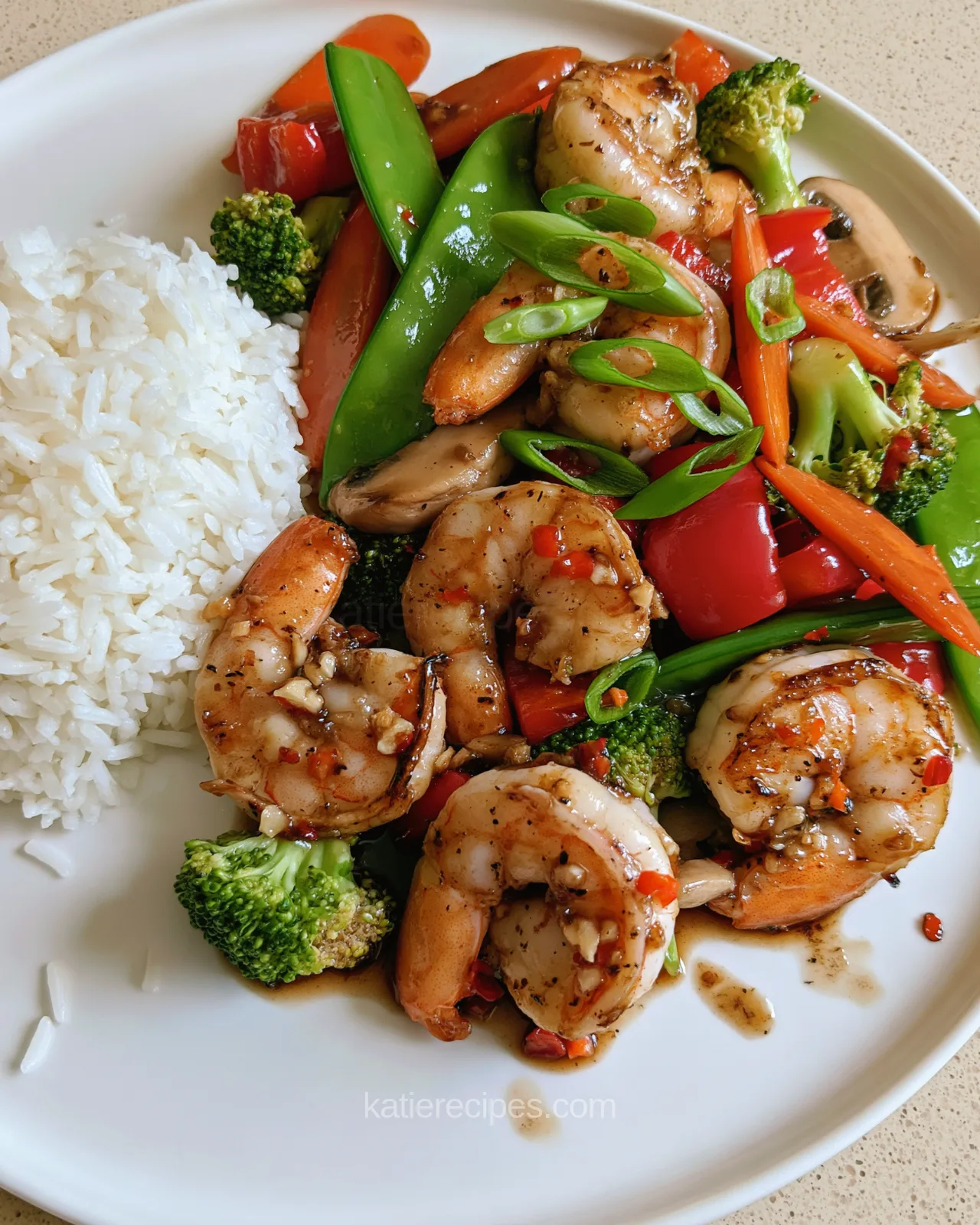
Spicy, garlicky Hunan shrimp with crisp-tender broccoli, bell pepper and snow peas in a glossy chili garlic sauce, ready in 25 minutes in one pan. Serves 4, and you set the heat by the spoonful.
Ingredients 20 items
- The Shrimp
- The Vegetables and Aromatics
- The Sauce
Instructions 5 steps
-
1
Marinate the shrimp
Pat the shrimp dry. Toss them with the cornstarch, soy sauce and oil and let them sit for 15 minutes. While they sit, slice and mince the vegetables and aromatics.
-
2
Mix the sauce
Whisk the broth, soy sauce, oyster sauce, rice vinegar, chili garlic paste, sugar and cornstarch in a bowl until smooth. Set it next to the stove.
-
3
Sear the shrimp and set aside
Heat a 12-inch skillet or wok over high heat for 2 minutes. Add 1 1/2 tablespoons of oil, then half the shrimp in a single layer. Sear 1 minute per side until golden at the edges and just starting to curl, but not cooked through, then move them to a plate. Repeat with the second half.
-
4
Stir-fry the vegetables
Add the remaining 1 1/2 tablespoons of oil to the same pan. Stir-fry the carrot and broccoli for 2 minutes. Add the bell pepper, snow peas and mushrooms and cook 2 more minutes, until crisp-tender. Add the garlic, ginger and scallion whites and stir for 30 seconds.
-
5
Combine and thicken
Return the shrimp to the pan. Whisk the sauce again, pour it in, and stir for 1 to 2 minutes until the sauce turns glossy and coats the back of a spoon and the shrimp have curled into a loose C and turned opaque. Top with the scallion greens and serve right away.
Tips & Substitutions
Pull the shrimp early. Large shrimp go from perfect to rubbery fast, so sear them only until golden at the edges, then let them finish in the sauce at the end. A loose C means done, and a tight ring means overcooked.
Use a 12-inch skillet or wok on high heat and cook the shrimp in two batches. Crowding the pan steams them. Prep everything before you light the burner, since the stir-fry takes about 10 minutes.
Whisk the sauce again right before pouring, because the cornstarch sinks. Use low-sodium soy sauce and skip extra salt, since the oyster sauce is salty too.
Heat: 1 1/2 tablespoons of chili garlic paste is medium. For mild, use 1 teaspoon. For hot, use 2 1/2 to 3 tablespoons.
Make-ahead: you can whisk the sauce and cut the vegetables a few hours early and keep them covered in the fridge, then whisk the sauce again before pouring. I haven't tested longer than the same day, and I wouldn't cook the dish ahead because reheated shrimp turn rubbery.
Gluten-free: swap tamari for the soy sauce, and check the oyster sauce and broth labels too.
Best eaten right away. Leftovers keep in the fridge for up to 2 days. Reheat in a skillet over medium heat with a splash of broth or water for 2 to 3 minutes, and skip the microwave. I haven't frozen it. The 15-minute marinade is included in the prep time. Nutrition is an estimate per serving.
My “Pull the Shrimp Early” Mini Guide
- Use your biggest pan on high heat. My first batch went into a small skillet all at once, and the shrimp steamed into pale, rubbery commas. A 12-inch skillet or wok, with the shrimp in two batches, fixes it.
- Pull the shrimp early. I once left them in the sauce until it thickened, and they came out tough. Now they sear a minute per side and finish in the sauce at the end. A loose C means done, and a tight ring means overcooked.
- Prep everything before you light the burner. I was mincing garlic while the pan smoked, and the oil burned. Stir-frying takes 10 minutes, so measure first.
- Whisk the sauce again right before pouring. The cornstarch sinks, so the first pour is thin and the last is gloppy.
- Use low-sodium soy sauce and skip extra salt. Regular soy sauce plus oyster sauce was too salty for me.
- Set the heat by the spoonful. My first version was too hot for the kids. Start with less chili garlic paste than you think you need, since you can add more at the end but you can’t take any out.
Helpful Tips
What Is Hunan Shrimp?
Hunan shrimp is a spicy Chinese-American stir-fry of shrimp and vegetables in a savory sauce of chili garlic paste, garlic, ginger and soy sauce. It’s named for China’s Hunan province, where cooking is known for direct chili heat and a sharp, sour edge from vinegar. American Chinese restaurants softened it with a glossy brown sauce, broccoli and bell peppers, and a little sugar. That’s the takeout version, and it’s the one here.
Hunan vs. Szechuan vs. Kung Pao Shrimp
Plenty of restaurants label any spicy dish “Szechuan,” so here’s how the three differ:
- Hunan: direct chili heat with a sour edge, in a savory brown sauce with garlic and chili paste. Broccoli and bell peppers are typical.
- Szechuan: numbing-spicy (“ma la”) from Sichuan peppercorns plus dried chilies, in a deeper red sauce with fermented bean paste.
- Kung Pao: moderate heat from dried chilies in a sweeter, tangier sauce, with peanuts and scallions.
As a rule of thumb, a tingle on your tongue points to Szechuan, heat alone points to Hunan, and peanuts point to Kung Pao. Menus blur the lines, though.
How Spicy Is Hunan Shrimp?
As written, 1 1/2 tablespoons of chili garlic paste gives medium heat. For mild (and kid-friendly), use 1 teaspoon. For hot, use 2 1/2 to 3 tablespoons.
Hunan Chicken, Beef or Tofu
I haven’t made these swaps myself, so treat the times as a starting point and cook until done.
- Chicken: use 1 pound of thinly sliced breast or thigh, coat it with the same cornstarch mixture, and sear 2 to 3 minutes per side. Finish it in the sauce until it’s cooked through.
- Beef: use flank steak sliced thin against the grain, and sear it 1 to 2 minutes in a very hot pan so it stays tender.
- Tofu: press a block of extra-firm tofu, cube it, and pan-fry until golden before adding the vegetables. Use vegetable broth and a vegetarian oyster-style sauce.
What to Serve With Hunan Shrimp
Steamed jasmine rice is my pick, because it soaks up the sauce. Fried rice or lo mein turns it into a bigger meal, and egg drop soup is a mild side that balances the heat.
Can You Make Hunan Shrimp Ahead?
Only the prep. Reheated shrimp turn rubbery, so I wouldn’t cook it ahead. You can whisk the sauce and cut the vegetables a few hours early, cover them in the fridge, and whisk the sauce again before pouring. I haven’t tested longer, so I’d keep it to the same day.
Storing and Reheating Hunan Shrimp
Best eaten right away. Leftovers keep in the fridge for up to 2 days. Reheat in a skillet over medium heat with a splash of broth or water for 2 to 3 minutes, and skip the microwave, which overcooks the shrimp. I haven’t frozen it, and I wouldn’t expect the vegetables or shrimp to hold up.
Frequently Asked Questions
What is in Hunan shrimp?
Shrimp stir-fried with broccoli, bell pepper, snow peas, carrots and mushrooms in a sauce of chili garlic paste, soy sauce, oyster sauce, rice vinegar, sugar and chicken broth.
How many calories are in Hunan shrimp?
About 260 per serving, an estimate from the ingredient list. Restaurant versions usually run higher because of extra oil and sugar.
Can I use frozen shrimp?
Yes. Thaw overnight in the fridge, or in cold water for about 20 minutes, then pat very dry. Wet shrimp steam instead of sear.
Do I need a wok?
No. I use a 12-inch skillet because it holds heat better on a home stove.
Is Hunan shrimp gluten-free?
It can be. Swap tamari for the soy sauce, and check the labels on the oyster sauce and broth too.
Final Thoughts
I keep an extra jar of chili garlic paste on the table, and everyone fixes their own plate. Serve it hot, straight from the pan, over rice, while the vegetables still have their snap.