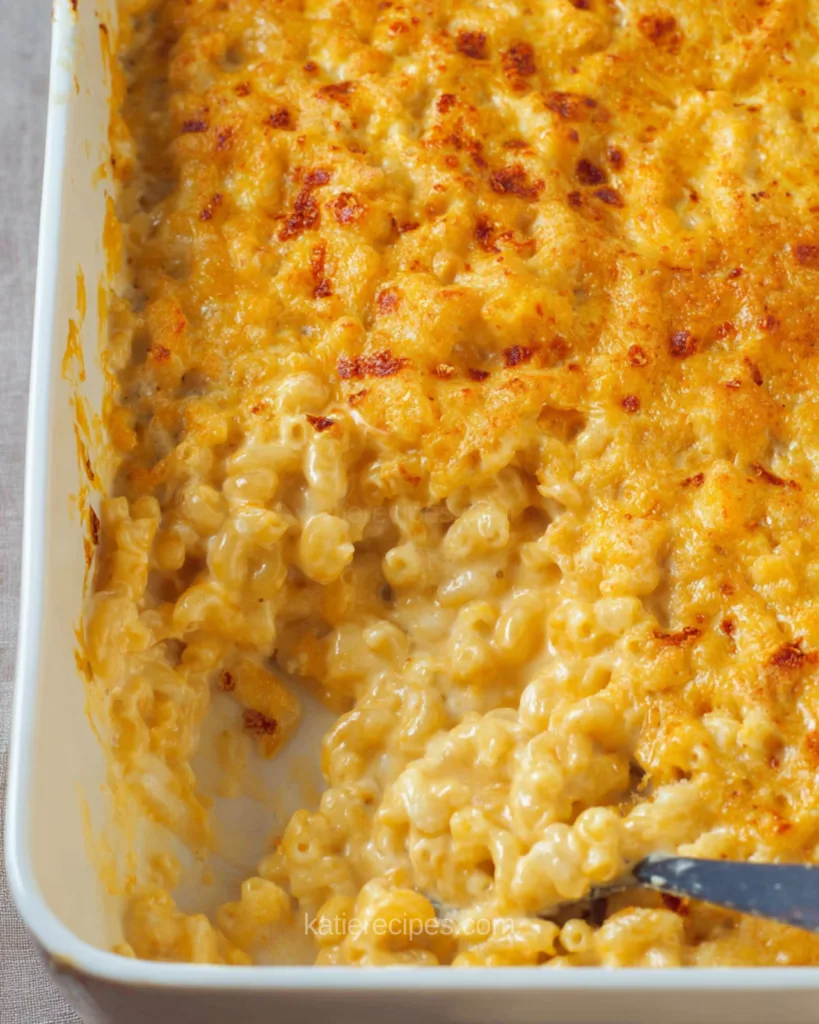
The first few times I made baked mac and cheese, it came out of the oven greasy.
Not bad exactly. Edible. But there’d be a slick of orange oil pooling at the edges, and the sauce underneath had gone grainy instead of smooth. I’d followed the recipe exactly. I just assumed that’s what homemade mac and cheese did.
The problem wasn’t me. It was the oven temperature.
This baked mac and cheese is built around that one piece of information. It’s creamy and gooey with a bubbly cheese crust, and it stays that way, because everything in it is designed to keep the sauce from breaking. Three cheeses, a couple of quiet stabilizers, a lower oven, and a shorter broil.
Table of Contents
Why You’ll Love This Recipe
- The sauce doesn’t break, and I’ll tell you exactly why
- Three cheeses instead of two, so it actually tastes like something
- A cheese crust on top, or panko if you want the crunch
- It feeds a crowd and holds up on a holiday table
- Leftovers reheat properly if you do it right
It’s also more forgiving than most versions, which matters when you’re making it for people.
Ingredients You’ll Need
1 lb elbow macaroni – Classic, and the little tubes hold sauce well. Any short shape works, but elbows are what people expect.
1 tbsp fine sea salt for the pasta water, plus 1 tsp for the sauce – Salt the water properly; it’s the only chance the pasta gets to season itself.
1 tbsp neutral oil – Tossed with the drained pasta so it doesn’t glue itself together while you make the sauce.
¾ cup reserved pasta water – Starchy water helps the sauce cling to the noodles instead of sliding off. Scoop it out before you drain, which I have forgotten more than once.
6 tbsp unsalted butter and ⅓ cup all-purpose flour – Your roux. It thickens the sauce, and the starch helps hold the emulsion together.
2½ cups whole milk – The bulk of the liquid. Whole, not skim; the fat matters here.
1 (12 oz) can evaporated milk – This is the first of my two secret weapons. Evaporated milk has concentrated milk proteins that act as an emulsifier, which means the sauce is far more resistant to breaking. Nobody talks about this and I don’t know why.
4 oz cream cheese, cubed – Second secret weapon. It brings its own stabilizers, adds a subtle tang, and it’s a big part of why the leftovers reheat well.
4 cups shredded medium cheddar (about 12 oz) – Medium, not sharp, and this is deliberate. Sharp and aged cheddars are far more likely to break. There’s a whole explanation below.
2 cups shredded Gruyère (about 6 oz) – Nutty, savory, and it melts beautifully. This is what makes it taste like more than just cheddar.
1½ cups shredded low-moisture mozzarella (about 5 oz) – The stretch. Mozzarella is young and high-moisture, which makes it very well-behaved in a sauce.
1½ tsp mustard powder (or 1 tbsp Dijon) – Flavor, but mustard is also an emulsifier in its own right. Doing double duty.
1 tsp smoked paprika, 1 tsp garlic powder, ½ tsp onion powder, ¼ tsp black pepper – The seasoning backbone. Smoked paprika rather than sweet gives it more depth, and the garlic goes in as powder because fresh turns sharp in a dairy sauce.
A pinch of freshly grated nutmeg (optional) – Traditional in béchamel. You won’t taste nutmeg, you’ll just think the sauce tastes finished.
Optional panko topping: ¾ cup panko, 2 tbsp melted butter, ¼ cup grated parmesan, ¼ tsp smoked paprika.
How to Make This Recipe
Heat the oven to 325°F and butter a 3-quart or 9×13-inch dish. That temperature is lower than most recipes call for, and it’s on purpose.
Boil the pasta in well-salted water, but pull it a full 2 minutes shy of the package time for al dente. It’s going to keep cooking in the hot sauce and again in the oven, so it needs the head start. Scoop out ¾ cup of the pasta water before draining, then toss the drained noodles with the oil so they don’t clump while they wait.
Toss the cheddar, Gruyère, and mozzarella together in a big bowl. Set aside 2 cups for the top.
Melt the butter in a large Dutch oven over medium heat. Once it foams, whisk in the flour and keep whisking about 2 minutes, until it smells nutty and turns pale gold. That light toasting is what keeps the sauce from tasting floury.
Slowly stream in the whole milk, evaporated milk, and pasta water while whisking. Bring it to a bare simmer, then whisk in the cream cheese until melted and smooth. Cream cheese sometimes needs a minute to disappear.
Add the mustard powder, smoked paprika, garlic powder, onion powder, the teaspoon of salt, pepper, and nutmeg. Simmer on low 2 to 3 minutes until it thickens to a light gravy.
Now the important part. Take the pot off the heat completely before any cheese goes in. Add the cheese in three batches, stirring each one until it’s fully melted before adding the next. The residual heat in the sauce is plenty to melt it, and it won’t get hot enough to break. This is the single biggest thing standing between you and grainy mac and cheese.
Fold in the pasta until every noodle is coated. Taste and adjust the salt and pepper.
Pour it into the dish and scatter the reserved 2 cups of cheese over the top, or the panko mixture if you’re going that route. Bake 20 minutes, until it’s bubbling around the edges. If you want a browned top, broil 90 seconds to 2 minutes and do not walk away.
Let it rest 5 to 10 minutes before serving. The sauce sets slightly and stops running when you scoop it.
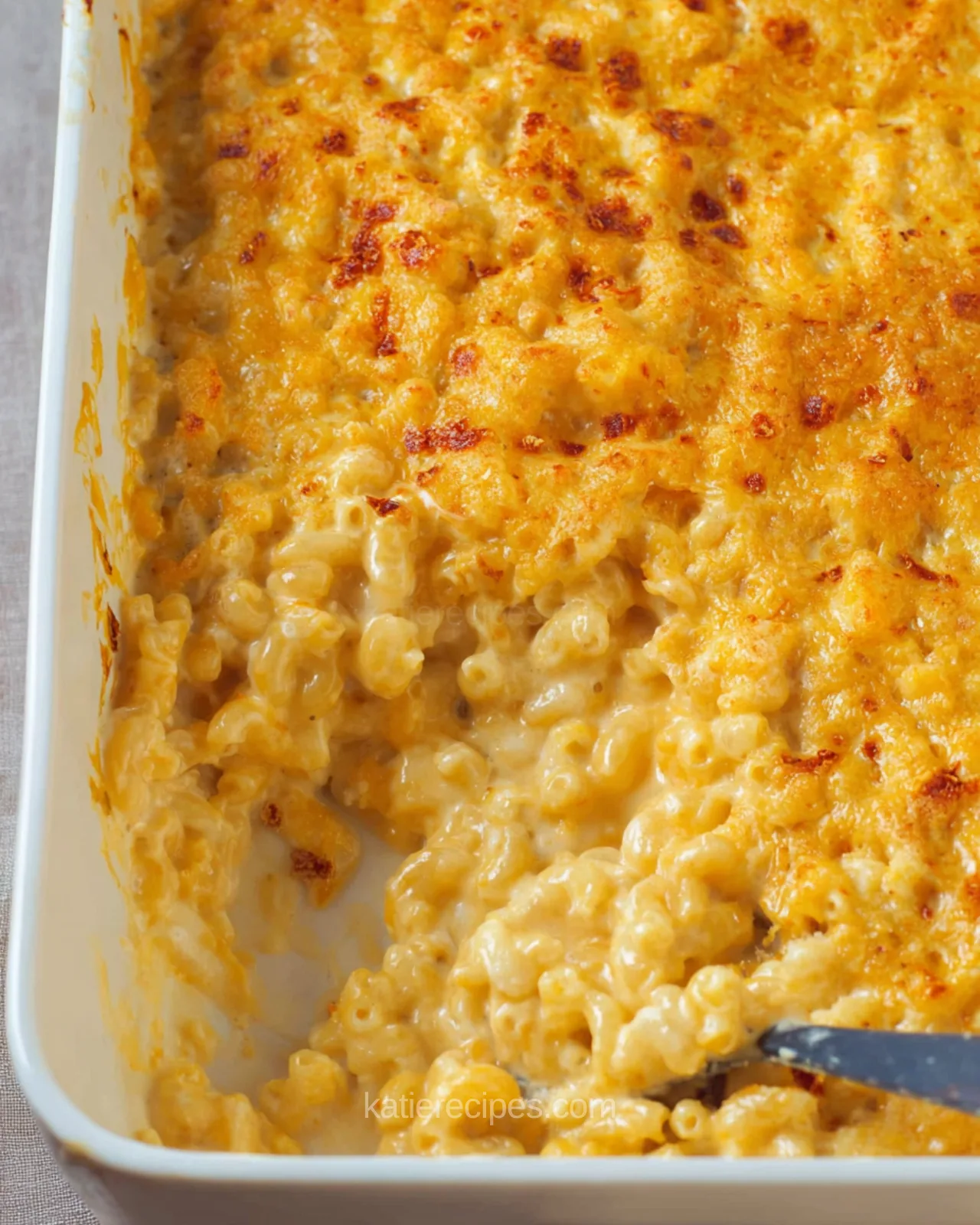
Baked Mac and Cheese
Ingredients
Method
- Heat the oven to 325 degrees F and butter a 3-quart or 9×13-inch casserole dish.
- Bring a large pot of water to a boil, add 1 tablespoon of salt and the macaroni, and cook until 2 minutes shy of package al dente. Reserve 3/4 cup of the pasta water, drain, then toss the noodles with the oil so they don’t clump.
- In a large bowl, toss the cheddar, Gruyere, and mozzarella together. Set aside 2 cups for the topping.
- In a large Dutch oven over medium heat, melt the butter. Once it foams, whisk in the flour and keep whisking about 2 minutes, until it smells nutty and turns pale gold.
- Slowly stream in the whole milk, evaporated milk, and reserved pasta water while whisking. Bring to a bare simmer, then whisk in the cream cheese until completely melted and smooth.
- Whisk in the mustard powder, smoked paprika, garlic powder, onion powder, 1 teaspoon salt, black pepper, and nutmeg. Reduce heat to low and simmer 2-3 minutes, until it thickens to a light gravy.
- Take the pot completely off the heat. Add the remaining cheese in three additions, stirring each until fully melted before adding the next. The residual heat is enough to melt it, and keeping it off the burner is what prevents a grainy sauce.
- Fold in the pasta until every noodle is coated. Taste and adjust the salt and pepper.
- Pour into the prepared dish and scatter the reserved 2 cups of cheese over the top. (For a panko topping instead, combine the panko, melted butter, parmesan, and a pinch of smoked paprika, and scatter that over.)
- Bake 20 minutes, until bubbling around the edges. For a browned top, broil 90 seconds to 2 minutes, watching constantly.
- Let it rest 5-10 minutes before serving so the sauce sets.
Notes
My “180°F Rule” Mini Guide
Here’s the thing nobody explains, and it’s why most homemade mac and cheese goes wrong.
Cheese is an emulsion — droplets of fat suspended in water, held in a net of proteins linked together by calcium. Heat melts the fat first, around 90°F. If the proteins stay relaxed, they keep holding everything together. If they get too hot, they tighten and clump, and the fat leaks out.
That’s what grainy mac and cheese is. Not undercooked, not badly stirred. It’s a broken emulsion, and once it breaks you can’t really fix it. This is a prevention problem.
The number is about 180°F. Past that in the center of the dish, the sauce is at real risk. Everything here is built around staying under it.
- Take the pot off the heat before the cheese goes in. Not “turn it down.” Off. A simmering béchamel is around 190°F, which is already past the line. The residual heat melts the cheese just fine.
- Bake at 325°F, not 375°F. Everything going into the dish is already cooked and hot — you’re only heating it through and melting the top. A gentler oven gets you there without pushing the center past the break point.
- Keep the broil short. Every recipe tells you to broil for the crust, and nobody mentions it’s the fastest way to overheat the top layer. Ninety seconds to two minutes, watching the whole time. Skip it if you don’t care about browning.
- Use medium cheddar, not sharp. This one surprises people. As cheddar ages it loses moisture, so there’s less water left to hold the emulsion together, and aging clumps the proteins into tight bundles that don’t emulsify well. Sharp tastes better on a cracker and breaks more easily in a sauce. Medium is the compromise, and the Gruyère covers the flavor.
- The stabilizers are doing real work. Evaporated milk brings concentrated proteins, cream cheese brings its own emulsifiers, flour brings starch, and mustard is an emulsifier too. Four insurance policies, which is why this breaks less easily than most.
- Rest it 5 to 10 minutes. The sauce sets and the temperature evens out. Scooping immediately is how you get a runny plate.
Helpful Tips
Grate your own cheese from blocks. Pre-shredded is coated in starch to stop it caking in the bag, and that coating keeps it from melting cleanly. A food processor with a shredding disc makes it quick.
Swap cheeses if you want, but stay young. Colby, Monterey Jack, young gouda, and fontina all melt well. If you want an aged cheese for flavor, use a small amount alongside the melters rather than as the main event.
If it looks thicker than you expected before baking, that’s fine. The pasta keeps absorbing as it bakes and the sauce loosens as it heats.
Frequently Asked Questions
Why did my cheese sauce turn grainy?
The cheese got too hot. When cheese passes roughly 180°F, its proteins tighten and squeeze out the fat they were holding, which is what you’re seeing. Take the pot fully off the heat before adding cheese, keep the oven at 325°F, and keep the broil short.
Can I use sharp cheddar instead of medium?
You can, but expect a slightly higher chance of a grainy sauce. Aged cheeses have less moisture and clumpier proteins, so they break more easily. If you want that sharper flavor, swap in about a cup and keep the rest young.
Can I make it ahead?
Yes. Assemble it completely, cool, cover, and refrigerate up to 2 days. Bake straight from the fridge at 325°F and add 10 to 15 minutes.
How do I reheat it without it going dry?
Sprinkle a little milk or water over the portion first, then reheat gently — microwave in 20-second bursts, stirring between, or covered in a low oven. The pasta keeps absorbing sauce as it sits, so it needs that liquid back. Reheating hot and fast is how leftovers go grainy.
Can I freeze it?
Yes, up to 3 months, and the cream cheese and evaporated milk help it survive better than most. Thaw overnight in the fridge and reheat gently with a splash of milk.
Do I have to use the cheese topping?
No. The panko-parmesan version gives you crunch instead of stretch. Cheese on top does insulate the pasta underneath and keeps it from drying out, so if you go panko, keep an eye on the bake time.
Final Thoughts
Mac and cheese has a reputation for being temperamental, and I don’t think it deserves it. It’s just that most recipes tell you what to do without telling you why, so when it goes wrong you have no idea which step to blame.
It’s almost always heat. Too hot when the cheese went in, too hot in the oven, or too long under the broiler.
Keep it under 180°F and it behaves. That’s the whole secret, and now it’s yours.