Ingredients
Method
- Season the chicken thighs all over with the Cajun seasoning, garlic powder, oregano, lemon pepper, smoked paprika, and black pepper.
- Heat the olive oil in a large skillet over medium-high. Sear the thighs 3-4 minutes per side until golden. You're building color, not cooking them through; they finish in the orzo later.
- Reduce the heat to LOW, then add the butter, honey, and red pepper flakes. Spoon over the chicken until glossy. Move the chicken to a plate and reserve about half the honey butter in a small bowl for serving.
- In the same skillet (don't wipe it), saute the onion, celery, and both bell peppers 4-5 minutes until softened. Stir in the tomato paste and cook 1 minute.
- Add the garlic for 30 seconds, then stir in the orzo, adobo, smoked paprika, and onion powder. Toast 1-2 minutes, until it smells nutty and looks slightly translucent at the edges.
- Pour in the broth and add the cayenne, thyme sprigs, and bay leaves. Bring to a simmer, cover, and cook 5-6 minutes, stirring once.
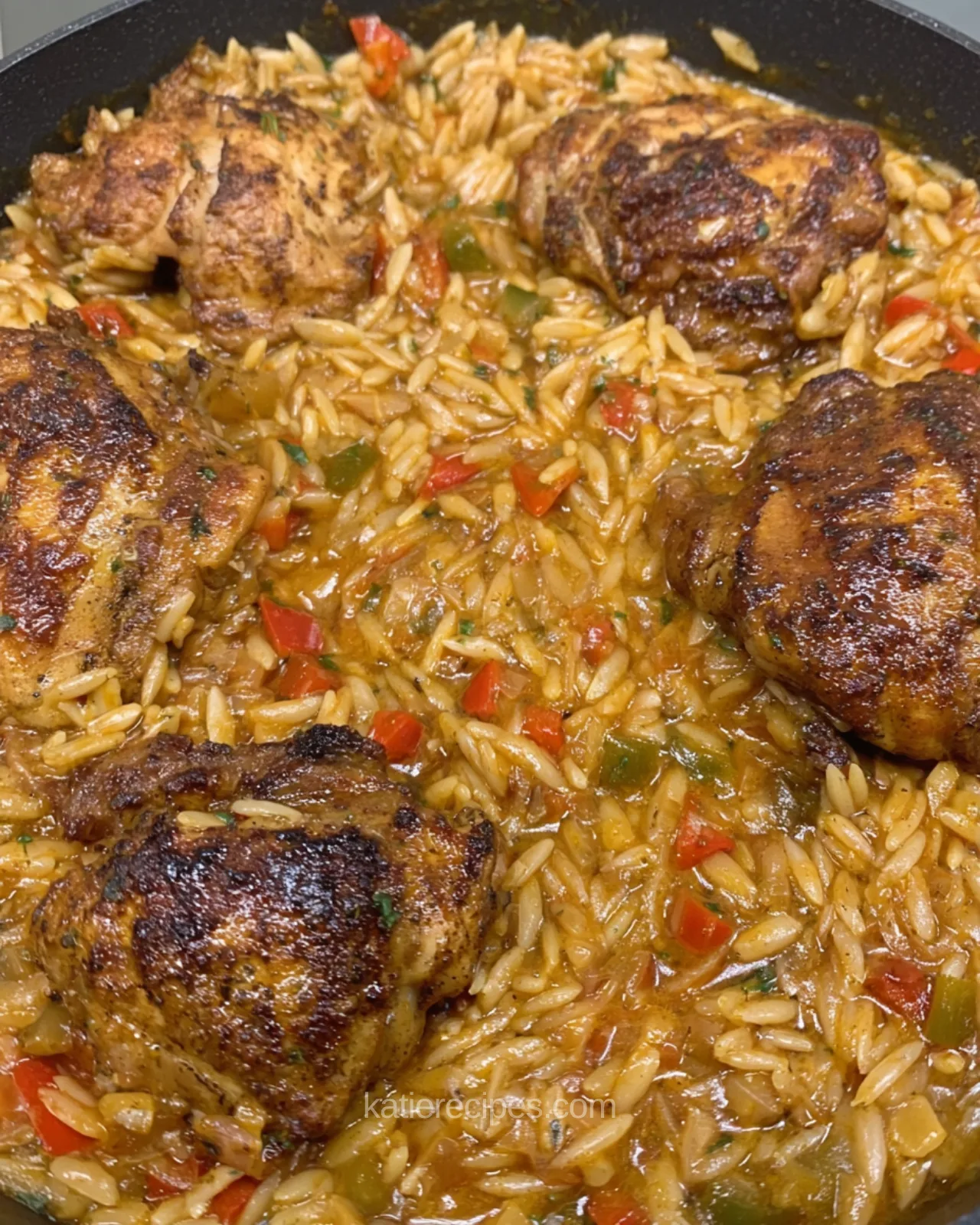
- Nestle the chicken back in, cover, and cook another 8-10 minutes, until the thighs reach 165 degrees F and the orzo is tender with a little bite left.
- Remove the thyme stems and bay leaves. Stir the cream and parsley into the orzo around the chicken. Taste and add salt only if needed.
- Drizzle the reserved honey butter over the chicken and serve straight from the pan.
Notes
Orzo is pasta, not rice. It's semolina wheat shaped like a grain, and it cooks in about 8-9 minutes. Many versions of this recipe simmer it 10-20 minutes before the chicken goes back in, then another 8-10 after, which turns it to paste. Five to six minutes covered, then 8-10 with the chicken, is right.
Don't rinse the orzo. The surface starch is what makes this creamy; cooking it directly in the broth releases it, the same way risotto works. The cream at the end is a finishing touch, not the structure.
Toasting the orzo before the liquid gelatinizes the surface starch so the grains hold their shape instead of collapsing, and adds a nutty background.
Add the cream at the end, not the start. Acid from the tomato paste plus dairy plus a long simmer is how you get a grainy, split sauce.
Take the heat to low before the honey goes in. Honey is mostly fructose, which browns at a lower temperature than table sugar and will scorch and turn bitter on high heat.
Reserve half the honey butter. Anything added before the simmer loses its gloss and its fresh honey flavor.
There's no measured salt because Cajun seasoning and adobo are both salt-forward. Taste at the end before adding any.
Use thighs rather than breasts; they survive the final 10 minutes in the pan without drying out.
If it tightens up, add a splash of warm broth and stir. Leftovers keep 3 days and need extra broth on reheating.