There’s something about a classic pot roast plate that just settles a house down.
You smell it before you even realize you’re hungry. That slow, beefy, oniony smell that kind of drifts into every room. It feels like Sunday, even if it’s Tuesday. It feels like you’re supposed to be wearing socks and moving a little slower.
I don’t make pot roast every week. It’s not that kind of meal. It’s the kind you plan for. The kind you wake up thinking about because it’s going to take hours, and somehow that’s part of the comfort. Nothing rushed. Nothing fancy. Just time doing its thing.
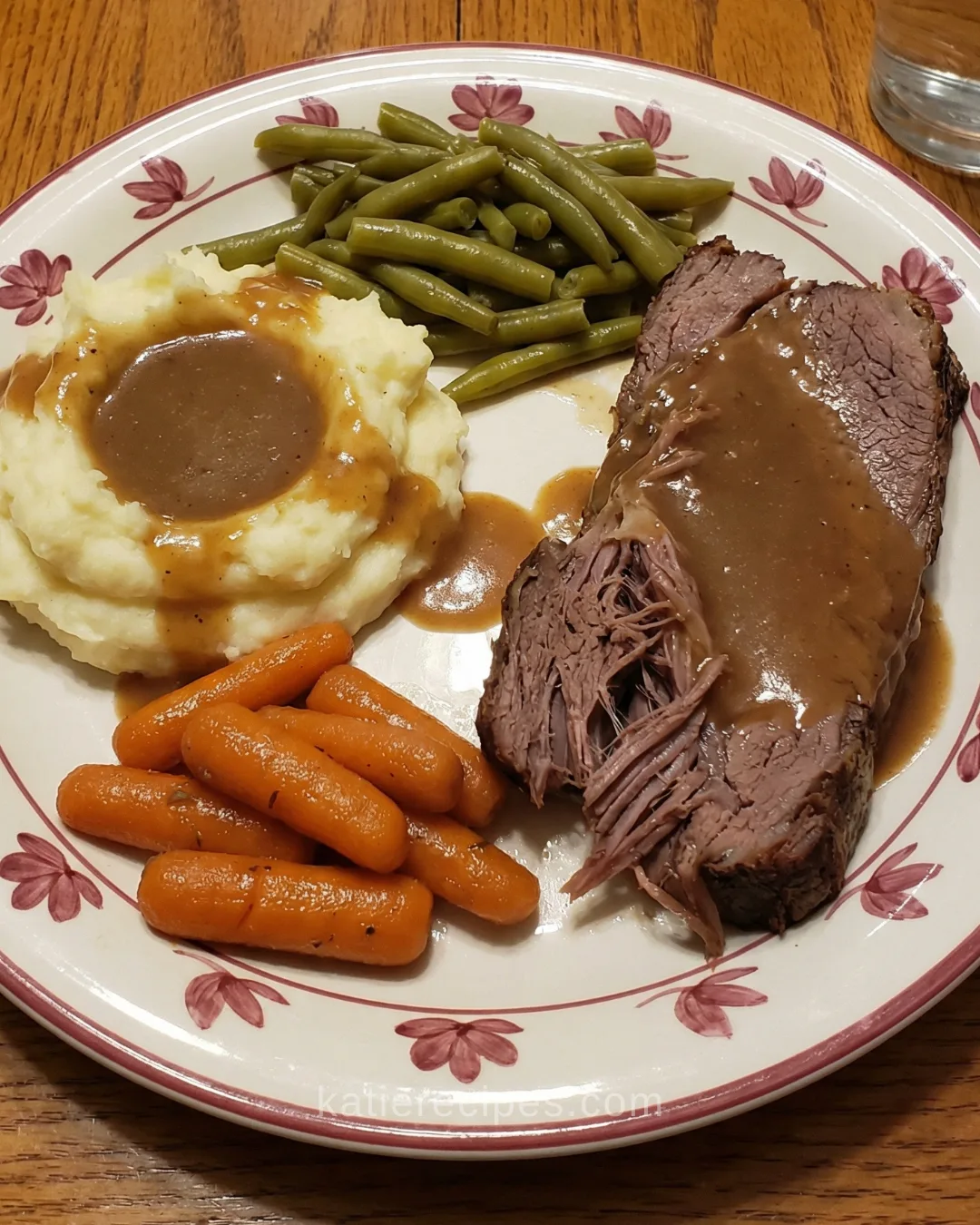
For me, it’s always the full plate. Tender pot roast that falls apart when you barely touch it. Mashed potatoes with enough butter to make them soft and fluffy but not over-the-top. Carrots that taste like they’ve been hanging out in beef broth all afternoon. Green beans on the side so it doesn’t feel too heavy. And that gravy. Always the gravy.
This is the version I come back to. The one that works.
Table of Contents
Why You’ll Love This Recipe
First, it’s dependable. That matters more than anything. A classic pot roast plate shouldn’t feel stressful. It’s not delicate. You don’t need perfect knife skills. You don’t need a thermometer glued to your hand. You just need time and a little patience.
It feeds people well. Six adults easily. Maybe more if there are kids who mostly want potatoes. And leftovers? Even better the next day. I almost like reheated pot roast more.
It’s flexible too. Oven, slow cooker, Instant Pot. I’ve done all three depending on the week. The flavor still shows up.
And emotionally… I don’t know. It just feels steady. When life feels loud or busy or a little messy, putting a chuck roast in a pot and letting it cook low and slow feels grounding. You don’t need a special occasion. It kind of becomes the occasion.
Ingredients You’ll Need
For the pot roast itself, I always grab a 3–4 pound chuck roast. That cut really is the one. It looks a little tough and marbled and not very impressive in the store, but that’s what you want. All that fat melts down and turns into flavor.
Salt and black pepper. Be generous. It’s a big piece of meat.
A couple tablespoons of oil for searing. I usually just use whatever neutral oil I have. Nothing fancy.
One onion, sliced. Sometimes two if they’re small. They cook down into almost nothing anyway.
Beef broth — three to four cups. Enough to come up around the roast without drowning it.
Worcestershire sauce. A couple tablespoons. I don’t always measure perfectly. It adds that deep, savory thing that makes people go, “What is that?” in a good way.
Garlic, a few cloves, minced. Totally optional but I almost always toss it in.
A little dried thyme if I remember. Again, optional. This isn’t a delicate herb situation. Just a background note.
For the veggies, I usually grab a bag of baby carrots because I’m tired and it’s easy. If I have whole carrots, I cut them into big chunks. You want them big enough that they don’t turn to mush.
Green beans — fresh, frozen, even canned in a pinch. I’ve used all of them at some point.
Then mashed potatoes. About two pounds of potatoes, peeled and cubed. Russets are what I use most. Butter. A few tablespoons. Milk or cream, somewhere between a third and a half cup. Salt and pepper. That’s it. I don’t complicate mashed potatoes on pot roast night.
If you like thicker gravy, just a little cornstarch and water mixed together. That’s your safety net.
How to Make This Recipe
I start by taking the roast out of the fridge and patting it dry with paper towels. That step feels small, but it makes a difference when you’re searing. Wet meat doesn’t brown well.
Salt and pepper it on all sides. Don’t be shy. It’s a big piece of beef.
Heat the oil in a heavy pot — Dutch oven if you have one. Let it actually get hot before you put the meat in. When the roast hits the pan, it should sizzle. That sound is reassuring.
Then I leave it alone. That’s the hard part. Three or four minutes per side, until it’s deeply browned. Not gray. Brown. That crust is flavor. If it sticks a little at first, that’s normal. It’ll release when it’s ready.
Once it’s browned all over, I take it out and set it aside. The bottom of the pot will look messy and dark. Perfect.
In go the sliced onions. If I’m using garlic, I toss that in too. I let them soften for a few minutes, scraping at the bottom with a wooden spoon. All those browned bits start to lift.
Then I pour in the beef broth and Worcestershire sauce. It bubbles up and smells like the beginning of something good. I scrape again to get every bit off the bottom. That’s the base of your gravy right there.
The roast goes back in. The liquid shouldn’t completely cover it — just come up partway. I like to nestle it down a bit into the onions.
At this point, you choose your path. If I’m using the oven, I cover the pot and slide it into a 300°F oven for about three to four hours. If it’s the slow cooker, everything transfers there and cooks on low for about eight hours. Instant Pot works too — around 60 to 70 minutes on high pressure, then let it release naturally.
However you cook it, you’re looking for fork-tender. When you can pull at it gently and it starts to fall apart, it’s ready. If it still feels tight, give it more time. Pot roast doesn’t rush.
About an hour to ninety minutes before it’s done (for oven or slow cooker), I add the carrots. They sink into the broth and soak up all that flavor.
Green beans go in near the end. If they’re fresh, maybe the last 20–30 minutes. If they’re frozen or canned, I sometimes just warm them separately and spoon a little broth over them on the plate. I like them still bright and not completely surrendered.
While all that finishes, I boil the potatoes in salted water until they’re tender. You can poke one with a fork and it slides right through. Drain them well. I let them sit in the hot pot for a minute so extra moisture cooks off.
Butter goes in first. It melts right into the hot potatoes. Then I add milk or cream gradually while mashing. I don’t measure exactly. I just stop when they look soft but not soupy. Salt and pepper at the end. Taste. Adjust.
For the gravy, you can leave it as is if you like it thinner. If you want it thicker, mix the cornstarch and water together and whisk it into the simmering liquid on the stove. It thickens quickly. A minute or two and it’s glossy and coats the back of a spoon.
Then it’s just plating. A scoop of mashed potatoes, roast pulled into big chunks, carrots and green beans on the side. Spoon gravy over everything. Maybe a little extra.
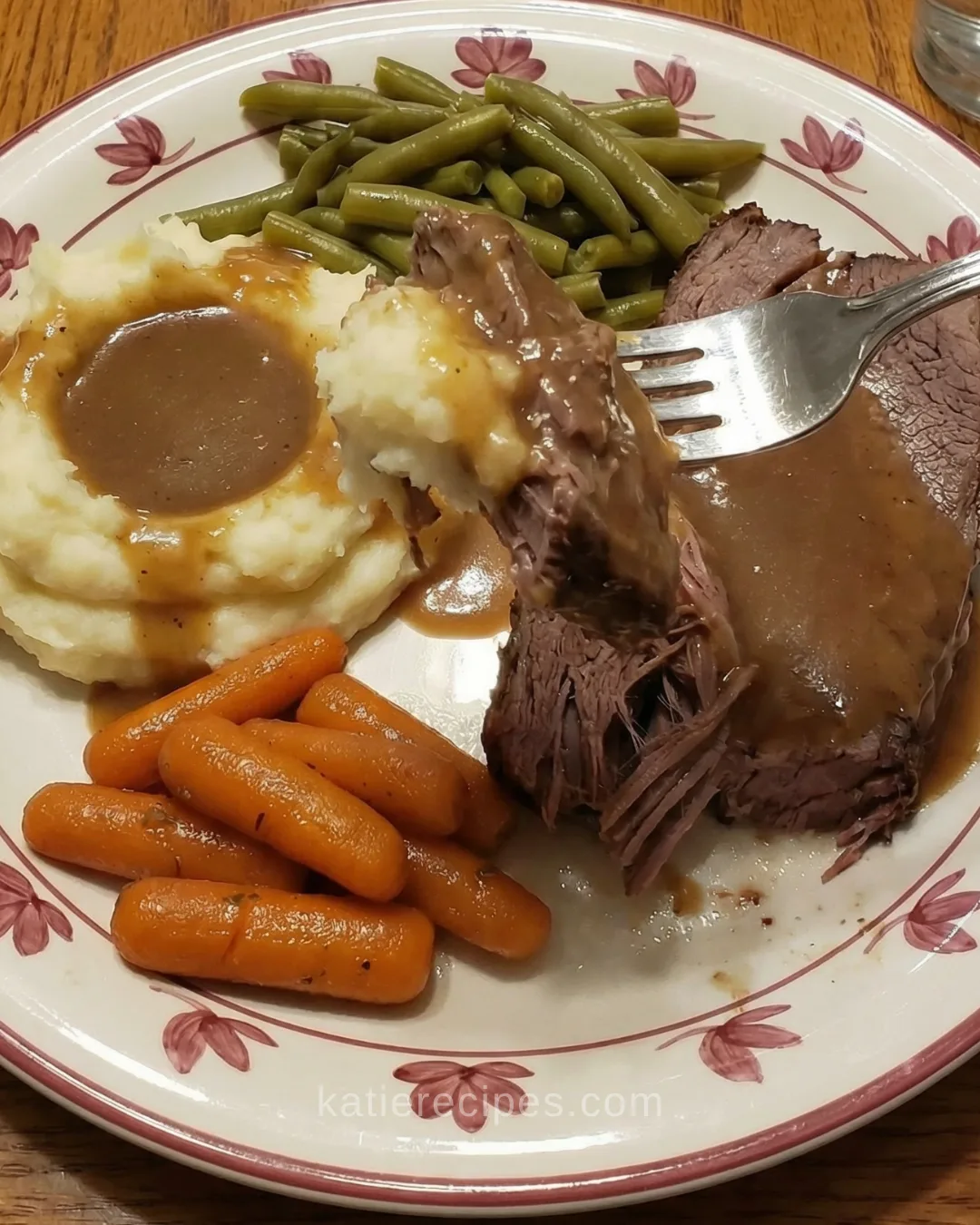
Classic Pot Roast Plate
Ingredients
Equipment
Method
- Pat the chuck roast dry with paper towels and season generously with salt and black pepper. Heat oil in a Dutch oven over medium-high heat and sear the roast for 3-4 minutes per side until deeply browned. Remove and set aside.
- Add sliced onion (and garlic if using) to the same pot and cook for 3-5 minutes until softened. Pour in beef broth and Worcestershire sauce, scraping up any browned bits from the bottom of the pot. Stir in dried thyme if using.
- Return the roast to the pot. Cover and cook in a 300°F oven for 3-4 hours, until fork-tender and easily shreddable. Alternatively, cook in a slow cooker on low for 8 hours, or pressure cook for 60-70 minutes with natural release.
- Add carrots during the last 60-90 minutes of cooking so they become tender without overcooking. Add green beans during the final 15-20 minutes, or heat them separately to maintain their bright color and texture.
- Meanwhile, boil the cubed potatoes in salted water for 15-20 minutes until fork-tender. Drain and mash with butter and milk or cream. Season with salt and pepper to taste.
- If a thicker gravy is desired, whisk together cornstarch and water to create a slurry. Stir it into the simmering cooking liquid and cook for 1-2 minutes until thickened.
- Slice or shred the pot roast and serve over mashed potatoes with carrots, green beans, and plenty of gravy spooned on top.
Notes
Helpful Tips
I’ve overcooked pot roast before. It sounds strange, since it’s supposed to cook forever, but it can happen. If it starts to dry out or shred too finely, it’s probably gone a bit too far. Keep an eye on it toward the end.
If the gravy tastes flat, it usually just needs salt. Or a tiny splash more Worcestershire. Sometimes I even add a pinch of sugar if the broth tastes overly sharp. Not enough to taste sweet. Just enough to round it out.
Don’t cut the carrots too small. I learned that the hard way. Tiny carrots disappear into mush. Bigger chunks hold their shape and feel more like part of the meal.
And let the roast rest a little before shredding it. Even ten minutes helps the juices settle. If you attack it immediately, you lose some of that moisture.
Mashed potatoes are forgiving. If they’re too thick, more milk. Too thin, just let them sit for a few minutes — they tighten up as they cool.
Frequently Asked Questions
Can I skip searing the roast?
You can. Especially in a slow cooker. But I don’t recommend it if you have the time. That browned crust really does change the flavor. It’s not dramatic or fancy, but you’d notice if it wasn’t there.
What if my roast is tough after three hours?
It probably just needs more time. That’s the frustrating answer, I know. Chuck roast breaks down slowly. Give it another 30–60 minutes and check again.
Can I add potatoes to the pot instead of making mashed?
Absolutely. Big chunks, added in the last hour or so. They’ll soak up the broth and get soft. I still prefer mashed on the side, but that’s just habit.
How do I store leftovers?
In an airtight container in the fridge. The meat and veggies together, potatoes separate if you can. They reheat well in the microwave or gently on the stove with a splash of broth.
Can I make this ahead of time?
Yes, and honestly it’s great the next day. The flavors settle. The gravy thickens slightly. Just reheat gently so the meat doesn’t dry out.
Final Thoughts
A classic pot roast plate isn’t flashy. It doesn’t trend. It doesn’t need a drizzle of anything artistic.
It’s steady food.
It’s the kind of meal where people sit down and get quiet for a minute because they’re actually hungry and it smells good and no one’s in a rush. Plates get heavy. Seconds happen.
I like that it takes time. I like that you can’t hurry it. There’s something reassuring about a pot sitting in the oven for hours, doing what it’s supposed to do.
And when you finally spoon that gravy over the mashed potatoes and it runs into everything else on the plate… it just feels right.
Nothing complicated. Just dinner the way it’s meant to be sometimes.